98
PART 2
How to Check Wheel Rim Wear
138692 Rev 0 (04/22)
Section A. Important Safety Information
GT Bicycle Owner’s Manual
How to Check Wheel Rim Wear
Check the condition of wheel rims wear before
every ride.
It is important to your safety, that, you also check
the surface wear of the wheel rims (in addition to
brake pad wear). This is the area of the wheel
where the brake pads contact the rim. Rims can
wear out.
How Can You Check Rim Wear?
Some wheels have wear indicators built in. Some
indicators are depressions in the rim lower that the
surface where the pads touch. When the surface
reaches this depression the wheel is worn out.
Other indicators are visible markings or signs that
are exposed to view when the braking surface is
worn out.
Consult the wheel manufacturer’s instructions/
manuals for information on how to check wear for
your specific wheels.
WARNING
Bicycle wheel rims are subject to wear and damage. A
worn-out or damaged wheel rim has reached its
maximum usable life and must be replaced.
■ Riding on unusable “worn-out” or damaged
wheels can lead to braking or wheel failure.
■ Replace your wheel when they become worn-out
or damaged.
■ Do not ride your bike when the wheels are
damaged or worn-out.
■ Ask your Dealer for help with inspecting the rim
wear of your wheels.
You can be severely injured, paralyzed or killed in an
accident if you ignore this message.
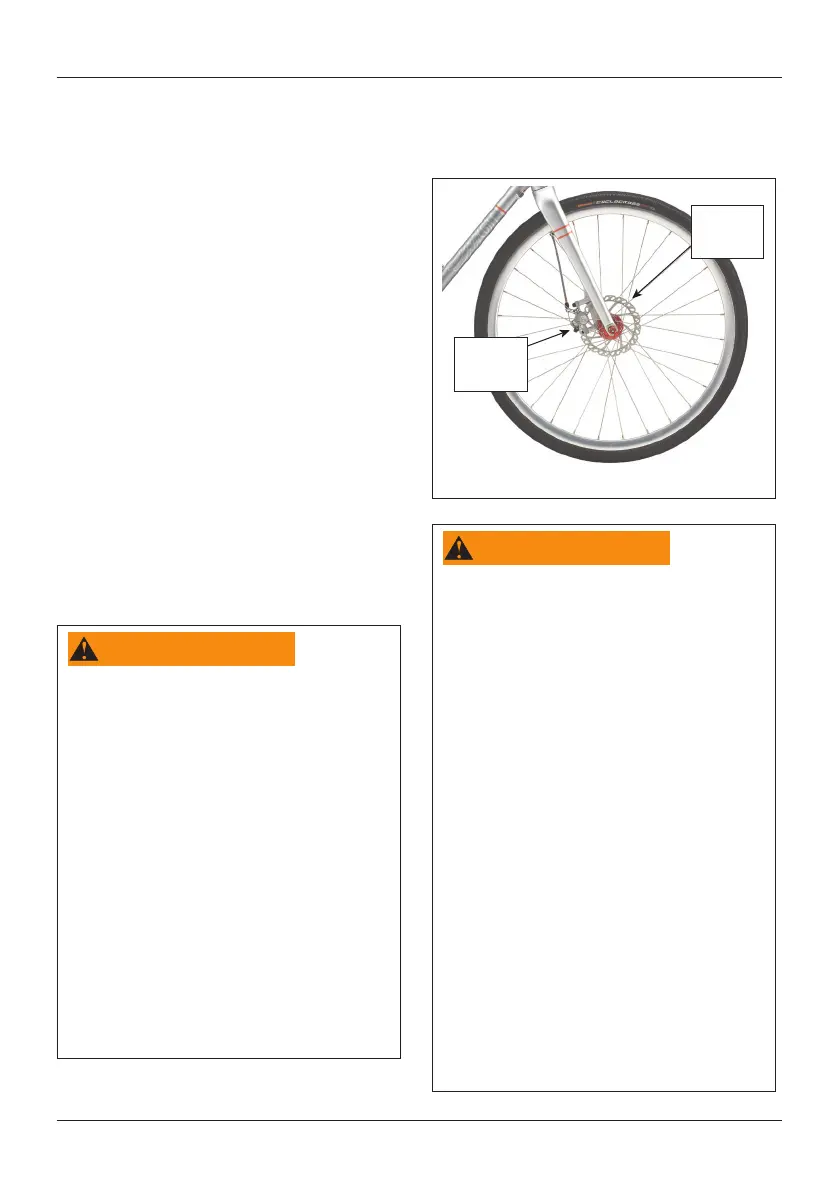
Understanding Disc Brakes On
Road Bikes
Brake
Disc
Contact Patch
Brake
Caliper
WARNING
Some road bikes are equipped with disc brakes.
Relative to conventional rim brakes, disc brakes are
less affected by water, do not wear or heat the rims
and therefore are more consistent. Disc brakes also
may be more powerful.
To minimize risk of injury or accidents:
■ Understand that road bikes have a relatively
small tire contact patch (part of the tire that
touches the road). In order to apply the brakes
safely and effectively, you may need more or less
braking force in different situations. You need to
take into account various road and weather
conditions that can affect traction.
■ Disc brakes are excellent, but not some kind of
magic. Take some time riding your new disc
brake road bike in lower risk circumstances to get
used to the feel and performance of the disc
brakes and tires.
You can be severely injured, paralyzed or killed in an
accident if you ignore this message.


 To Next Page