43
10. Heating at Low Thermal Output
(during Transitional Seasons)
YoucanvarythethermaloutputofyourLima,Sila
orSilaPlusbyadjustingthequantityoffuelused.
NOTE!
Do not attempt to slow down the com-
bustion by reducing the air supply. When
heating with wood, this can result in an
incomplete burning process and pose the
risk of an explosive like combustion of the
accumulated wood gases (deagration).
11. Emptying the Ash Drawer
Asasafetyprecaution,pleasemakesurethatyou
onlydisposeofashesoncetheyarecold.Whilethe
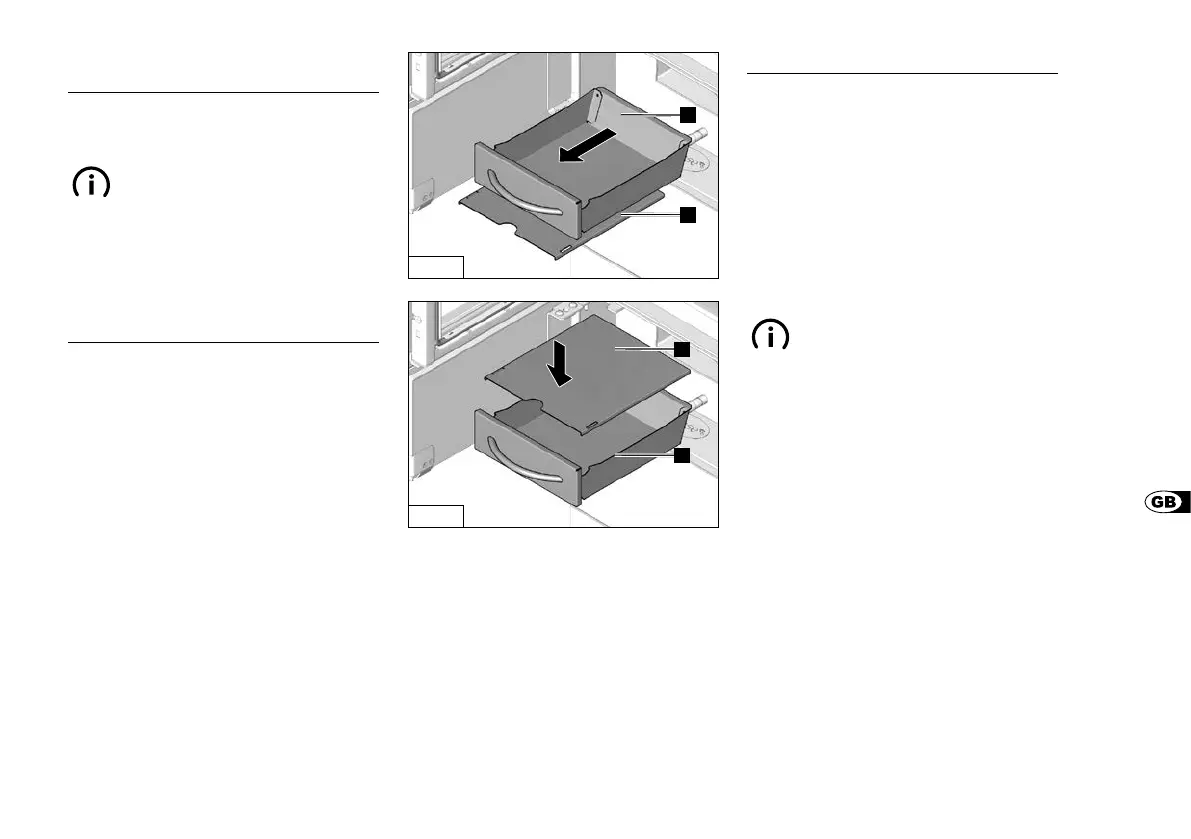
ashcollectsduringthere,thelid(g.7/1)islo-
catedundertheashdrawer
(g.7/2).
Theashdrawer containsthemineralcomponents
ofthewood(approx.1%)ascombustionresidues.
Remove both the ash drawer and the lid located
underneathit.Makesuretheashdoesnotpileup
allthewaytothebottomoftherebox.Slidethe
lid onto the ash drawer so that it is closed; this
prevents ashes from yingaround, which inturn
meansyourhomestaysclean(g.8).
Pleaseensurethat,wheninsertingtheashdrawer,
theashdrawerlidispositionedonthebaseofthe
drawerwiththesidebracketsfacingdown.
g. 7
1
2
2
1
g. 8
12. Cleaning the ceramic glass panel
Tocleanusetheincludedprotectiveglovewithan
extralongshaft.Thisprotectsyouandyourcloth-
ingfromgettingdirty.
We recommend a proven and environmentally
friendlycleaningmethod:
Ballsomeuppapertowelsornewspaper,moisten
theball,dipitintothecoldwoodash,rubthepanel
withitand then wipe the glass with a clean, dry
ballofpaper.
NOTE!
Only use wood ash from split logs for this
cleaning process. Wood briquettes can
contain additives, which may scratch the
surface of the ceramic glass.
Acommon,retailglassdetergentmayalsobeused
forcleaning.Whencleaningthesealandsteelsur-
faceswerecommendthatyouspraytheglassde-
tergentonaclothandnotdirectlyonthepane.


 To Next Page