EasyManua.ls Logo

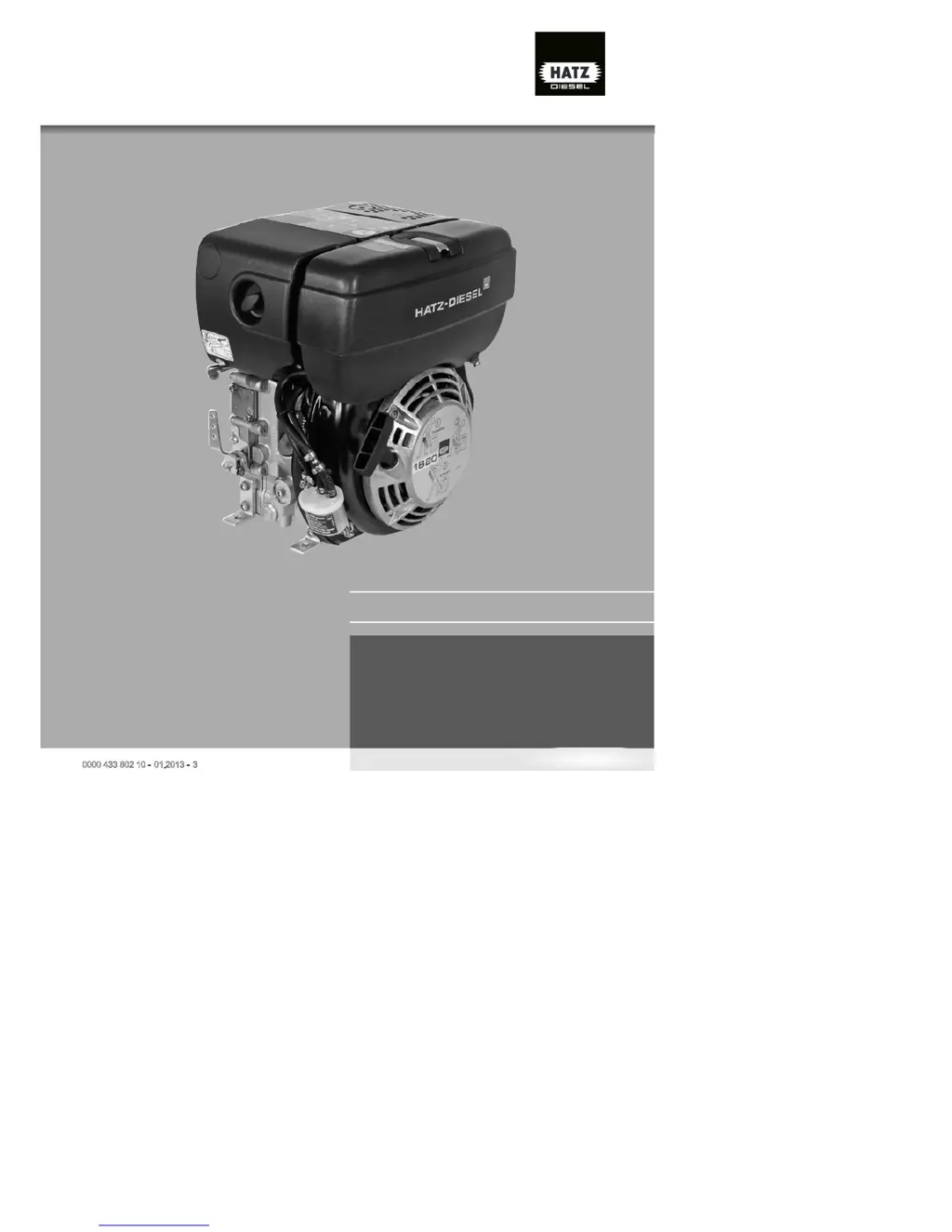
Hatz Diesel 1B30 - User Manual

Hatz Diesel 1B30
89 pages
Print Icon
To Next Page IconTo Next Page
Loading...
1B20 | 1B27 | 1B30 | 1B40 | 1B50
www.HATZ-DIESEL.com
Hat z Diesel
CREATI NG POWER SOLUTI ONS.
OPERATOR’ S MANUAL
Diesel engine
0000 433 802 10 - 01.2013 - 3
Printed in Germany
ENG

Table of Contents

Other manuals for Hatz Diesel 1B30

Questions and Answers

Summary

Notices and Contact Information

Contact Data and Copyright

Provides manufacturer contact details, copyright, and distribution policy for the manual.

General Information on the Operators Manual

Document Scope and Purpose

Details the manual's intent, scope, and the applicability of regulations during operation.

Machine Description and Customer Service

Identifies the HATZ diesel engine models and advises on authorized service stations and genuine parts.

Exclusion of Liability

States manufacturer's disclaimer for damages resulting from improper use or non-compliance.

Safety Instructions and General Information

General Safety Information

Emphasizes the importance of following safety instructions to prevent accidents and damage.

Intended Use and Foreseeable Misuse

Defines the engine's intended purpose and lists actions considered foreseeable misuse.

Machine User and Manufacturer Obligations

Outlines responsibilities for installation, operation, and maintenance personnel.

Residual Risks

Describes residual risks encountered during daily use and maintenance work.

Representation of Safety Notes

Explains the structure and meaning of safety notes, including warning symbols and signal words.

General Danger Symbol and Signal Words

Defines the general danger symbol and the meaning of signal words like DANGER, WARNING, CAUTION.

Meaning of Safety Symbols

Details the meaning of various safety symbols used in the manual.

General Safety Notes and Operational Safety

Introduction to Safety Notes

Highlights the chapter's focus on personal protection and safe operation.

DANGER: Failure to Comply

Warns of life-threatening danger from not following manual instructions.

Using the Machine and Compliance

Details proper machine usage, adherence to regulations, and operating personnel qualifications.

Personal Protective Equipment (PPE)

Specifies essential PPE like safety shoes, hearing protection, and gloves with their functions.

Personal Protective Equipment (PPE) Continued

Details PPE such as safety goggles and working clothes, and their protective functions.

Warning and Notice Labels

Stresses the importance of following and maintaining warning labels on the machine.

Machine-Specific Safety Instructions for Operation

Introduction to Operational Safety

Explains how to eliminate residual risks during operation through safety instructions.

WARNING: Personnel Qualifications

Highlights danger from unqualified personnel and voided warranty.

CAUTION: Lifting and Body Overload

Warns about injury risks from improper lifting and advises using hoists.

Safe Operation Practices

Covers ensuring safety during startup, operation, and refueling.

DANGER: Exhaust Gases

Warns of life-threatening danger from inhaling toxic engine exhaust gases.

DANGER: Fuel Fire Hazard

Alerts to fire hazards from fuel igniting on hot engine parts.

CAUTION: Starter Rope Injury

Warns of injury risk from a chafed starter rope and advises checking for abrasion.

Machine-Specific Safety Instructions for Maintenance Work

Introduction to Maintenance Safety

Emphasizes following general and machine-specific safety instructions during maintenance.

Maintenance Intervals and Work

Advises adhering to intervals, checking safety equipment, and using qualified technicians for complex tasks.

Replacing Parts and Post-Maintenance Checks

Recommends genuine parts and outlines post-maintenance checks for foreign bodies and connections.

DANGER: Flammable Cleaning Agents

Warns of explosion hazards from flammable cleaning agents like benzene.

WARNING: Compressed Air and Dust Particles

Warns of eye injuries from compressed air and dust particles during cleaning.

CAUTION: Maintenance Procedure Errors

Highlights injury risks if maintenance instructions are not followed, emphasizing engine shutdown and battery disconnection.

CAUTION: Burns from Hot Engine

Warns of burns when working on a hot engine and advises letting it cool.

Safety Notes for Electrical Equipment

DANGER: Electrical Hazards

Warns of life-threatening danger from incorrect battery use and electrical work.

DANGER: Battery Explosion Hazard

Alerts to explosion risks from flammable gases near batteries and open flames.

CAUTION: Chemical Burns from Battery Acid

Warns of chemical burns from battery acid and advises immediate rinsing and medical attention.

NOTICE: Electrical Equipment Precautions

Provides notices on wiring diagrams, faulty lamps, starting key use, and cleaning electrical components.

Labels on the Machine

Informs about the types of labels found on the machine: engine type plate and warning labels.

Engine Type Plate Information

Details the information provided on the engine type plate and its location.

Warning Labels and Information Signs

Explains the meaning of various warning and information labels, including maintenance instructions.

Starter Operation Label

Illustrates and explains the procedure for starting the engine with a recoil start.

CAUTION: Starter Rope Safety

Warns of injury from faulty starter rope and advises checking for abrasion.

Speed Adjustment and Fueling Labels

Covers speed adjustment with connecting rod and proper fueling with diesel fuel.

Fuel Filter Change Label

Illustrates and explains the procedure for changing the fuel filter.

Technical Data: Engine Specifications

Engine Type and Combustion System

Details engine types, bore/stroke, displacement, and oil capacities.

Engine Oil Capacity and Consumption

Provides information on oil sump capacity, oil level difference, and oil consumption.

Operating Parameters and Inclination Limits

Lists engine oil pressure, rotation sense, tappet clearance, and maximum inclination.

Screw Tightening Torque and Fuel Specifications

Specifies tightening torque for oil drain screw and suitable diesel fuel types.

CAUTION: Low Quality Fuel

Warns of engine damage from using low-quality fuel and requires approval for non-standard fuels.

Winter Fuel Recommendations

Advises on using winter fuel or mixing petroleum at low temperatures.

Engine Oil Specifications and Viscosity

Lists engine oil specifications and provides a chart for selecting oil viscosity based on temperature and start type.

CAUTION: Unsuitable Engine Oil

Warns that unsuitable engine oil can significantly shorten engine service life.

Engine Design Overview and Components

Engine Component Identification

Identifies key engine components via numbered positions on an illustration.

Additional Engine Components

Lists further engine components like intake openings, oil filling, recoil start, and lifting eye.

Transport, Assembly, and Commissioning Procedures

Safety Notes for Transport

Warns about injury risks during lifting and advises on upright transport to prevent fluid leakage.

Transport Conditions

Specifies safe transport practices, including using lifting lugs and checking for damage after delivery.

Assembly Instructions Overview

Notes that engines are for commercial use and manufacturers must follow machine safety regulations.

Installation Safety and Modifications

Covers safety equipment, hot parts, cable connections, rotating parts, and unauthorized modifications.

Preparations for Commissioning

Details checks for delivered parts completeness, damage, and ensuring adequate ventilation.

DANGER: Exhaust Gases During Commissioning

Warns of life-threatening danger from toxic exhaust gases in poorly ventilated areas.

Operation and Use: Safety and General Notes

Safety Notes for Operation

Emphasizes following safety instructions and replacing faulty parts immediately.

DANGER: Machine Damage and Defects

Warns of life-threatening danger from operating a damaged or defective machine.

WARNING: Operating Instructions and Unauthorized Tasks

Highlights injury risk from not following instructions or performing unauthorized tasks.

CAUTION: Low Load Operation Damage

Warns of engine damage from prolonged low load operation.

CAUTION: Speed Control Lever Force Limits

Warns of damage to stops and regulator parts from exceeding force limits on the speed control lever.

Performing Pre-Start Tests

Lists essential tests to perform before starting the engine for proper operation.

Setting the Speed Control

CAUTION: Inadequate Lubrication

Warns of engine damage due to inadequate lubrication after extended disuse.

Speed Control Lever Operation

Explains how to set the speed control lever to 'Stop', '1/2', or 'Start' positions.

Starting the Engine Procedures

Starting Options and Separation

Describes standard hand start and optional starter, and advises separating the engine from driven machinery.

DANGER: Exhaust Gases During Starting

Warns of life-threatening danger from toxic exhaust gases during engine start-up.

WARNING: Faulty Starter Rope

Warns of injury from faulty starter rope and advises checking for abrasion.

CAUTION: Starting Fluid Hazards

Warns of injury and engine damage from uncontrolled ignitions caused by starting fluid.

Overview of Recoil Start Components

Identifies components involved in the recoil start procedure.

Recoil Start Procedure Steps

Details the step-by-step process for starting the engine using the recoil starter.

NOTICE: White Smoke After Failed Starts

Provides instructions for handling white smoke emission after multiple failed start attempts.

Starting Engine with Electric Starter

Details the procedure for starting the engine using an electric starter.

Overview of Electric Starter Components

Identifies standard and optional components for electric start, including indicators and ignition lock.

NOTICE: Electric Start Operation

Provides notices on starter engagement duration and key position for starting.

Electric Start Procedure Steps

Details the step-by-step process for starting the engine using an electric starter.

NOTICE: Irregularities and Automatic Shutoff

Advises immediate shutdown for irregularities and explains electrical automatic shutoff features.

NOTICE: Engine Stopping Indicators

Explains indicators for automatic shutoff activation and troubleshooting.

Switching Off the Engine Procedures

NOTICE: Idle Speed Shutdown

Advises on shutdown methods for engines with blocked lower idle speed.

Switching Off the Engine (Mechanical Methods)

Details how to switch off the engine using the speed control lever or stop pin.

Speed Control Lever Shutdown

Instructs to move the speed control lever to the 'STOP' position to switch off the engine.

Stop Pin Shutdown Procedure

Explains how to press and hold the stop pin to switch off the engine.

Connecting Rod Speed Adjustment Shutdown

Describes using the connecting rod to move the speed adjustment to 'STOP'.

Switching Off the Engine (Electrical Method)

Details turning the starting key to '0' to switch off the engine and remove it.

CAUTION: Unauthorized Operation

Warns of injury risk from unauthorized handling and advises removing the starting key.

NOTICE: Battery Discharge Prevention

Advises turning the starting key to '0' when switched off to prevent battery discharge.

NOTICE: Automatic Shutoff with Fault Storage

Explains indicators for automatic shutoff activation and fault remedy.

Refueling Safety and Procedures

DANGER: Fuel Fire Hazard

Alerts to fire hazards from fuel igniting on hot engine parts and warns against smoking and open flames.

CAUTION: Environmental Damage from Spilled Fuel

Warns of environmental damage from spilled fuel and advises proper disposal.

CAUTION: Engine Damage from Low Quality Fuel

Warns of engine damage from using low-quality fuel and requiring approval for non-standard fuels.

Fuel Tank and Fuel Cap Overview

Identifies the fuel cap and fuel tank components.

Fueling Procedure Steps

Details the steps for opening the fuel cap, filling the tank, and closing the cap.

NOTICE: Fuel System Bleeding

Explains automatic fuel system bleeding after filling the tank for the first time or when empty.

Checking the Water Separator

CAUTION: Environmental Damage from Draining

Warns of environmental damage from spilled fuel during draining and advises proper disposal.

NOTICE: Water Separator Check Interval

Recommends checking the water separator at least once a week.

Water Separator Overview

Identifies standard and optional components of the water separator.

Checking Oil Level and Adding Oil

CAUTION: Burns from Hot Engine;Oil

Warns of burns when working on a hot engine and advises wearing safety gloves.

CAUTION: Engine Damage from Incorrect Oil Level

Warns of engine damage from operating with oil levels below min. or above max. marks.

Engine Oil Level Check Procedure

Details the step-by-step process for checking the engine oil level using the dipstick.

Oil Level in Oil Bath Filter (Option)

Oil Bath Filter Components Overview

Identifies the oil container, filter insert, gasket, and lock for the oil bath filter.

Oil Bath Filter Maintenance Procedure

Details the steps for removing, cleaning, and assembling the oil bath filter.

General Maintenance Instructions and Safety

WARNING: Maintenance Safety

Warns of injury from not following instructions or performing unauthorized tasks during maintenance.

NOTICE: Maintenance Compliance

Emphasizes following safety chapters, using trained personnel, and accident prevention measures.

Maintenance Best Practices

Covers using genuine parts, adhering to manual conditions, and performing maintenance with the engine off.

Performance of Maintenance Work

Notes easy accessibility of parts and the importance of performing work at specified intervals and conducting function tests.

CAUTION: Maintenance Safety Precautions

Reinforces safety during maintenance: engine off, secure starting key, disconnect battery, clear tools.

Maintenance Notice Label

Explains the maintenance plan label, its placement, and the importance of adhering to specified intervals.

Maintenance Schedule: Model Without Automatic Valve Lash Adjustment

Illustrates maintenance intervals and checks for engines without automatic valve lash adjustment.

Maintenance Schedule: Model With Automatic Valve Lash Adjustment

Illustrates maintenance intervals and checks for engines with automatic valve lash adjustment.

Detailed Maintenance Plan Intervals

Provides a detailed breakdown of maintenance intervals and tasks.

Fuel Filter Maintenance Interval

Notes that the fuel filter maintenance interval depends on fuel cleanliness and may need shortening.

Maintenance Schedule: 8-15 Hour Intervals

Details checks for oil level, oil bath filter, intake area, air filter indicator, and water separator every 8-15 hours.

Maintenance Schedule: 250 Hour Intervals

Outlines maintenance for oil bath filter, engine oil change, tappet clearance, cooling air, and screw connections at 250 hours.

Maintenance Schedule: 500 & 1000 Hour Intervals

Specifies changing the fuel filter (500h) and cleaning the oil filter (1000h).

Initial Maintenance for New Engines

Lists initial maintenance tasks for new/overhauled engines after 25 operating hours.

Checking the Intake Area for Contamination

Details how to check and clean the air intake area for debris.

CAUTION: Burns from Hot Engine

Warns of burns when working on a hot engine and advises letting it cool.

NOTICE: Shorten Intervals for Heavy Contamination

Advises shortening maintenance intervals if heavy contamination is present.

Intake Area Inspection Procedures

Details how to check and clean air intake openings, cyclone precleaner areas, and oil bath filter intake.

Changing the Engine Oil Procedure

Details the steps for draining engine oil and cleaning the oil filter.

CAUTION: Burns from Hot Oil

Warns of burns from hot oil and advises wearing gloves and proper disposal.

NOTICE: Oil Change Preparation

Emphasizes ensuring the engine is level, switched off, and warm for optimal oil draining.

Engine Oil Drain Overview

Identifies the oil drain screw and gasket for oil removal.

Engine Oil Draining and Oil Filter Cleaning

Details draining the engine oil and cleaning the oil filter as part of the oil change process.

CAUTION: Burns from Hot Engine

Warns of burns when working on a hot engine and advises letting it cool.

CAUTION: Injury from Compressed Air

Warns of eye injury from flying particles during compressed air use.

NOTICE: Oil Capture and Disposal

Advises capturing emerging oil in a container and disposing of it according to regulations.

NOTICE: Oil Filter Cleaning Timing

Notes that the oil filter should be cleaned when the engine oil is changed.

Oil Filter Cleaning Procedure

Details loosening the screw, removing the filter, blowing it out with compressed air, and checking gaskets.

Oil Filter Assembly and Oil Level Check

Covers inserting the filter, tightening the screw, and checking the oil level after cleaning.

Checking and Setting Tappet Clearance

Details checking and adjusting tappet clearance for engines without automatic valve lash adjustment.

CAUTION: Burns from Hot Engine

Warns of burns when working on a hot engine and advises performing settings while the engine is cold.

NOTICE: Applicability to Non-Automatic Valve Adjustment

Specifies that this chapter applies only to engines without automatic valve lash adjustment.

Preparations for Dry Air Filter Model

Details removing the air filter cap and sound protection hood for dry air filter models.

Preparations for Oil Bath Filter Model

Details releasing screws and removing the cover plate with sound protection hood for oil bath filter models.

Preparations for Rammer Operation Model

Details unscrewing the air filter cap and removing the sound protection hood for rammer operation.

NOTICE: Sequential Preparation Steps

Emphasizes that described steps require prior completion of appropriate preparations.

Tappet Clearance Adjustment Procedure

Details checking and adjusting tappet clearance by turning the engine and using a feeler gauge.

Maintaining the Oil Bath Filter

Details the maintenance procedures for oil bath filters, with and without cyclone precleaners.

CAUTION: Burns and Filter Repair Prohibition

Warns of burns from hot engines and prohibits repairing the oil bath filter.

Procedures for Oil Bath Filter Without Cyclone Precleaner

Details cleaning the oil container, rinsing the filter insert, and cleaning the filter housing.

Procedures for Oil Bath Filter With Cyclone Precleaner

Details emptying and cleaning the dust collection container and intake opening for cyclone precleaner models.

Cleaning the Cooling Air Area

Details cleaning the cooling air area to ensure proper engine cooling.

CAUTION: Burns from Hot Engine

Warns of burns when working on a hot engine and advises letting it cool.

CAUTION: Injury from Compressed Air

Warns of eye injury from flying particles during compressed air use.

Dry Contamination Cleaning Procedure

Details removing screws, recoil start, cleaning fan blades, and blowing out with compressed air.

Cleaning Cooling Ribs and Air Gap

Covers cleaning cooling ribs, checking the air gap, and checking/cleaning the element.

Moist or Oily Contamination

Advises contacting the HATZ service station for moist or oily contamination.

Checking Screw Connections for Tightness

Details checking all screw connections for tightness and tightening loose ones.

NOTICE: Cylinder Head and Regulator Screw Precautions

Warns against retightening cylinder head screws and adjusting regulator screws.

Cleaning the Exhaust Screen

Details procedures for cleaning the exhaust screen in standard and rammer operation models.

CAUTION: Burns from Hot Engine

Warns of burns when working on a hot engine and advises letting it cool.

CAUTION: Injury During Cleaning

Warns of injury when cleaning the exhaust screen and advises wearing gloves.

Exhaust Screen Cleaning Procedure (Standard Models)

Details removing the exhaust manifold, screen insert, and cleaning with a wire brush.

Exhaust Screen Reassembly (Standard Models)

Covers tightening hex nuts and reinserting the exhaust manifold and bracket.

Exhaust Screen Cleaning Procedure (Rammer Operation)

Details removing the exhaust manifold and screen insert for rammer operation models.

Exhaust Screen Cleaning and Reassembly (Rammer Operation)

Details cleaning the screen insert, checking for cracks, and reattaching the hose and bracket.

Changing the Fuel Filter Procedure

Details the steps for changing the fuel filter, including safety precautions.

DANGER: Fuel Fire Hazard

Alerts to fire hazards from fuel igniting on hot engine parts and warns against smoking and open flames.

CAUTION: Skin Irritation from Fuel Contact

Warns of skin irritation from repeated contact with diesel fuel and advises wearing gloves.

CAUTION: Environmental Damage from Spilled Fuel

Warns of environmental damage from spilled fuel and advises proper disposal.

CAUTION: Dirt Particles Damaging Injection System

Warns of damage to the injection system from dirt and stresses maintaining cleanliness.

Fuel Filter Change Procedure (Model with Fuel Filter in Tank)

Details opening the fuel cap and pulling the fuel filter out of the tank.

Fuel Filter Replacement (Model with Fuel Filter in Tank)

Details pulling the fuel feed line, inserting a new filter, closing the cap, and automatic bleeding.

NOTICE: Double Fuel Filter System

Explains the advantage of a double system and that the outside filter is maintenance-free.

Fuel Filter Change Procedure (Model with External Fuel Filter)

Details opening the fuel cap, pulling the filter, inserting a new one, closing the cap, and automatic bleeding.

NOTICE: External Fuel Filter System

Notes that models with an external fuel filter do not have a fuel filter in the tank.

Water Separator Fuel Draining Procedure

Details draining fuel from the water separator (with or without window) for filter replacement.

Fuel Filter Removal and Replacement

Details unscrewing the fuel filter, collecting remaining fuel, and replacing the filter.

Maintaining the Dry Air Filter

Details procedures for maintaining the dry air filter, including indicator checks and cartridge replacement.

NOTICE: Cleaning and Replacement Intervals

Advises immediate cleaning of the filter cartridge if the maintenance display appears.

Checking the Air Filter Maintenance Indicator

Explains how to check the air filter maintenance indicator, especially in dusty environments.

Dry Air Filter Maintenance: Indicator Check

Details maintaining the dry air filter when the rubber bellow contracts and covers the green field.

Installing and Removing the Filter Cartridge

Details unscrewing the air filter cover and knurled nut, and removing the cartridge.

Cleaning Filter Housing and Cover

Covers cleaning the filter housing and cover, avoiding dirt ingress into the engine.

Air Filter Cartridge Check and Replacement

Details checking the air filter cartridge and replacing or cleaning it based on contamination.

CAUTION: Injury from Compressed Air

Warns of eye injury from flying particles during compressed air use.

NOTICE: Pressure Limits and Cartridge Damage

Specifies pressure limits for cleaning and notes that minor damage makes reuse impossible.

Filter Cartridge Cleaning Procedure

Details blowing out the filter cartridge with compressed air and checking the sealing surface.

Filter Cartridge Inspection and Replacement

Explains checking the filter paper for cracks and replacing the cartridge if necessary.

Troubleshooting Engine Faults

Troubleshooting Notes and Service Contact

Advises contacting HATZ service station if faults persist after troubleshooting.

Fault: Engine Hesitates or Does Not Start

Lists causes and remedies for engine starting issues, including speed control and fuel supply.

Fault: Engine Hesitation Causes

Details insufficient compression, worn parts, and non-functional injection nozzles as causes.

Fault: Low Temperature Starting Issues

Addresses issues at low temperatures, including pre-glow system faults and fuel gelling.

Fault: Engine Starts but Fails to Continue Running

Covers causes like uncoupled machines, faulty pre-glow, fuel gelling, and viscous oil.

Fault: Low Starting Speed (RPM)

Addresses low starting speed due to viscous oil or insufficiently charged battery.

Fault: Machine Not Uncoupled or Fuel Filter Clogged

Troubleshoots issues related to uncoupled machines and clogged fuel filters.

Fault: Automatic Electrical Shut-off Mechanism

Details fault signals from monitoring elements, oil pressure, and temperature.

Fault: Faulty AC Alternator or Voltage Regulator

Covers faulty AC alternators and issues with the voltage regulator's overvoltage protection.

Fault: Starter Does Not Switch On or Turn Engine

Addresses starter issues due to electrical irregularities, loose connections, or faulty components.

Fault: Engine Switches Off Spontaneously During Operation

Covers spontaneous engine shutdown due to fuel supply interruption, clogged filters, or air in the system.

Fault: Automatic Shut-off Monitoring Elements

Details monitoring elements like oil pressure and engine temperature for automatic shut-off.

Fault: Engine Loses Power and Speed

Addresses engine power loss due to fuel supply issues, clogged filters, or tank venting.

Fault: Engine Loses Power, Black Smoke

Covers engine power loss and black smoke from air in fuel, speed adjustment, and dirty air filter.

Fault: Engine Overheating and Indicator Lamp

Addresses engine overheating, cylinder head temperature lamp, and cooling system issues.

Fault: Condensate from Exhaust Silencer

Addresses condensate emerging from the exhaust silencer due to prolonged no-load operation.

Emergency Start Procedure and Safety

Details the emergency start procedure, safety warnings, and shutoff valve functions.

Electrical Fault Signal and Engine Shutdown

Explains how electrical faults trigger automatic shut-off and engine shutdown.

Function of Shutoff Valve and Starting Key Settings

Describes the shutoff valve's operation and the starting key positions for enabling fuel supply.

Electrical Automatic Shutoff Feature

Highlights the flashing indicators indicating electrical automatic shutoff activation.

CAUTION: Engine Damage in Emergency Operation

Warns of potential engine damage as monitoring components are deactivated in emergency operation.

NOTICE: Risk Transfer and Fault Determination

States risk transfers to the operator in emergency mode and advises determining fault causes.

Emergency Start Lever Operation

Details using pliers to turn the emergency start lever counterclockwise to unlock the shutoff valve.

Starting Engine in Emergency Mode

Instructs to start the engine using electric starter or recoil start in emergency mode.

Returning Emergency Start Lever to Stop Position

Explains returning the emergency start lever to the stop position to enable normal shutdown.

Machine Storage and Disposal Guidelines

NOTICE: Comply with Safety Chapter

Reminds users to follow basic safety instructions from Chapter 3.

Storing the Machine for Lengthy Periods

Provides measures for storing the machine, including covering and dry storage.

Disposal Information and Environmental Concerns

Advises disposal according to local regulations and using specialist companies for environmental safety.

NOTICE: Proper Disposal of Parts and Substances

Emphasizes safe disposal of parts and substances, especially batteries, to protect the environment.

Manufacturers Installation Declaration

Declaration of Incorporation for EC Machinery Directive

Declares conformity with safety and health protection requirements of EC directives.

Compliance with Standards and Directives

Lists standards and directives used, and confirms compliance with technical documents.

Signature and Documentation Details

Includes fields for signature, name, and address of the EC documentation officer.

Hatz Diesel 1B30 Specifications

General IconGeneral
Engine Model1B30
Displacement347 cm³
Cooling SystemAir-cooled
FuelDiesel
Bore80 mm
Fuel SystemDirect injection
Engine TypeSingle-cylinder, four-stroke diesel engine
Starting SystemRecoil start / Electric start (optional)

Related product manuals