49
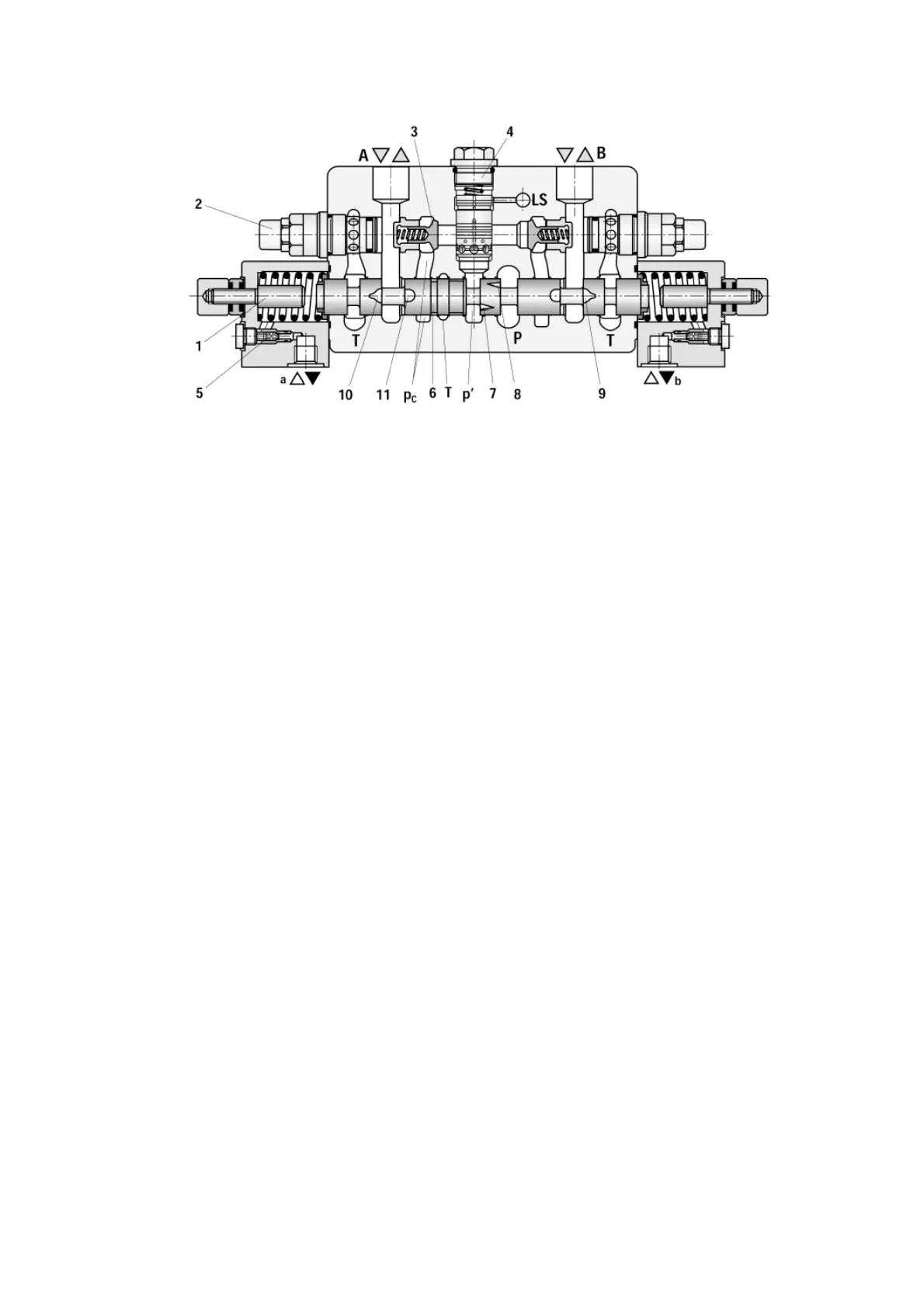
Fig.8-2 The Principle of Control Valve
When the oil from the leader hydraulic control valve puts up the spool of the
main valve, its displacement becomes the direct proportion with the pressure. With the
valve spool moving, inlet of the throttle measuring box(7) is opened, and then, oil
from the pump flows into its inlet. At last, the pressure push up the maintaining
Valve(3).
Inlet(A) pressure through the spool of the control valve passage push up the
Maintaining Valve(3) and keep it from openning. When inlet(p) pressure raises and
exceeds pressure of the orifice, the maintaining valve will be opened. As a result,
outlet of the pump linked with the operating cylinder is filled with high pressure oil,
and the mast may be up or down. The return oil from the port “B” flows through the
throtting grooves passage(9) to the tank. When the spool of the control valve is
operated and becomes bigger, flow increases too. It causes the speed of mast is
quicker. As long as the pressure of cylinder is under the pressure that the overflow
valve (2) is set, the valve keeps on closing. If the system pressure is higher than the
setting pressure, the overflow valve will be opened to make the pressure in system
lower. If it is not enough oil to supply the cylinders, the overflow valve will be opened
too. Then the oil will flow into the cylinders from the tank .According to the require
of cylinders, the pressure and flow is set in a piece of valve. In this way, the speed and



 To Next Page