Parameter Scope Unit of change
Hardness of raw water (only in A-03 and A-04 modes) 0.1 – 9.9 0.1
Regeneration factor (only in A-03 and A-04 modes) 0.3 – 0.99 0.01
Time of back rinse 0 – 99 1
Time of brine draw and slow rinse 0 – 99 1
Time of water refill in water tank 0 – 99 1
Time of fast rinse 0 – 99 1
Maximum interval between regenerations (in days) 0 – 40 1
Type of external signal sent b-01, b-02 -
9. CLEANING AND MAINTENANCE
9.1. CONTROLLING THE LEVEL OF SALT AND REFILLING THEREOF
The quantity of salt in the salt tank shall be checked regularly (recommended once per week), so that it
never runs out. Table 2 presents average salt consumption per regeneration. Salt shall be replenished as
the consumption thereof progresses, so that its level is always above water level. (Water shall not be visible).
Exclusively tablet salt intended for water softening shall be used.
ATTENTION! Salty water (brine) may cause eye, skin and wounds irritation. Do not
touch or otherwise contact it. In case of contact, wash brine with tap water.
9.2. PREVENTING THE AGGLOMERATION OF SALT
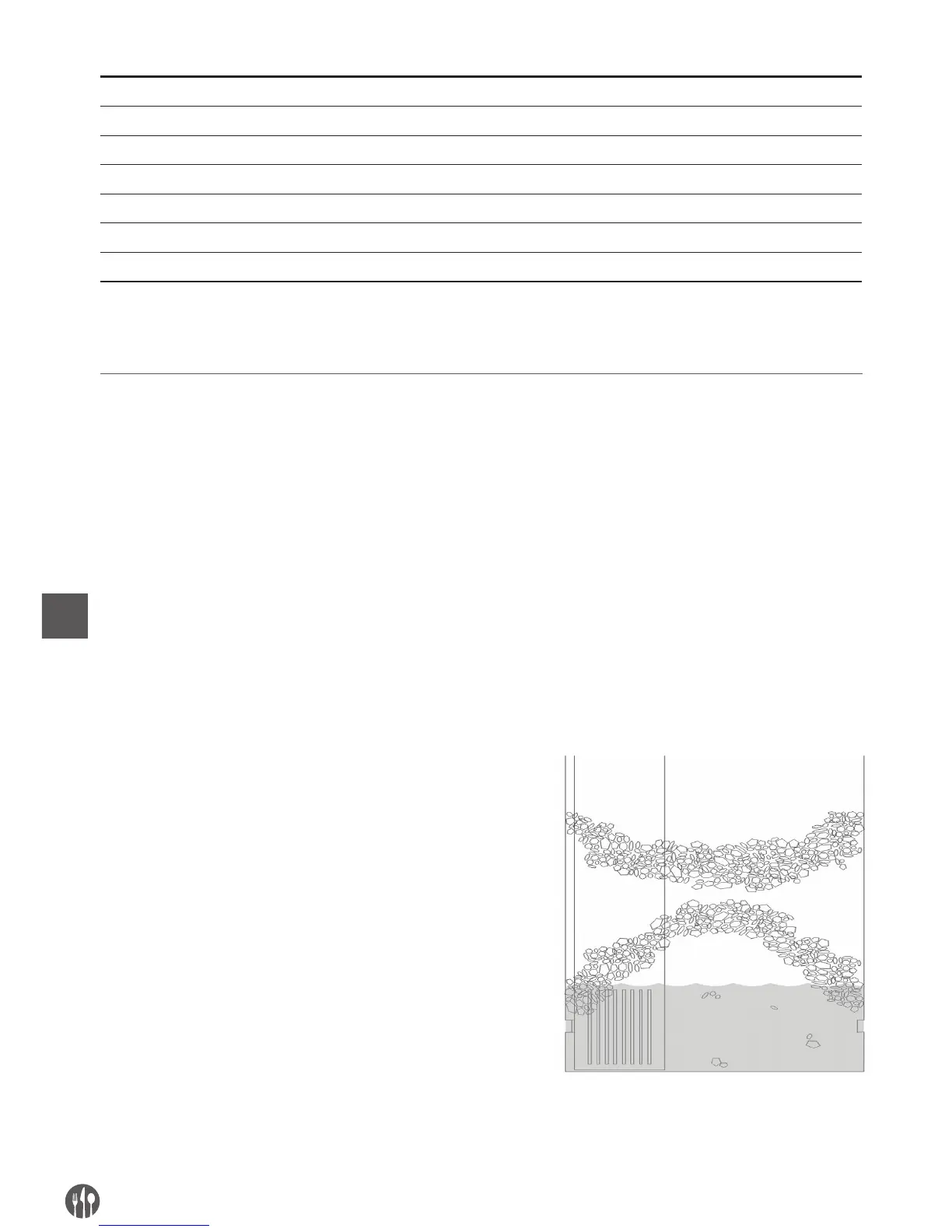
High air humidity or a wrong type of salt may cause
the formation of large salt chunks (salt depos-
its) in the salt tank. The process may protrude the
preparation of the proper amount of brine and,
as a result, prevent the proper regeneration of
the device. As a result, water will not be softened.
In case of a suspicion that a salt deposit was formed,
one may knock on the walls of the salt tank or pour
hot water over the salt deposit to break it. A salt
chunk may also be broken into pieces with a long
object (e.g., a pipe). If salt agglomerated excessive-
ly as a result of bad quality thereof, the brine tank
shall be rinsed and filled with salt of proper quality.
Salt deposit


 To Next Page