
 Need help?
Do you have a question about the HighPoint SSD7104 and is the answer not in the manual?
Lists components included with the SSD7104 controller card for installation.
Lists components included with the SSD7204 controller card for installation.
Requires at least one NVMe SSD installed in the controller for data arrays.
Specifies PCIe slot types (x16 for SSD7104, x8/x16 for SSD7204) for installation.
Lists compatible OS versions for Windows, Linux, and macOS.
Requires a motherboard supporting UEFI modes for optimal compatibility.
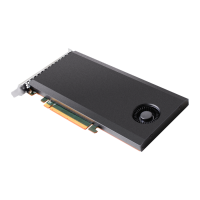
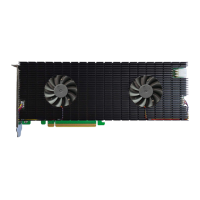
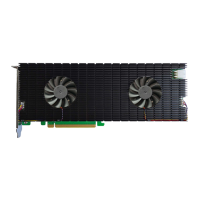
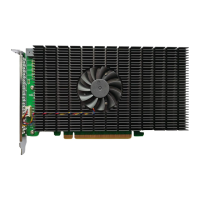
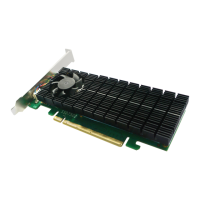
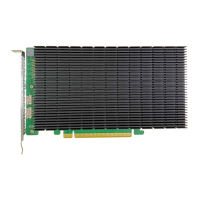
Describes the front view of the SSD7104, highlighting heatsink and interface.
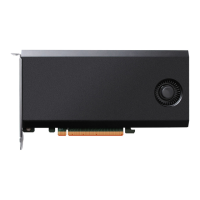
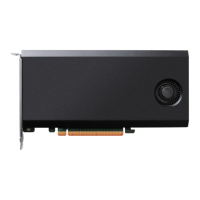
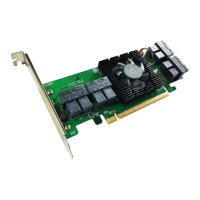
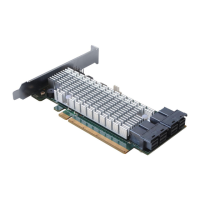
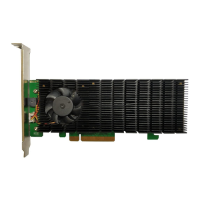
Describes the front view of the SSD7204, highlighting heatsink and interface.
Details steps for removing the heat sink from the SSD7204.
Explains the importance of preparing the thermal pad before reinstallation.
Covers securing NVMe SSDs with screws and insertion into slots.
Details refastening the heat sink after all SSDs are installed.
Provides critical notes on heatsink alignment, NVMe connection, and driver installation.
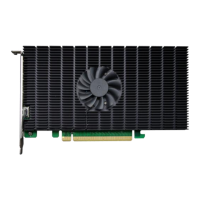
Details the HS8004F fan cooling unit with a low-noise fan.
Lists NVMe controllers compatible with the fan cooling unit.
Provides links to manuals, guides, FAQ, and software downloads.
Offers contact methods for technical assistance and web support.
The HighPoint SSD7104/SSD7204 is a series of NVMe RAID controllers designed to expand storage capabilities in computer systems by integrating multiple M.2 NVMe SSDs into a single PCIe slot. These controllers are primarily intended for creating high-performance data arrays, offering a robust solution for storage-intensive applications rather than serving as boot devices. The SSD7104 and SSD7204 models differ in their PCIe lane requirements, with the SSD7104 requiring a PCIe 3.0 or 4.0 x16 slot, while the SSD7204 can operate in a PCIe 3.0 or 4.0 x8 or x16 slot, providing flexibility for various system configurations.
A key feature of these controllers is their ability to support up to four M.2 NVMe SSDs, allowing users to leverage the high speed and low latency of NVMe technology for their storage needs. The design incorporates a full-length, black anodized aluminum, fan-less heatsink, which is crucial for dissipating the significant heat generated by multiple high-performance NVMe SSDs. This passive cooling solution ensures stable operation without the added noise or potential failure points associated with active cooling fans, making it suitable for environments where quiet operation is desired. The heatsink is designed to make full contact with the controller board (PCB) and the thermal pads, ensuring efficient heat transfer away from the NVMe SSDs and the controller's components. Proper installation of the heatsink is emphasized as critical for preventing overheating, which could lead to performance degradation, unstable I/O, data loss, or even damage to the SSDs and the controller hardware.
The installation process for NVMe drives involves several careful steps. Users must first remove the heatsink from the rear of the controller by unscrewing six retaining screws. Once the heatsink is detached, a blue protective film must be removed from the thermal pad. This film is present to protect the pad during shipping and handling but must be taken off to allow the thermal pad to effectively conduct heat away from the NVMe SSDs once they are installed. The controller supports various M.2 form factors, including 2242, 2260, 2280, and 22110, offering broad compatibility with different NVMe SSDs. After removing the heatsink and preparing the thermal pad, users can then install their NVMe SSDs into the available M.2 slots. This involves removing specific screws on the right side of the controller, gently inserting the SSDs into their respective slots, and then refastening the screws to secure the SSDs. It is crucial to ensure that all SSDs are clean and securely inserted to prevent loose connections, which can lead to stability and performance issues, and potentially data loss. Once all SSDs are installed and secured, the heatsink must be carefully reattached, ensuring proper alignment and full contact with the thermal pad and the controller board, and the six retaining screws are refastened.
The SSD7104/SSD7204 controllers are compatible with a wide range of operating systems, including Windows 11, 10, Server 2022, 2019, 2016, 2012R2, and Microsoft Hyper-V. For Linux users, support extends to RHEL, Debian, Ubuntu, Fedora, Proxmox, Xenserver, and Rocky Linux (with kernel 3.10 and later), as well as Arch Linux (with kernel 5.17.5 and above). macOS users are also supported, specifically versions 10.13.6 through 13.x. This broad operating system compatibility ensures that the controllers can be integrated into diverse computing environments. Furthermore, the system motherboard must support UEFI modes for proper operation. HighPoint Technologies provides compatibility lists for both the SSD7104 and SSD7204, recommending specific motherboards to ensure optimal performance and compatibility.
For users seeking enhanced cooling, optional accessories are available, such as the HS8004F fan cooling unit. This unit features a low-noise fan integrated with a full-length anodized aluminum heatsink, providing active cooling for situations where passive cooling might not be sufficient or for users who desire additional thermal management. This accessory is compatible with various HighPoint NVMe RAID controllers, including the SSD7104, SSD7104F, SSD7204, SSD7105, and SSD7505, offering a modular approach to cooling solutions.
Maintenance of these controllers primarily revolves around ensuring proper installation and thermal management. The fan-less design reduces the need for routine cleaning of fan components, but periodic checks of the heatsink for dust accumulation, which can impede heat dissipation, are advisable. The emphasis on secure SSD installation and correct heatsink reattachment highlights the importance of careful handling during any drive installation or replacement. Users are also advised to install the necessary drivers in the system before physically installing the controller board, a crucial step to avoid potential errors and ensure smooth operation. HighPoint Technologies provides comprehensive resources, including manuals, guides, FAQs, and software downloads (drivers and management interfaces), to assist users with installation, configuration, and troubleshooting. Customer support is also available for any issues or questions that may arise during the use of these products.
 General
| PCI Express slots version | 3.0 |
|---|---|
| Supported storage drive interfaces | M.2 |
| RAID levels | 0, 1 |
| Certification | CE, FCC, RoHS, REACH, WEEE |
| Data transfer rate | 14 Gbit/s |
| S.M.A.R.T. support | Yes |
| Number of devices supported | 4 |
| Mean time between failures (MTBF) | 920585 h |
| Mac operating systems supported | Mac OS X 10.13 High Sierra |
| Linux operating systems supported | Kernel 3.12 |
| Server operating systems supported | Windows Server 2016 |
| Windows operating systems supported | Windows 10 |
| Storage temperature (T-T) | -20 - 80 °C |
| Operating temperature (T-T) | 5 - 55 °C |
 Weight and Dimensions
| Depth | 20.5 mm |
|---|---|
| Width | 195 mm |
| Height | 112 mm |
| Weight | 600 g |


 To Next Page