This document serves as a Quick Start Guide for the Hikvision HiWatch Series Network Turret Camera, providing essential information for its installation, activation, and access.
Function Description:
The Network Turret Camera is a surveillance device designed for monitoring various environments. It captures images and provides network configuration capabilities, allowing users to adjust surveillance angles and access the camera remotely. The camera supports Power over Ethernet (PoE) for certain models, enabling both power and data transmission over a single Ethernet cable, which simplifies installation by reducing the need for separate power sources.
Important Technical Specifications:
- Power: The standard power supply is PoE or 12 VDC. For PoE-supported cameras, a switch with PoE functionality is required.
- Operating Temperature: The camera is designed to operate within a temperature range of -30°C to 60°C.
- Surveillance Angle Adjustment:
- Pan: 0° to 360°
- Tilt: 0° to 75°
- Rotation: 0° to 360°
- Memory Card: Supports memory card installation for local storage.
- Waterproofing: For outdoor installations, a waterproof accessory for the network cable is required to prevent moisture ingress and short circuits.
- Compliance:
- FCC: Complies with part 15 of the FCC Rules for Class B digital devices, ensuring reasonable protection against harmful interference in residential installations. Operation is subject to two conditions: not causing harmful interference and accepting any interference received.
- EU Conformity (CE): Products are marked with "CE" and comply with EMC Directive 2014/30/EU and RoHS Directive 2011/65/EU.
- WEEE Directive (2012/19/EU): Products marked with the crossed-out wheeled bin symbol should not be disposed of as unsorted municipal waste in the European Union. Proper recycling through local suppliers or designated collection points is required.
- Battery Directive (2006/66/EC): Products containing batteries that cannot be disposed of as unsorted municipal waste are marked with the battery symbol, which may include lettering for cadmium (Cd), lead (Pb), or mercury (Hg). Proper recycling of batteries is mandated.
- Industry Canada ICES-003: Meets CAN ICES-3 (B)/NMB-3(B) standards requirements.
Usage Features:
- Installation Flexibility: The camera offers multiple mounting options, including ceiling mounting, wall mounting, mounting with a junction box, and mounting with an inclined base. Drill templates are provided to facilitate accurate hole drilling for installation.
- Memory Card Installation: Easy access to the memory card slot for storage expansion. The process involves rotating the camera, loosening screws, inserting the card, and re-securing the cover.
- Adjustable Surveillance Angle: The camera body can be manually adjusted for pan, tilt, and rotation to achieve the desired surveillance angle.
- Network Activation and Access: The camera can be activated and accessed via network configuration. A QR code is provided for quick access to activation and network camera visitation, with a note about potential mobile data charges if Wi-Fi is unavailable.
- Waterproof Protection: For outdoor use, a waterproof jacket for the network cable is essential to protect against environmental elements and prevent short circuits. The guide provides detailed steps for installing this jacket.
Maintenance Features:
- Safety Instructions: Emphasizes the importance of following warnings and cautions to prevent serious injury or equipment damage. Warnings include proper configuration of passwords, responsibility of the installer/end-user for security settings, strict compliance with electrical safety regulations, and ensuring correct input voltage (SELV and Limited Power Source). Cautions highlight the risk of burns from hot surfaces and the importance of not dropping the camera or subjecting it to physical shock.
- Environmental Considerations:
- Avoid placing the camera in extremely hot, cold, dusty, or damp locations, and protect it from high electromagnetic radiation.
- Good ventilation is required to prevent heat accumulation.
- Keep the camera away from liquids during use.
- Handling and Cleaning:
- Do not touch sensor modules with fingers. If cleaning is necessary, use a clean cloth with a bit of ethanol and wipe gently.
- If the camera will not be used for an extended period, replace the lens cap to protect the sensor from dirt.
- Optical Protection:
- Do not aim the camera at the sun or extra bright places to avoid blooming or smearing, which can affect sensor endurance.
- Ensure the sensor surface is not exposed to laser beams from any laser equipment in use, as this can burn out the sensor.
- Packaging: During delivery, the camera should be packed in its original packaging or packaging of the same texture to ensure protection.
- Regular Part Replacement: Certain parts, such as electrolytic capacitors, may require regular replacement based on their average enduring time, which varies with operating environment and usage history. Regular checking is recommended, and users should contact their dealer for details.
- Child Safety: The equipment is not suitable for use in locations where children are likely to be present.
- Battery Safety:
- CAUTION: Risk of explosion if the battery is replaced with an incorrect type. Dispose of used batteries according to instructions.
- Improper battery replacement may defeat safeguards.
- Do not dispose of batteries in fire or hot ovens, or mechanically crush or cut them, as this may result in an explosion.
- Avoid leaving batteries in extremely high-temperature environments, which can lead to explosion or leakage of flammable liquid or gas.
- Do not subject batteries to extremely low air pressure, which may cause explosion or leakage.
- Troubleshooting: If the product does not work properly, contact the dealer or nearest service center. Users should not attempt to disassemble the camera themselves, as unauthorized repair or maintenance will void responsibility for problems.

 Need help?
 General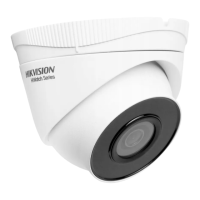


 To Next Page