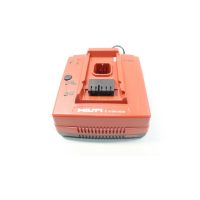
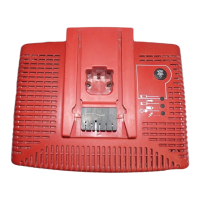
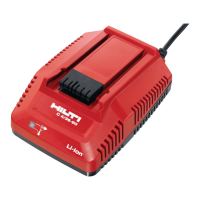
The Hilti SFC 7/18 Charger is designed for charging Hilti batteries with a nominal voltage of 7 to 18 volts. It is crucial to read the operating instructions before using the charger for the first time and to keep them with the device. When passing the charger to others, ensure the instructions are included.
Function Description:
The SFC 7/18 charger is specifically designed to charge a range of Hilti NiCd and NiMH batteries. It features electronic, microprocessor-controlled charging functions, including battery cell temperature monitoring. The charger can accommodate various battery types, including SFB 105, SBP 10, SFB 125, SBP 12, SFB 121, SFB 126, SFB 150, SFB 155, SFB 180, and SFB 185. It incorporates a trickle charging current that is regulated to two levels for both NiCd and NiMH battery packs, preventing damage even if batteries are left in the charger for extended periods. For NiCd packs, the charging current is greatly reduced after 24 hours, and for NiMH packs, after 4 hours, to maintain battery capacity. The charger is designed exclusively for the listed battery types; using other batteries may lead to incorrect temperature monitoring and potential chemical liquid leakage due to overheating.
Important Technical Specifications:
- Mains voltage: 115 Volt, 220-240 Volt
- Frequency (Versions): 50/60 Hz
- Output voltage: 7.2-18.0 V
- Output current for voltage range:
- NiCd 7.2-12.0 V: 5 A
- NiCd 13.3-15.6 V: 4 A
- NiCd 16.8-18.0 V: 3 A
- NiMH 7.2-15.6 V: 4 A
- NiMH 16.8-18.0 V: 3 A
- Trickle charging current: 100-250 mA for all voltage ranges
- Charging time:
- 24 min (NiCd 7.2-12.0 V)
- 30 min (NiCd 13.3-15.6 V)
- 40 min (NiCd 16.8-18.0 V)
- 50 min (NiMH 7.2-15.6 V)
- 60 min (NiMH 16.8-18.0 V)
- Weight: 0.85 kg
- Supply cord length: approx. 2 m
- Dimensions: 194×75×134 mm
- Insulation class: Electrical insulation class II (double insulated)
Usage Features:
- Safety Precautions: Always avoid short circuits, keep the charger away from rain, damp/wet surroundings, flammable liquids, or gases. Check the charger, supply cord, and plug before each use. Handle the supply cord carefully, never carrying the charger by it or unplugging by pulling the cord. Keep the charger and batteries in good condition, clean, and dry. Repairs should only be carried out by authorized Hilti service centers. Keep the charger and battery pack out of reach of children. Maintain a clean and well-lit work area and keep other persons away during operation.
- Connecting to Mains: Connect the charger to a mains supply that matches the voltage specified on the rating plate. A constant green LED indicates the charger is ready. If not, check the mains supply and connection; if the fault persists, take the charger to a Hilti service center.
- Operating Location: Operate the charger in a dry, clean, and cool location, not exposed to frost. Ensure ventilation slots are unobstructed as the charger gives off heat during charging.
- Wall Mounting: The charger can be mounted on a wall using the provided mounting holes. To prevent the battery pack from falling, do not mount the charger on an overhanging wall. Regularly check that the charger is securely mounted.
- Battery Insertion: Insert the battery into the charging compartment until it engages, ensuring it fits correctly.
- Indicators (LEDs):
- Green LED: Lights constantly when connected to mains (ready for operation). Blinks when the battery is not ready to be charged (re-insert battery; if charging doesn't start, refer to the "Care and maintenance" section of the relevant tool's operating instructions).
- Red LED: Lights constantly when the battery is being charged. Blinks when the battery is charged.
- Yellow LED: Lights constantly when the battery is being charged in conditioning charge mode. Blinks when the battery is too cold (approx. 0°C) or too hot (approx. 60°C), indicating charging is not taking place. Charging will automatically resume once the battery reaches the required temperature.
- Conditioning Charge Mode: This mode addresses self-discharge in older batteries where some cells discharge faster than others. It supplies a small current over several hours (6 to 12 hours depending on battery condition) to ensure all cells reach full charge, preventing inadequate battery capacity. To activate, insert the battery and press the conditioning mode button for approximately 2 seconds. The yellow LED will light up. This mode should not be used more than once per month, as overuse may negatively affect battery capacity.
- First Use of Battery: Before first use, batteries must be charged for 24 hours in normal mode or up to 12 hours in conditioning mode to "form" the battery cells.
- Battery Temperature: Battery performance drops at low temperatures; store batteries at room temperature. Avoid storing batteries in high temperatures (e.g., exposed to sun, near radiators).
- Battery Discharge: Never fully discharge a battery. Recharge as soon as performance drops noticeably to prevent damage to cells from deep discharge.
Maintenance Features:
- General Care: Always pull out the mains plug before conducting care and maintenance work.
- Charger Housing: The outer housing is made from impact-resistant plastic.
- Cleaning: Clean the outside of the charger at regular intervals using a slightly damp cloth. Do not use sprays, steam pressure cleaning equipment, or running water, as this may negatively affect electrical safety. Avoid cleaning agents containing silicone. Do not permit foreign objects to enter the charger's interior.
- Ventilation Slots: Never operate the charger when ventilation slots are blocked. Clean them carefully using a dry brush.
- Battery Care: Use a dry cloth to clean battery contacts if necessary.
- Inspection: Regularly check all external parts of the charger for damage and ensure all controls operate faultlessly. If parts are damaged or controls malfunction, the electric tool should be repaired at a Hilti service center.
- Warranty: Hilti warrants the tool is free of defects in material and workmanship for 12 months from the sale date, provided it is operated, handled, cleaned, and serviced according to the operating instructions. Only original Hilti consumables, components, and spare parts may be used. The warranty covers free repair or replacement of defective parts only, excluding normal wear and tear. Additional claims are excluded unless prohibited by national rules.
- Disposal: Most materials from Hilti electric tools are recyclable. Separate materials correctly for recycling. Contact Hilti customer service for information on returning old tools for recycling. If dismantling yourself, separate parts as follows: plastic for outer housing (recycled as plastic), various electronics (recycled as plastic), copper/elastomer sheathed supply cord (recycled as electronic scrap or metal scrap), and steel screws/small parts (recycled as scrap metal). Hilti batteries contain nickel, cadmium, and nickel-metal hydride; dispose of them according to national regulations or return used batteries to Hilti.

 Need help?
 General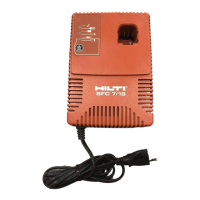

 To Next Page