EasyManua.ls Logo

Hilti C7 - User Manual

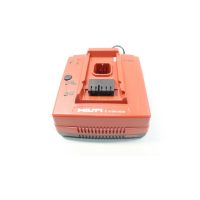
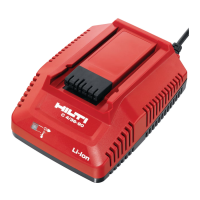
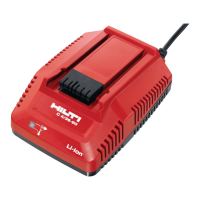
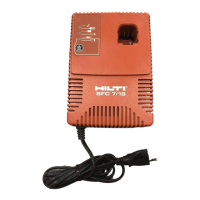
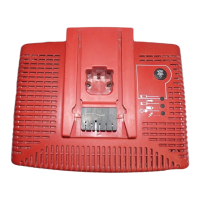
Hilti C7
9 pages
Print Icon
To Next Page IconTo Next Page
Loading...
C7/24,
C7/36-ACS
*378437*
378437
Hilti Corporation
FL-9494 Schaan
Tel.: +423/234 2111
Fax: +423 /234 29 65
www.hilti.com
Hilti = registered trademark of Hilti Corp., Schaan W 2816 0803 1-Pos. 1 1 Printed in Liechtenstein © 2003
Right of technical and programme changes reserved S. E. & O.
378437/B
Bedienungsanleitung de
Operating instructions en
Mode d’emploi fr
Istruzioni d’uso it
Gebruiksaanwijzing nl
Manual de instruções pt
Manual de instrucciones es
Brugsanvisning da
Käyttöohje fi
Bruksanvisning no
Bruksanvisning sv
Οδηγιες χρησεως
el
Kasutusjuhend et
Lietoßanas pamåcîba lv
Instrukcija lt

Other manuals for Hilti C7

Question and Answer IconNeed help?

Do you have a question about the Hilti C7 and is the answer not in the manual?

Summary

C 7;24 and C 7;36-ACS Chargers

General Information

Provides basic information about the product, including signal words and pictograms.

Signal Words and Meanings

Explains the meaning of signal words like CAUTION and NOTE used in the manual.

Pictograms and Symbols

Illustrates and explains various warning signs, alert signs, and symbols used in the manual.

Identification Data Location

Describes where to find the type designation and serial number on the appliance.

Product Description

Items Supplied

Lists the components included with the C 7/24 standard charger or C 7/36-ACS top charger.

Accessories

Details the CA 7/36 adaptor for specific battery models.

Technical Data

Provides technical specifications for both C 7/24 and C 7/36-ACS chargers.

Safety Precautions

Basic Safety Information

General safety advice, emphasizing reading all instructions to avoid risks.

Correct Use of Appliance

Details the intended use, limitations, and prohibitions for the charger.

Workplace Safety Precautions

Advises on maintaining a well-lit, tidy workplace and keeping children away.

General Safety Precautions

Covers general safety practices, including using the correct appliance and environmental considerations.

Electrical Hazards

Details precautions to protect against electric shocks and electrical damage.

Handling Liquids

User Requirements

Specifies that the appliance is for professional use and requires authorized personnel.

Before Use

Suitable Operating Location

Advises operating the charger in a dry, clean, cool place, ensuring ventilation.

Switching On the Charger

Instructions for plugging in the charger and what to expect from indicator lamps.

Operation

Inserting the Battery

Guides on how to insert batteries, including using adaptors for specific models.

Indicator Lights

Explains the meaning of the green, red, and yellow indicator lamps during charging.

Refresh Mode

Details the refresh mode for battery conditioning and its benefits and cautions.

Refresh Mode for C 7;24

Instructions on how to activate and use the refresh mode on the C 7/24 charger.

Refresh Mode for C 7;36-ACS

Explains the automatic refresh mode function on the C 7/36-ACS charger.

Battery Handling and Care

Provides guidance on initial battery charging, usage, and storage conditions.

Care and Maintenance

Appliance Care

Instructions on cleaning the charger's exterior, ventilation slots, and grip surfaces.

General Maintenance Checks

Advises checking external parts and controls for damage and proper operation.

Battery Care

Guidance on keeping battery contacts clean and when to seek diagnostic checks.

Disposal Instructions

Warranty Information

EC Declaration of Conformity

Overview

The Hilti C7/24 and C7/36-ACS are battery chargers designed for professional use, specifically for charging Hilti batteries with nominal voltages ranging from 7.2 to 36 volts. The C7/24 model supports batteries from 7.2 to 24 volts, while the C7/36-ACS model extends this range to 36 volts. These chargers are essential tools for maintaining the performance and longevity of Hilti cordless power tool batteries.

Function Description

The primary function of these chargers is to safely and efficiently recharge Hilti NiCd and NiMH batteries. The charging process is initiated automatically once a battery is fully inserted into the appropriate compartment or interface.

The C7/24 charger features a manual refresh function. This function is crucial for conditioning older batteries, addressing the self-discharge effect where individual cells may lose charge at different rates. By performing a refresh, the charger ensures that all cells receive a full charge, thereby restoring the battery's capacity and extending its life. The refresh mode is activated by pressing and holding the "Refresh" button while inserting the battery, and it is indicated by a constantly lit yellow lamp. Hilti recommends conditioning batteries with the refresh mode at regular intervals, approximately every 30-50 standard charging cycles, but not more than once a month, as excessive refreshing can potentially weaken the battery.

The C7/36-ACS charger, on the other hand, incorporates an automatic refresh function. This intelligent system automatically initiates refresh mode when necessary, based on the battery type. For new batteries, the refresh mode is activated immediately upon the first charge to ensure proper cell "formation." If a refresh cycle is interrupted, the charger will resume it during the next charging cycle. This automatic feature simplifies battery maintenance and ensures optimal performance without manual intervention.

Both chargers employ electronic charging control via a microcontroller, ensuring precise and safe charging. They are designed to prevent damage to batteries even when left in the charger for extended periods after charging is complete.

Important Technical Specifications

  • Charger Types: C7/24 (standard charger) and C7/36-ACS (top charger).
  • Supported Battery Types: NiCd, NiMH.
  • Mains Voltage: Both models support 100-127 V and 220-240 V.
  • Mains Frequency: 50/60 Hz.
  • Output Voltage:
    • C7/24: 7.2-24 V
    • C7/36-ACS: 7.2-36 V
  • Output Power:
    • C7/24: 90 W
    • C7/36-ACS: 200 W
  • Cooling System:
    • C7/24: By convection (passive cooling).
    • C7/36-ACS: Active cooling system.
  • Weight: Approximately 1.0 kg for both models.
  • Supply Cord Length: Approximately 2 m for both models.
  • Dimensions (LxBxH): 170×165×88 mm for both models.
  • Charging Control: Electronic charging control (microcontroller).
  • Protection Class: Electrical protection class II (double insulated).
  • Charging Times: Vary significantly depending on battery voltage, designation, and type (NiCd/NiMH). For example, a 9.6V SBP 10 NiCd battery takes 30 minutes with the C7/24 and 20 minutes with the C7/36-ACS. A 24V B24/3.0 NiMH battery takes 72 minutes with the C7/24 and 30 minutes with the C7/36-ACS. The C7/36-ACS generally offers faster charging times due to its higher output power and active cooling.
  • Year of Design: 2003.
  • Compliance: Both models comply with various EC directives and EN standards (e.g., 73/23/EWG, 89/336/EWG, EN 60335-1, EN 60335-2-29, EN 55014-1, EN 55014-2, EN 61000-3-2, EN 61000-3-3). The C7/36-ACS also complies with 1999/5/EG, EN 300330, EN 301489 for radio interference suppression.

Usage Features

  • Ease of Use: The charging process is largely automatic. Users simply insert the battery, and the charger takes over.
  • Indicator Lamps:
    • Green Lamp (constant): Charger is connected to mains and ready for use.
    • Green Lamp (blinking): Malfunction detected in charger or battery during self-test.
    • Red Lamp (constant): Battery is being charged.
    • Red Lamp (blinking): Battery charging is complete.
    • Yellow Lamp (constant - C7/24): Battery is being charged in refresh mode.
    • Yellow Lamp (blinking): Battery temperature is outside the optimal range (too cold < 0°C or too warm > 60°C), and charging cannot start. Charging will commence automatically once the battery temperature is within the specified range.
  • Adaptor Requirement: For certain battery types (BP 12, BP 40, BP 72, RB 10), the Hilti CA 7/36 adaptor is required for charging. This adaptor is not supplied with the charger and must be purchased separately.
  • Battery Conditioning (Refresh Mode):
    • C7/24: Manual activation via "Refresh" button. Beneficial for restoring capacity in older batteries.
    • C7/36-ACS: Automatic activation, simplifying maintenance and ensuring optimal battery health, especially for new batteries.
  • Temperature Management: The chargers are designed to handle batteries within a specific temperature range. If a battery is too cold or too warm, charging will be delayed until it reaches an optimal temperature. This protects the battery from damage.
  • Safety Features: Built-in self-test upon power-up, malfunction detection, and protection against charging incompatible batteries. The appliance is double insulated for electrical safety.
  • Storage Recommendations: Batteries perform best when stored at room temperature. High temperatures (e.g., direct sunlight, near radiators) can damage batteries.

Maintenance Features

  • General Care:
    • The outer casing, made of impact-resistant plastic, should be cleaned regularly with a slightly damp cloth.
    • Ventilation slots must be kept clear of dust and debris using a dry brush to ensure proper heat dissipation, especially for the convection-cooled C7/24 and the active-cooled C7/36-ACS.
    • Avoid using sprays, steam pressure cleaning equipment, or running water for cleaning, as this can compromise electrical safety.
    • Keep grip surfaces free from oil and grease.
    • Do not use cleaning agents containing silicone.
  • Regular Checks:
    • Periodically inspect all external parts for damage.
    • Ensure all controls operate faultlessly.
    • Check the condition of the supply cord and extension cords regularly, replacing them if damaged.
    • Do not operate the appliance if it is damaged, incomplete, or if controls are faulty.
  • Battery Contact Maintenance: Keep the electrical contacts on the battery free from dust, oil, and grease. Use a clean cloth to clean contact surfaces if necessary.
  • Professional Servicing: Repairs to the electrical section of the appliance should only be carried out by trained electrical specialists or a Hilti service center, using original Hilti spare parts.
  • Battery Diagnostic Check: If battery capacity drops significantly after a long period of use, Hilti recommends returning the battery for a diagnostic check.
  • Disposal: Batteries must be disposed of correctly and safely at the end of their life, in accordance with national regulations. Hilti offers arrangements for taking back old appliances for recycling, and users can also dismantle the appliance for material separation (e.g., plastic, electronics scrap, metal) for recycling. Incorrect disposal can lead to environmental pollution and health hazards from toxic fumes or leaking caustic liquids.

Hilti C7 Specifications

General IconGeneral
BrandHilti
ModelC7
CategoryBattery Charger
LanguageEnglish

Related product manuals