This document is an operation manual for the Hitachi Sanitary Hot Water Heat Pump, specifically models TAW-270NH2A (Tank Unit) and RAW-25NH2A (Outdoor Unit). It provides comprehensive information for installation, operation, maintenance, and troubleshooting.
Function Description:
The Hitachi Sanitary Hot Water Heat Pump is designed to provide sanitary hot water for residential use. It operates by extracting heat from the ambient air using a heat pump system, which is a more energy-efficient method than traditional electric water heaters. The system consists of an indoor tank unit for water storage and an outdoor unit that houses the heat pump compressor and heat exchanger. The unit can operate in different modes, including standard heating, ECO mode for energy saving, and anti-bacteria mode for water sterilization. It also features a boost function for rapid heating and an emergency function in case of outdoor unit failure.
Important Technical Specifications:
- Model Names: TAW-270NH2A (Tank Unit) / RAW-25NH2A (Outdoor Unit)
- Power Source: 1Ø 230V 50Hz
- Maximum Current: 16 A
- Tank Nominal Volume (Vn): 262 dm³
- Setting Temperature of Performance Below: 53 °C
- COPt: 3.09
- Reference Hot Water Temp. (wr): 53.3 °C
- Maximum Quantity of Hot Water (Vmax) (converted to 40°C): 375 L
- Heating Up Time (th): 6 h: 20 min
- Heating Up Energy Input (Weh): 3.84 kWh
- Stand By Effective Power Input (Pes): 30 W
- Electric Heater: 2 kW
- Sound Level: 46 dB(A) (Outdoor Unit)
- Water Tank Rated Pressure: 0.7 MPa
- Outside Air Operating Temperature: -15°C to 37°C
- Temperature Setting Range: 40°C to 65°C
- IP Protection Rating: IPX1 (Tank Unit) / IPX4 (Outdoor Unit)
- Refrigerant: R410a (0.95kg), GWP 2000
- Refrigerant Circuit Pressure (Max): 4.15 MPa
- Tank Material: Stainless Steel SUS304
- Dimensions (W x H x D):
- Tank Unit: 600 x 1,570 x 730 mm
- Outdoor Unit: 750 x 570 x 280 mm
- Net Weight:
- Tank Unit: 63 kg (DRY)
- Outdoor Unit: 38 kg
- Test Condition: EN16147 (Indoor Ambient Air 20°C - Outdoor Air 7°C - Tapping Cycle XL)
- Sound Test Standard: JISZ8731
Usage Features:
- Control Panel: Features a 7-segment LED indicator for water temperature, time, and other information. Includes buttons for START/STOP, ECO mode, Boost, Anti-bacteria, Function, Set, and Up/Down for navigation and setting adjustments.
- Power Supply Systems: Supports both full-time power supply and off-peak power supply systems, with available functionality depending on the power contract.
- Time Setting: Allows users to set the current time and day of the week, crucial for timer operation. An extended power outage (30 minutes or longer) will cancel the time setting.
- Hot Water Temperature Setting: Adjustable from 40°C to 65°C, with a recommended range of 40°C to 55°C for efficient operation. The factory default is 55°C. The operation mode (heat pump only or with electric heater) automatically adjusts based on the set temperature.
- Standard Operation: The unit heats water to the set temperature. The heating operation LED lights up, and blinks during defrosting. Defrosting occurs approximately once an hour for 5-10 minutes when frost forms on the outdoor unit's heat exchanger.
- Timer Function: Two timer settings can be made per day. Users can set the same mode for every day or different modes for each day of the week. This function is only available with a full-time power supply.
- ECO Mode: Uses only the heater pump for heating, without engaging the electric heater, to reduce power consumption. Water temperature can be set between 40°C and 55°C in this mode.
- Anti-bacteria Function: Raises the tank temperature to 65°C once a week to sterilize the water. In a full-time power supply system, it starts at 22:00 on Sunday. In an off-peak system, it runs in one out of every seven operating sessions. This mode uses the electric heater.
- Boost Function: Operates the electric heater and the heat pump at full power to quickly reach the boiling temperature. Not available during anti-bacteria mode.
- Emergency Function: In case of outdoor unit failure (E1 ** error code), the electric heater can be used for emergency operation for a limited time. The water temperature is fixed at 55°C, and ECO, Boost, or Anti-bacteria modes cannot be used.
Maintenance Features:
- Safety Precautions: Emphasizes critical safety measures during installation, handling, and maintenance, including proper grounding, avoiding modifications, installing a pressure-relief valve, and ensuring correct water supply.
- Unit Maintenance: Regular cleaning with a dry cloth or a cloth dampened with kitchen detergent and water. Avoid using harsh chemicals or hot water above 40°C.
- Water Leakage Inspection: Check for leaks from pipe joints and the leak water receiver after filling the tank.
- Monthly Inspection:
- Safety Pressure-Relief Valve: Operate the valve and check for water leaks from the drain pipe.
- Circuit Breaker: Operate the circuit breaker.
- Time Check: Verify and adjust the time setting as needed.
- Yearly Inspection:
- Water Softener Inspection: Set water hardness to 15-20°F.
- Scaling Removal: Authorized personnel should remove scaling from the hot-water tank.
- Ground Connection Inspection: Ensure the unit is properly grounded.
- Outdoor Mounting Frame Inspection: Check for stable installation and rust.
- Regular Inspection and Maintenance for Hot-Water Tank: Includes checking for water leaks, electrical insulation, insulator for piping, electric heater, pressure reducing valves, auto purge valve, and discharging scale sediment.
- Replacement of Parts: Packings, pressure reducing valves, pressure-relief valves, and auto purge valves wear out and may need replacement based on water quality and inspection results.
- Power Failure: Heating operation resumes after a short power outage. For outages lasting 30 minutes or longer, the current time setting must be reset.
- Suspension of Water Supply: Turn off the water heater water valve during water supply interruptions to prevent strainers from clogging and water turbidity.
- Extended Non-Use: For periods of a month or more, turn off the circuit breaker and drain the tank. For shorter periods, turn off the circuit breaker and close the water valve.
- Draining Procedure: Involves turning off the circuit breaker, closing mixer taps, opening hot water knobs, and opening the drain valve.

 Need help?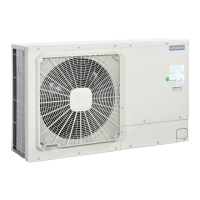


 To Next Page
 General