2
3
ENGLISH
Device Description
The Omni Hysteroscope is intended for use in visualizing the
uterine cavity and performing operative hysteroscopy procedures
including use with the MyoSure Tissue Removal Device. The Omni
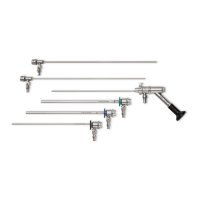
Hysteroscope system includes a base scope with compatible
sheaths of varying working channel size. The removable outflow
channels are intended to be used to provide a fluid outflow lumen
for use with Omni 5.5mm and 6mm Operative Sheaths. The
removable outflow channel includes a sealed entry port to permit
the introduction of instrumentation.
The reusable rod lens hysteroscope utilizes rod lenses for
visualization and fibers for illumination. The hysteroscope includes
Omni 5.5mm and 6mm Operative Sheaths to accommodate the
respective MyoSure Tissue Removal Device. (See Table1.)
The operative hysteroscopy system can be combined with a
hysteroscopic fluid management system to provide continuous flow
hysteroscopy capability. The hysteroscope is normally coupled to a
camera and video display unit for visualization.
Indications for Use
The Omni Hysteroscope is used to provide viewing of the cervical
canal and the uterine cavity for the purpose of performing
diagnostic and surgical procedures.
Diagnostic Hysteroscopy
• Abnormal uterine bleeding
• Infertility and pregnancy wastage
• Evaluation of abnormal hysterosalpingogram
• Intrauterine foreign body
• Amenorrhea
• Pelvic Pain
Operative Hysteroscopy
• Directed biopsy
• Removal of submucous fibroids and large polyps
• Submucous Myomectomy (see Contraindications)
• Transection of intrauterine adhesions
• Transection of intrauterine septa
Contraindications
• Acute pelvic inflammatory disease
Hysteroscopy may also be contraindicated by the following
conditions, depending on their severity or extent:
• Inability to distend uterus
• Cervical stenosis
• Cervical/vaginal infection
• Uterine bleeding or menses
• Known pregnancy
• Invasive carcinoma of the cervix
• Recent uterine perforation
• Medical contraindication or intolerance to anesthesia
Contraindications to Hysteroscopic Myomectomy
Hysteroscopic myomectomy should not be undertaken without
adequate training, preceptorship, and clinical experience. The
following are clinical conditions that can significantly complicate
hysteroscopic myomectomy:
• Severe anemia
• Inability to circumnavigate a myoma due to myoma size (e.g.,
predominantly intramural myomas with small submucous
components).
Warnings
• For use only by physicians trained in hysteroscopy
• Suspicion of pregnancy should suggest a pregnancy test
before the performance of diagnostic hysteroscopy.
• The Omni Hysteroscope set is only to be used in conjunction
with accessories that comply with the following safety
standards: National/Regional versions of IEC 60601-1, the
general safety requirements for medical devices; and, as
applicable, IEC 60601-2-18, particular safety requirements
for endoscope equipment and accessories; and IEC 60601-
2-2, particular safety requirements for High Frequency
(HF) surgical equipment and accessories. Before using any
accessory, be sure to follow the instructions provided with
the accessory, including in the case of a HF electrode, the
maximum recurring peak voltage rating.
• When using HF surgical equipment, keep the working part of
the active electrode in the field of view to avoid accidental
burns.
• The hysteroscope, sheath(s), outflow channel(s) and
accessory components are shipped non-sterile. They must
be thoroughly cleaned and sterilized before each use.
• If each scope light post adapters have been used, they need
to be disassembled, cleaned, and sterilized before every
subsequent use.
• Uterine perforation can result in possible injury to bowel,
bladder, major blood vessels, and ureter.
• High energy radiated light emitted from illuminating fiber
at the distal end of the scope may give rise to temperatures
exceeding 106°F/41°C (within 8mm in front of the scope).
Do not leave tip of scope in direct contact with the patient
tissue or combustible materials, as burns may result. Lower
the light source output when working in close proximity to
the object.
• The hysteroscope light post and adapter may exceed
temperatures of 41°C. Hysteroscopes should not be placed
on the patient or on combustible materials, as burns may
result.
• To prevent potential safety hazard to the patient caused
by accidental loss of function of the device (i.e., front end
damage by surgical instruments) it is recommend to have
an additional sterile “stand-by” device during surgical
procedures.
• When scopes are used with laser equipment, appropriate
filtering spectacles must be worn by the operating team.
In some cases, a specific filter must be put between the
scope and camera head to prevent camera damage by high-
power laser radiation. Contact your laser supplier for details.
To prevent scope damage by high-power laser radiation,
always ensure that the laser delivery fiber is seen through
the scope and not directed at the scope before energizing
the laser.
For Continuous Flow Hysteroscopy:
• If liquid distension medium is used, strict fluid intake and
output surveillance should be maintained. Intrauterine


 To Next Page
 Loading...