EasyManua.ls Logo

Honeywell SIXCOMBO - User Manual

Honeywell SIXCOMBO
4 pages
Print Icon
To Next Page IconTo Next Page
Loading...
SiXCOMBO
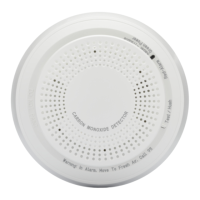
Combination Smoke/Carbon Monoxide (CO) Detector w/Built-in Wireless Transmitter
(features voice and 360 degree viewable LED ring)
Installation and Setup Guide
This device is intended for use with Honeywell control panels that support SiX series devices. Before installing detectors, please
thoroughly read these installation instructions and read the Limitations of Fire Alarm Systems Insert (P/N 800-15144 5/13) and System
Smoke Detectors Application Guide (P/N SPAG9101 7/12).
FEATURES
Multi-Criteria Sensing: uses four
sensing elements to react faster
while minimizing false alarms:
- Photoelectric smoke sensor
detects airborne smoke particles
- Carbon Monoxide (CO) sensor
detects smoldering fires
- Infrared (IR) sensor measures
ambient light and flame
signatures, such as flame flicker
- Thermal detection monitors for
dangerous rise in temperature
Low Temperature sensing:
senses ambient temperature
and reports if temperature goes
below 41°F (5°C).
One Go / All Go: all smoke
detectors in the system
programmed as one-go-all-
go will sound on alarm.
CO Detector End-of-Life
reporting (detector needs
replacing)
Smoke detector maintenance
reporting (detector needs
cleaning)
Low Battery Detection
CO Test
LED
Smoke Test
5800combo-ii 001
( )
( )
IR Flame
Detector
Table 1: Operation Modes
MODE
Status LED
(Top)
LED Windows
(Side)
Sounder
Speaker
Power Up
Blink Green,
every 2 secs
Dark Silent
Voice welcome,
instructions after first
time power up or
after default
Normal
(Standby)
Single Blink
Green every
10 secs
Dark Silent Silent
Smoke
Alarm
Blink R
ed
every 10 secs
Blink red Temp-3 Voice smoke warning
Thermal
Alarm
Blink Red
every 10 secs
Blink red Temp-3 Voice smoke warning
CO Alarm
Blink Red
every 10 secs
Blink blue Temp-4
Voice CO
warning
Powered
Down
Dark Dark Silent Silent
ENROLLMENT
The Smoke, Heat, and Carbon Monoxide (CO) sensors each have
unique MAC ID numbers (serial numbers) that are enrolled in
separate zones.
Once enrolled, the device cannot be used with another system
until it is removed from the current controller. See the 24-hour
Enrollment Deletion section below or the controller’s instructions.
Enroll the Device Services (Smoke, Heat, CO)
1. Remove the detector from the base plate (tamper switch must
be faulted when enrolling).
2. Put the control panel in Zone Programming mode.
For Lyric Controller: Security > installer code > Program >
(scroll down) > SiX Programming
3. Pull the battery tab to activate enrollment process (be sure
batteries are seated properly to avoid a false low battery
condition). If the battery tab has already been removed and the
unit is powered up, press either Test switch for less than 3
seconds to activate the enrollment process.
4. The device attempts enrollment (green LED flashes about 8
seconds). If successful, the green LED lights steady for 3
seconds and the device announces successful enrollment.
If the LED does not light steady, enrollment failed. Retry by
pressing either Test switch for less than 3 seconds.
All services (Smoke, Heat, and CO) are automatically enrolled
in sequential (or next available) zone numbers with the
following default attributes:
Zone Device Type Zone Response Type
Smoke Det.
Smoke Detector Fire No Verification
Heat Det. Heat Sensor Fire No Verification
CO Det. Carbon Mono. Det.
Carbon Monoxide
5800combo-ii 002
Pull Battery Tab
Open
Top
5800 combo-ii-003-USA
2
Serial Number Loop Number
Zone Description 1 Zone Description 2
Zone n
Program
Zones > Serial Number.
LED
Flashes
3a) Test CO
3b) Test Smoke
1
Power - Up
( )English
( )Spanish
Transmission announcment >
Beep > Serial # sent to panel
(approx. 30 secs)
4
Press Test button for 1 sec.
3
Test
or
5
Save
NOTE: Maintenance and CO End-of-Life are automatically
enrolled for the respective smoke and CO zones. Upon either of
these conditions, Contact ID code E386 “Low Maintenance
Smoke” is sent for the respective zone.
Supervision: Detector supervision is factory set for 1 minute
and is not programmable.
5. To assign zone descriptors for each of the zones and/or change
device type or zone response type, select the zone then select
Edit and make the desired changes. Press Save when done.
24
-
Hour Enrollment Deletion
Use this procedure within 24 hours of initial enrollment to delete
this device from the controller. This allows reenrollment in a
specific controller in case enrollment in that controller failed (i.e.,
the device inadvertently enrolled in a different controller). This
resets the device to factory default settings and removes the.
communication link data in the controller in which it is enrolled,
allowing the device to be reenrolled in the desired controller
1. Press and hold both the Smoke and CO test switches
simultaneously for 5 seconds, then release. The green light
flashes rapidly.
2. Press and hold both buttons again for one second and release.
LANGUAGE SELECTION
1. Press and hold both the Smoke and CO test switches
simultaneously for 5 seconds until Welcome message is
announced, then release. The green light flashes rapidly.
2. Pres the Test button corresponding to the desired language:
English: Press the Smoke (•) test button
Spanish: Press the CO (••) test button
MOUNTING
After enrolling, verify adequate signal strength by
conducting Go/No Go tests (see the controller’s
instructions) with the device in its intended mounting
location. Adjust the device location and orientation
as necessary.
1. Using two supplied screws and anchors, mount
the base.
2. Attach the smoke detector to the mounting base
with a clockwise motion.
5800 combo-QG-004
3.Test each detector as described in the Testing
section.
4. Confirm all desired signals have been received
by the Central Station.
NOTE: NFPA 72 recommends the installation of
detectors only after completing construction or any
other dust producing activity.
NOTE: This device should not be located within 5 ft
(1.5 m) of any cooking appliance.

Other manuals for Honeywell SIXCOMBO

Question and Answer IconNeed help?

Do you have a question about the Honeywell SIXCOMBO and is the answer not in the manual?

Summary

Features and Enrollment

Product Features

Details multi-criteria sensing for smoke and CO, voice alerts, and operation modes.

Device Enrollment Process

Step-by-step guide for enrolling the detector's services into the control panel.

Enrollment Deletion

Procedure to delete a device from the controller within 24 hours of initial enrollment.

Language Selection

Instructions for selecting the desired voice language for the detector.

Mounting Instructions

Guidance on properly mounting the detector after enrollment and verifying signal strength.

Testing and System Checks

Smoke Detector Testing

Procedures for performing alarm and functional tests on the smoke detector.

CO Detector Testing

Procedures for performing alarm and functional tests on the CO detector.

Hush Feature and Alarm Silence

How to silence audible alarms for smoke and CO conditions temporarily.

CO Sensor End-of-Life

Information on the CO sensor's limited life and end-of-life reporting.

Signal Strength Testing

Steps to test communication path strength with the control panel.

Detector Maintenance and Specifications

LED Indicators

Explanation of the multi-color top LED and side LED window indications.

Cleaning Procedure

Instructions for cleaning the detector to ensure proper function.

Replacing Batteries

Guidelines for safely replacing the detector's batteries.

Carbon Monoxide Poisoning Symptoms

Details on symptoms of CO exposure at various concentration levels.

Device Specifications

Technical details including electrical, physical, and operating parameters.

Regulatory Information and Support

Approval Listings

Lists the safety and regulatory standards the device complies with.

FCC Compliance Statement

Information regarding FCC rules, interference, and user modifications.

Support and Warranty Information

Links and resources for documentation, support, and warranty details.

Summary

Features and Enrollment

Product Features

Details multi-criteria sensing for smoke and CO, voice alerts, and operation modes.

Device Enrollment Process

Step-by-step guide for enrolling the detector's services into the control panel.

Enrollment Deletion

Procedure to delete a device from the controller within 24 hours of initial enrollment.

Language Selection

Instructions for selecting the desired voice language for the detector.

Mounting Instructions

Guidance on properly mounting the detector after enrollment and verifying signal strength.

Testing and System Checks

Smoke Detector Testing

Procedures for performing alarm and functional tests on the smoke detector.

CO Detector Testing

Procedures for performing alarm and functional tests on the CO detector.

Hush Feature and Alarm Silence

How to silence audible alarms for smoke and CO conditions temporarily.

CO Sensor End-of-Life

Information on the CO sensor's limited life and end-of-life reporting.

Signal Strength Testing

Steps to test communication path strength with the control panel.

Detector Maintenance and Specifications

LED Indicators

Explanation of the multi-color top LED and side LED window indications.

Cleaning Procedure

Instructions for cleaning the detector to ensure proper function.

Replacing Batteries

Guidelines for safely replacing the detector's batteries.

Carbon Monoxide Poisoning Symptoms

Details on symptoms of CO exposure at various concentration levels.

Device Specifications

Technical details including electrical, physical, and operating parameters.

Regulatory Information and Support

Approval Listings

Lists the safety and regulatory standards the device complies with.

FCC Compliance Statement

Information regarding FCC rules, interference, and user modifications.

Support and Warranty Information

Links and resources for documentation, support, and warranty details.

Overview

This document describes the Honeywell SiXCOMBO, a combination smoke and carbon monoxide (CO) detector with a built-in wireless transmitter. It features a voice output and a 360-degree viewable LED ring. This device is designed for use with Honeywell control panels that support SiX series devices.

Function Description

The SiXCOMBO detector utilizes multi-criteria sensing, employing four sensing elements to react faster to threats while minimizing false alarms. These elements include:

  • Photoelectric smoke sensor: Detects airborne smoke particles.
  • Carbon Monoxide (CO) sensor: Detects smoldering fires and the presence of CO gas.
  • Infrared (IR) sensor: Measures ambient light and flame signatures, such as flame flicker.
  • Thermal detection: Monitors for dangerous rises in temperature.

Additionally, the device incorporates low-temperature sensing, which monitors ambient temperature and reports if the temperature drops below 41°F (5°C).

The device supports a "One Go / All Go" feature, meaning that if all smoke detectors in the system are programmed for this mode, they will all sound an alarm when one detects a threat. It also provides CO Detector End-of-Life reporting, indicating when the detector needs replacing, and smoke detector maintenance reporting, signaling when the detector needs cleaning. Low battery detection is also included.

Usage Features

The SiXCOMBO detector offers various operational modes indicated by its multi-color top LED and side LED windows, along with distinct sounder patterns and voice announcements.

Power-Up: Upon power-up, the top LED blinks green every 2 seconds, the side LEDs are dark, and the device is silent. Voice welcome instructions are provided after the first power-up or after a default reset.

Normal (Standby): In normal operation, the top LED blinks green every 10 seconds, side LEDs are dark, and the device remains silent.

Smoke Alarm: During a smoke alarm, the top LED blinks red every 10 seconds, side LEDs blink red, and the sounder emits a Temp-3 pattern with a voice smoke warning.

Thermal Alarm: For a thermal alarm, the top LED blinks red every 10 seconds, side LEDs blink red, and the sounder emits a Temp-3 pattern with a voice smoke warning.

CO Alarm: In a CO alarm, the top LED blinks red every 10 seconds, side LEDs blink blue, and the sounder emits a Temp-4 pattern with a voice CO warning.

Powered Down: When powered down, all LEDs are dark, and the device is silent.

Enrollment: The smoke, heat, and CO sensors each have unique MAC ID numbers (serial numbers) that are enrolled in separate zones. Once enrolled, the device is linked to the current controller until removed. Enrollment involves removing the detector from its base, putting the control panel in Zone Programming mode, pulling the battery tab (or pressing a test switch if already powered up), and allowing the device to attempt enrollment. Successful enrollment is indicated by a steady green LED for 3 seconds and a voice announcement. If enrollment fails, the process can be retried by pressing a test switch. All services (smoke, heat, and CO) are automatically enrolled in sequential zone numbers with default attributes for Fire No Verification (smoke and heat) and Carbon Monoxide (CO).

24-Hour Enrollment Deletion: Within 24 hours of initial enrollment, the device can be deleted from the controller by pressing and holding both the Smoke and CO test switches simultaneously for 5 seconds, then releasing, and then pressing and holding both buttons again for one second. This resets the device to factory defaults and removes its communication link data, allowing re-enrollment.

Language Selection: The device supports language selection. To change the language, press and hold both the Smoke and CO test switches simultaneously for 5 seconds until a welcome message is announced, then release. The green light will flash rapidly. Then, press the Smoke test button for English or the CO test button for Spanish.

Testing: The device has two test buttons: one for smoke testing and one for CO testing. It can be functionally tested using canned smoke and canned CO.

Smoke Test (Alarm Test): Press and hold the Smoke Test button for 1 to 2 seconds. The detector will sound, illuminate, and send a smoke alarm signal to the control panel.

Smoke System Test (Functional Smoke Test): Press and hold the Smoke Test button for 3 to 5 seconds to enter functional smoke test mode. Spray canned smoke into the detector to verify its functionality.

CO Test (Alarm Test): Press and hold the CO Test button for 1 to 2 seconds. The control panel should display and sound a CO alarm.

CO System Test (Functional CO Test): Press and hold the CO Test button for 3-5 seconds to enter functional gas test mode. While the green LED blinks, spray a small amount of canned CO into the CO gas entry port. Upon successful gas entry, the detector will go into CO alarm.

Hush Feature / Alarm Silence: The audible alarm for smoke and CO conditions can be silenced for 5 minutes by pushing the "Test/Hush" button. Low chirping can also be silenced for 12 hours. The hush feature will not operate at high smoke or CO concentrations.

CO Sensor End-of-Life Feature: When the CO sensor reaches its end-of-life, a trouble signal is sent to the control panel. If unresolved for 30 days, the detector will chirp every 45 seconds. The typical life of the CO sensor is ten years from the date of manufacture.

Low Battery: When the battery is low, the top LED blinks amber every 10 seconds, side LEDs are dark, and the device chirps every 45 seconds after 7 days. Voice instructions are provided when the chirp is silenced by pressing either test button.

Smoke Maintenance: For smoke maintenance issues, the top LED blinks amber every 5 seconds, side LEDs are dark, and the device is silent. Voice smoke maintenance instructions are provided if either test button is pressed.

CO Trouble: For CO trouble, the top LED double blinks amber every 5 seconds, side LEDs are dark, and the device is silent. Voice end-of-life instructions are provided when either test button is pressed.

CO End of Life: For the first 29 days of CO end-of-life, the top LED double blinks amber every 3 seconds, side LEDs are dark, and the device is silent. After 30 days, the top LED double blinks amber every 3 seconds, side LEDs are dark, and the device chirps every 45 seconds. Voice end-of-life instructions are provided when either test button is pressed.

Freeze Warning (Low Temp): For a low-temperature freeze warning, the top LED blinks red every 10 seconds, side LEDs are dark, and the device is silent.

Maintenance Features

LED Indicators: The multi-color top LED indicates:

  • Green: Supervisory indication (blinks during power on, reset, and normal operation).
  • Amber: Signal maintenance and trouble events.
  • Red: Alarm condition (either smoke or CO). Side LED windows indicate:
  • Red: Smoke alarm.
  • Blue: CO alarm.

Cleaning: The detector should be cleaned at least once a year.

  1. Remove the detector from the base plate by turning counterclockwise.
  2. Clean the outside casing with a cloth, ensuring the holes on the front are not blocked by dirt or dust. Canned air can be used to remove dust or debris.
  3. Reattach the detector to the base plate by rotating clockwise.
  4. Test the detector to ensure full functionality.
  5. Notify proper authorities and the Central Station when the system is back in service.

Replacing the Batteries: The device uses four Panasonic CR123A Lithium batteries.

  1. Remove old batteries.
  2. Wait 10 seconds.
  3. Replace with four new batteries, ensuring all 4 batteries are installed within 15 seconds of installing the first one to avoid a false low battery indication.

CO Sensor End-of-Life: The CO sensor has a typical life of ten years from the date of manufacture. It is recommended to periodically check the "Replace by" sticker located on the back of the detector head for the replacement date. The device will signal the panel when the CO sensor has passed its end-of-life.

General Maintenance: Do not paint, and do not use cleaning agents, bleach, or polish the detector. Before performing any maintenance, notify the proper authorities and Central Station that maintenance is being performed. Disable the zone or system undergoing maintenance to prevent unwanted alarms. Power must be removed from the detector before performing maintenance.

The SiXCOMBO detector reports maintenance issues to the control panel and communicates them visually and audibly. A "Trouble" feature indicates when the sensor is in a trouble condition (e.g., dirty detector or non-functioning CO sensor), sending a trouble signal to the control panel.

Honeywell SIXCOMBO Specifications

General IconGeneral
Battery LifeUp to 5 years
Operating Temperature0°C to 38°C
MountingCeiling or Wall
ComplianceFCC
Battery Type3V Lithium (CR123A)
CompatibilityHoneywell

Related product manuals