
 Need help?
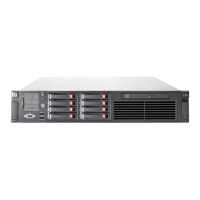
Do you have a question about the HP ProLiant DL385 SAS and is the answer not in the manual?
Components like PCBs/PCAs with a surface greater than 10 sq cm.
All types of batteries, including alkaline and lithium coin/button styles.
Components containing mercury, e.g., in lamps and backlights.
LCDs larger than 100 sq cm, often with gas discharge lamps.
CRT displays requiring selective treatment.
Capacitors, including those containing PCB/PCT.
Electrolytic capacitors over 2.5 cm in diameter or height.
External power and data cables.
Lamps that operate via gas discharge.
Plastic parts containing brominated flame retardants.
Parts with toner/ink, gels, or pastes.
Components or waste containing asbestos material.
Materials containing refractory ceramic fibers.
Components with radioactive substances.
Tool for removing Torx screws, size T-15 Bit.
Tool for removing Philips screws, size #2.
Medium-sized flat head screwdriver for general use.
Steps to remove the system board battery using a flat head screwdriver.
Steps to remove capacitors (>2.5CM) using Philips and flat head screwdrivers.
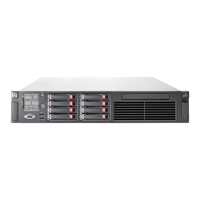
Diagram showing component locations and assembly.
Diagram illustrating the location of the system battery on the PCA.
Image showing the location of capacitors to be removed.
This document outlines the end-of-life disassembly instructions for HP ProLiant DL385 SAS servers, specifically models DL385R01O-NVP1-2.2GHz and DL385R01O-NVQ1-1.8GHz. The primary function of this guide is to assist end-of-life recyclers and treatment facilities in the proper disassembly of these server products. It provides essential instructions for removing components and materials that require selective treatment, as mandated by the EU directive 2002/96/EC concerning Waste Electrical and Electronic Equipment (WEEE). By following these guidelines, recyclers can ensure environmentally responsible disposal and recovery of materials, minimizing the ecological impact of electronic waste.
The selective treatment process is crucial for managing hazardous substances and valuable resources found within electronic devices. This manual details specific items within the server that necessitate special handling. These include printed circuit boards (PCBs) or printed circuit assemblies (PCAs) with a surface area greater than 10 square centimeters, which are common in servers due to their complex processing requirements. The document specifies that there are six such PCBs/PCAs within the HP ProLiant DL385 SAS server.
Batteries are another key component requiring selective treatment. The server contains one battery, which can be of various types, including standard alkaline, lithium coin, or button-style batteries. These batteries often contain chemicals that are harmful to the environment if not disposed of properly, making their removal and separate treatment essential.
Mercury-containing components, while not explicitly quantified in this document for this specific server model, are generally highlighted as items needing selective treatment in the broader context of WEEE. Examples typically include mercury in lamps, display backlights, scanner lamps, switches, and other types of batteries. The absence of a quantity for this item suggests that the HP ProLiant DL385 SAS server likely does not contain such components, or if it does, they are not present in a quantity that requires specific mention beyond the general category.
Liquid Crystal Displays (LCDs) with a surface greater than 100 square centimeters are also listed. This category includes displays with background illumination provided by gas discharge lamps. Similar to mercury-containing components, no specific quantity is provided for this server, implying that large LCDs are not a significant feature or are not present in a manner requiring selective treatment in this particular model.
Cathode Ray Tubes (CRTs) are mentioned as a general category for selective treatment, but again, no quantity is listed for this server, indicating their absence. This is expected for modern servers, which typically do not use CRT technology.
Capacitors and condensers, particularly those containing PCB/PCT, are critical items for selective treatment. The manual specifically identifies electrolytic capacitors or condensers measuring greater than 2.5 cm in diameter or height. The HP ProLiant DL385 SAS server contains two such capacitors. These components can store significant electrical charges and may contain hazardous materials, necessitating careful removal and disposal.
Other items requiring selective treatment, but not quantified for this specific server, include external electrical cables and cords, gas discharge lamps, plastics containing brominated flame retardants, components and parts containing toner and ink (including liquids, semi-liquids, and toner), components and waste containing asbestos, components, parts, and materials containing refractory ceramic fibers, and components, parts, and materials containing radioactive substances. The inclusion of these categories in the general list underscores the comprehensive nature of WEEE directives, even if they are not present in every product. For instance, the mention of toner and ink components is more relevant to printers, but its presence in the general list ensures all potential electronic waste elements are covered.
To facilitate the disassembly process, the manual specifies the tools required. These include a Torx Driver with a T-15 Bit, a Philips Driver (#2), and a Flat Head Screw Driver (medium size). These tools are standard for electronic device repair and disassembly, ensuring that recyclers can easily access and remove the necessary components.
The disassembly process itself is outlined in a step-by-step manner. The first step involves removing the system board battery. This requires removing the top cover of the server, locating the battery on the system board, and then using a medium flat head screwdriver to carefully remove it for proper disposal. This highlights the importance of isolating potentially hazardous components early in the disassembly process.
The second step focuses on the capacitors larger than 2.5 cm. This involves removing the power supply units from the system. Once the power supplies are accessible, a #2 Philips screwdriver is used to remove the screws securing the top cover and the heatsinks within the power supply. After these are removed, the capacitors can be located and pried from the PCB using a medium flat head screwdriver. This detailed instruction ensures that these specific capacitors, which are identified as requiring selective treatment, are safely extracted.
The document also includes optional graphic illustrations to aid in complex disassembly processes. These attachments provide visual guidance for identifying items that require selective treatment. Attachment 1 is a general disassembly diagram, illustrating the overall structure of the server and pointing out key areas where components are located. This diagram helps recyclers understand the spatial arrangement of parts. Attachment 2 specifically shows the location of the system battery on the system PCA (Printed Circuit Assembly), with an arrow indicating the battery to be removed. This visual aid is crucial for quickly identifying the small battery on a potentially crowded circuit board. Attachment 3 provides a clear image of the two capacitors located within the power supply unit, with an arrow pointing to them, ensuring that recyclers can easily identify and remove these specific components.
In summary, this manual serves as a critical guide for the responsible end-of-life management of HP ProLiant DL385 SAS servers. It meticulously details the components requiring selective treatment, the tools needed for disassembly, and the step-by-step procedures for removing these items. By adhering to these instructions, recyclers can effectively comply with environmental regulations, recover valuable materials, and mitigate the environmental impact of electronic waste, contributing to a more sustainable lifecycle for electronic products. The emphasis on specific components like PCBs, batteries, and large capacitors, along with clear visual aids, makes this a practical and essential resource for anyone involved in the recycling and treatment of these server models.
 General
| Processor | AMD Opteron |
|---|---|
| Form Factor | 2U Rack |
| Number of Processors Supported | 2 |
| Storage | SAS |
| Network | Embedded Gigabit Ethernet |
| Expansion Slots | 6 |
| Power Supply | Redundant options available |


 To Next Page