35
LP- 293 REV. 9.2.14
3” PVC CONCENTRIC VENT TERMINATION KIT
3” STAINLESS STEEL VENT TERMINATION KIT
4” STAINLESS STEEL VENT TERMINATION KIT
6” STAINLESS STEEL VENT TERMINATION KIT
Table 12
H. VENTING DRAWINGS
1. DIRECT VENT INSTALLATION OF EXHAUST VENT AND INTAKE PIPE
If installing a direct vent option, combustion air must be drawn from the outdoors directly into the appliance intake, and exhaust must
terminate outside. There are three basic direct vent options detailed in this manual: 1. Side Wall Venting, 2. Roof Venting, and 3.
Unbalanced Venting.
Be sure to locate the appliance such that the exhaust vent and intake piping can be routed through the building and properly
terminated. Different vent terminals can be used to simplify and eliminate multiple penetrations in the building structure (see Optional
Equipment in Venting Section). The exhaust vent and intake piping lengths, routing and termination methods must all comply with the
methods and limits given in the Venting section of this manual.
When installing a combustion air intake from outdoors, care must be taken to utilize uncontaminated combustion air. NOTE: To
prevent combustion air contamination, see Table 1.
Take extra precaution to adequately support the weight of vent pipes terminating through the roof. Failure to properly support roof
terminated vent piping could result in property damage, serious personal injury, or death due to flue gas leakage.
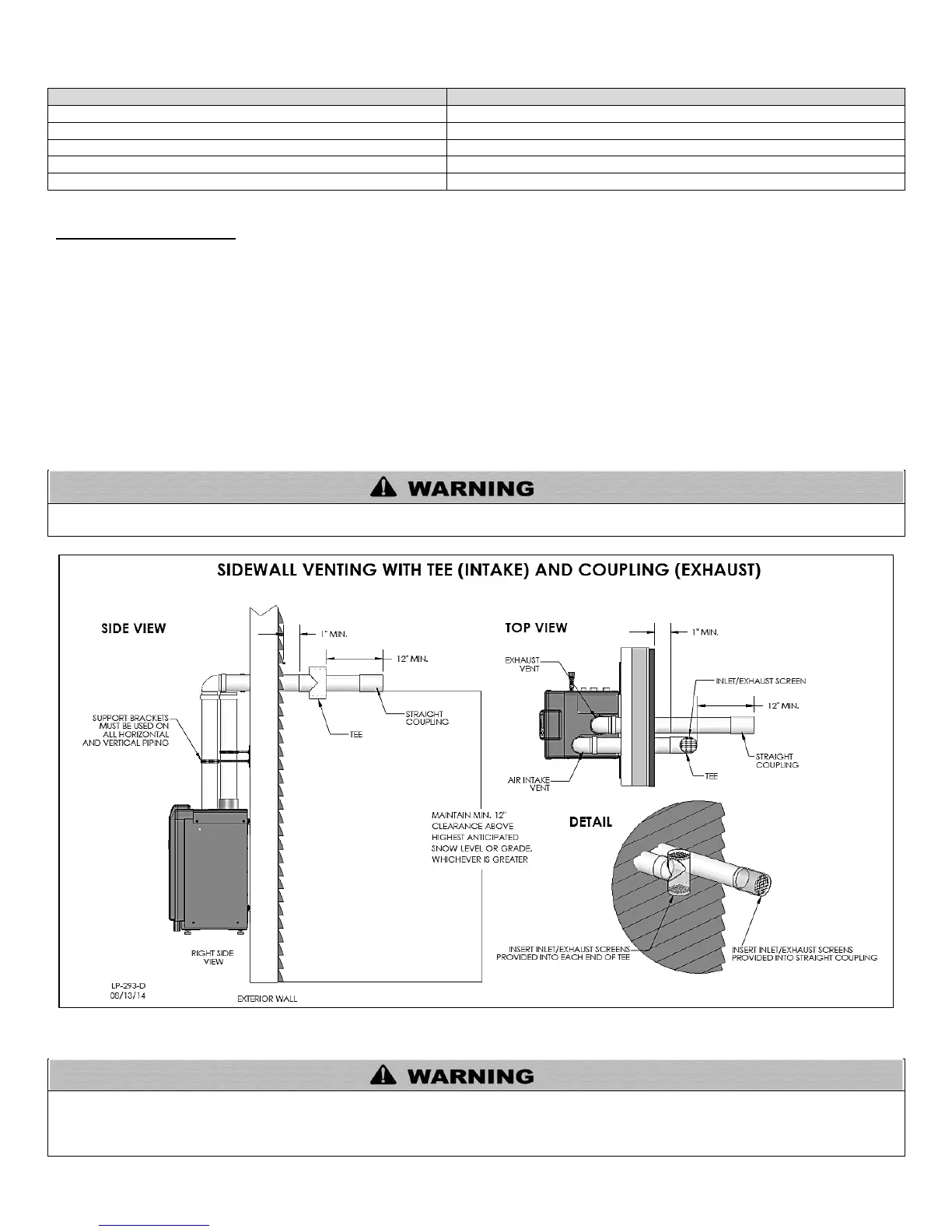
Figure 14 – Sidewall Venting with Tee (Intake) and Coupling (Exhaust) NOTE: Drawing is meant to demonstrate system
venting ONLY.
All vent pipes must be glued, properly supported, and the exhaust must be pitched a minimum of ¼” per foot back to the boiler to allow
drainage of condensate. When placing support brackets on vent piping, the first bracket must be within 1 foot of the boiler and the
balance at 4 foot intervals on the vent pipe. Boiler venting must be readily accessible for visual inspection for the first three feet from the
boiler.



 To Next Page