EasyManua.ls Logo

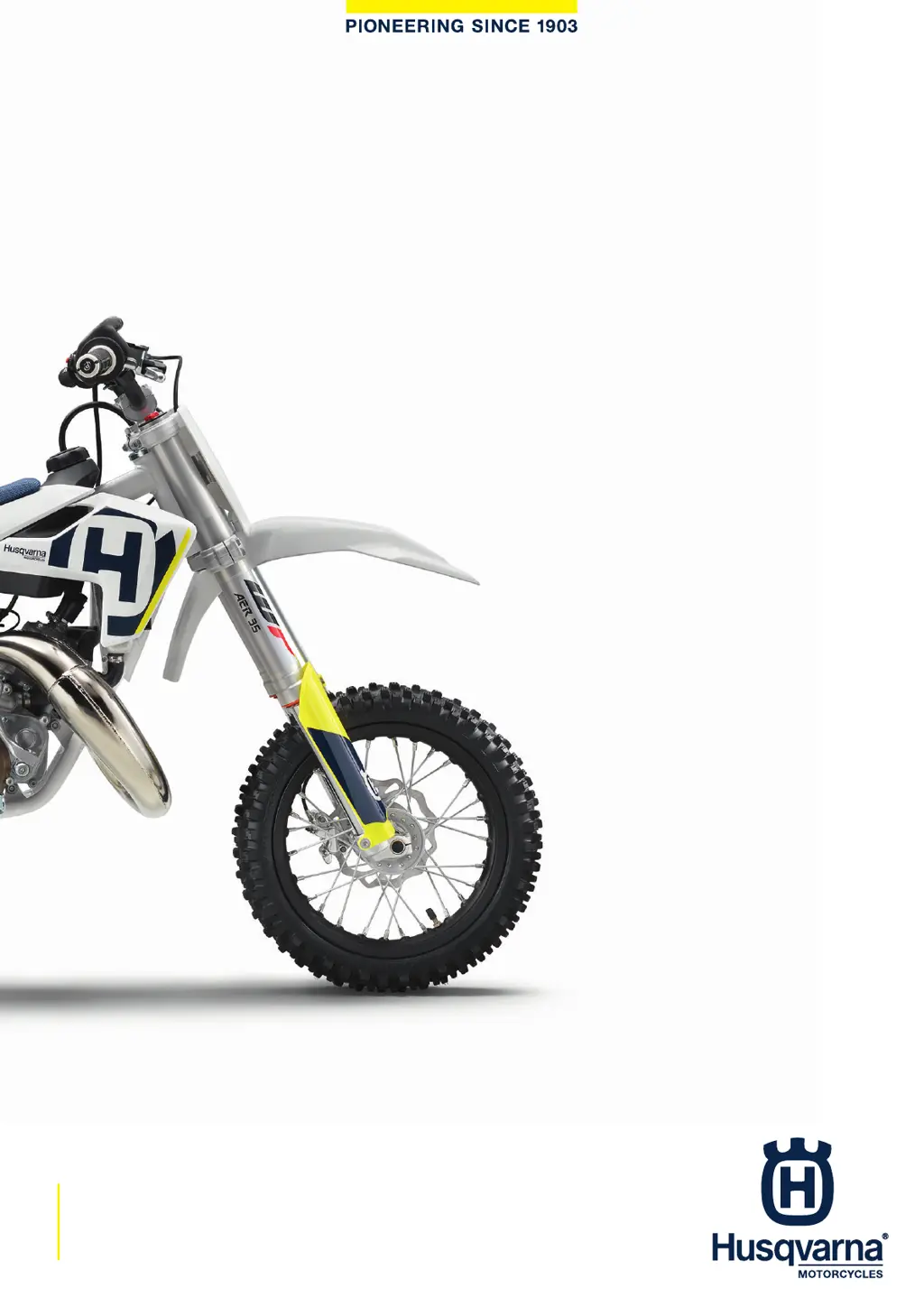
Husqvarna TC 50 - User Manual

Husqvarna TC 50
137 pages
Print Icon
To Next Page IconTo Next Page
Loading...
OWNER'S MANUAL 2018
TC 50
TC 50 Mini
Art. no. 3402161en

Table of Contents

Questions and Answers

  • R
    Robin ButlerAug 14, 2025
    What to do if my Husqvarna TC 50 engine overheats?
    • A
      Andre BlackwellAug 14, 2025
      If your Husqvarna Motorcycle engine overheats, start by checking the coolant level and inspecting the cooling system for leaks. Ensure there's sufficient airflow, and switch off the engine when standing still. Clean any dirt from the radiator fins. If there's foam in the cooling system, drain and refill the coolant. Also, check the cylinder head and cylinder head gasket for damage. A bent radiator hose should be replaced.
  • C
    Christopher JonesAug 17, 2025
    Why is gear oil coming out of the vent hose on my Husqvarna TC 50 Motorcycle?
    • C
      chris48Aug 17, 2025
      If gear oil is exiting at the vent hose of your Husqvarna Motorcycle, it's likely because too much gear oil was added. Check the gear oil level.
  • M
    Melissa BarrAug 20, 2025
    How to fix a Husqvarna Motorcycle that turns over but won't start?
    • C
      Charles HarrisAug 20, 2025
      If your Husqvarna Motorcycle engine turns but doesn't start, several factors could be at play. It might be an operating error during the start procedure, or old fuel in the float chamber if the motorcycle hasn't been used for a while, in which case you should empty the carburetor float chamber. Check for any interruption in the fuel supply by inspecting the fuel tank breather and cleaning the fuel tap. A spark plug that's oily or wet should be cleaned, dried, or replaced. Ensure the spark plug electrode gap is correctly adjusted to 0.60 mm (0.0236 in). Problems in the ignition system or a defective kill switch can also prevent starting, so those should be checked. Also, clean any loose or oxidized connectors with contact spray. Water in the carburetor or blocked jets can also be a cause.
  • B
    Billy CooperAug 25, 2025
    Why does my Husqvarna Motorcycle engine have so little power?
    • J
      janetwilliamsAug 25, 2025
      If your Husqvarna Motorcycle engine has too little power, the issue could stem from several causes. Check if the fuel supply is interrupted by inspecting the fuel tank breather and cleaning the fuel tap. A very dirty air filter can restrict airflow, so clean the air filter and air filter box. Inspect the exhaust system for leaks or deformation, and consider changing the glass fiber yarn filling in the main silencer. Issues with the ignition system, such as a defective ignition coil or spark plug connector, can also reduce power. Additionally, check the diaphragm and reed valve housing for damage. Significant wear may necessitate an engine overhaul. Finally, verify that the clutch engagement speed is properly set.
  • J
    Joshua JensenAug 27, 2025
    How to troubleshoot a Husqvarna TC 50 Motorcycle engine with no idle?
    • W
      Wanda MccormickAug 27, 2025
      If your Husqvarna Motorcycle engine has no idle, several things could be wrong. The idling jet might be blocked. Also, check if the adjusting screws on the carburetor are positioned incorrectly. A defective spark plug can cause idling issues, so replace it. Finally, inspect the ignition system, including the ignition coil and spark plug connector.
  • M
    Maria TaylorAug 30, 2025
    Why does my Husqvarna Motorcycle engine stall or pop into the carburetor?
    • D
      Dr. Jessica CarlsonAug 30, 2025
      If your Husqvarna Motorcycle engine stalls or pops into the carburetor, it could be due to a lack of fuel. Ensure the fuel tap is fully counterclockwise and refuel if necessary. The engine might be taking in bad air, so check the intake flange and carburetor for tightness. Also, make sure that the connector or ignition coil is not loose or oxidized, and clean the plug-in connection with contact spray.
  • J
    joyce91Sep 2, 2025
    What causes a Husqvarna TC 50 Motorcycle engine not to speed up?
    • K
      Kelly ObrienSep 3, 2025
      If your Husqvarna Motorcycle engine does not speed up, it could be due to a few reasons. The carburetor might be overflowing because the float needle is dirty or worn. Loose carburetor jets can also cause this issue. Additionally, a fault in the ignition system could be the culprit, so it should be checked.
  • F
    Frank KnightSep 6, 2025
    Why is my Husqvarna Motorcycle emitting white smoke?
    • J
      James McdanielSep 6, 2025
      If your Husqvarna Motorcycle is emitting white smoke (steam) in the exhaust gas, it could be due to a damaged cylinder head or cylinder head gasket. In this case, you should check the cylinder head or cylinder head gasket.
  • D
    Deanna MurraySep 9, 2025
    How do I fix water in the gear oil of my Husqvarna TC 50?
    • R
      Raymond HunterSep 10, 2025
      If there's water in the gear oil of your Husqvarna Motorcycle, it could be due to a damaged shaft seal ring or water pump. Check the shaft seal ring and water pump.

Summary

1 Means of Representation

1.1 Symbols Used

Explains the meaning of symbols used in the manual.

1.2 Formats Used

Details the typographical formats used for names, brands, and terms.

2 Safety Advice

2.1 Use Definition - Intended Use

Defines the vehicle's intended purpose and compliance with motorsport standards.

2.4 Degrees of Risk and Symbols

Explains the risk categories and corresponding warning symbols used.

2.6 Safe Operation

Provides critical safety warnings regarding accidents, poisoning, and burns during operation.

2.10 Owners Manual

Highlights the manual's importance for operation, handling, and maintenance.

3 Important Notes

3.1 Manufacturer and Implied Warranty

Explains warranty voidance due to unauthorized work and conversions.

3.4 Service

Stresses the importance of proper service for operation, wear prevention, and longevity.

4 View of Vehicle

4.1 View of Vehicle, Front Left (Example)

Illustrates and labels key components visible from the front left view.

4.2 View of Vehicle, Rear Right (Example)

Illustrates and labels key components visible from the rear right view.

5 Serial Numbers

5.1 Chassis Number

Indicates the location of the chassis number stamped on the steering head.

5.3 Engine Number

Identifies the engine number's location on the engine's left side.

6 Controls

6.1 Hand Brake Lever

Describes the hand brake lever and its function for the front brake.

6.3 Kill Switch

Explains the kill switch's location and its function in stopping the engine.

6.4 Opening Filler Cap

Provides safety warnings regarding refueling and how to open the fuel filler cap.

6.8 Fuel Tap

Describes the fuel tap's location and its open/closed states.

6.9 Choke (TC 50)

Explains the choke's function for cold starts and its operation on the TC 50.

6.13 Plug-in Stand

Describes the fixture for the plug-in stand and its purpose for parking.

7 Preparing for Use

7.1 Advice on First Use

Provides crucial safety advice and readiness checks before the first ride.

8 Riding Instructions

8.1 Checks and Maintenance Measures When Preparing for Use

Lists pre-ride checks and maintenance for safe vehicle operation.

8.2 Starting the Vehicle

Details safety precautions and notes for starting the engine.

8.4 Riding

Offers advice on handling the vehicle during riding, including throttle use and engine idling.

8.5 Applying the Brakes

Warns about brake application, potential issues, and proper technique.

8.6 Stopping, Parking

Covers safe practices for stopping, parking, and fire hazards.

9 Service Schedule

9.1 Additional Information

Provides notes on service work and country-specific intervals.

9.2 Required Work

Lists essential maintenance tasks and their recommended intervals.

10 Tuning the Chassis

10.1 Checking the Basic Chassis Setting with the Riders Weight

Explains how to adjust suspension based on rider weight for optimal characteristics.

10.2 Air Suspension AER 35 (TC 50)

Describes the air suspension system used in the TC 50 fork.

10.4 Adjusting the Low-Speed Compression Damping of the Shock Absorber (TC 50)

Details the procedure for adjusting low-speed compression damping on the TC 50 shock absorber.

10.5 Adjusting the High-Speed Compression Damping of the Shock Absorber (TC 50)

Guides on adjusting high-speed compression damping for the TC 50 shock absorber.

10.6 Adjusting the Rebound Damping of the Shock Absorber

Explains how to adjust the rebound damping of the shock absorber.

10.8 Checking the Static Sag of the Shock Absorber

Guides on checking the static sag of the shock absorber.

10.10 Adjusting the Spring Pretension of the Shock Absorber

Provides instructions for adjusting the spring pretension of the shock absorber.

10.12 Checking the Basic Setting of the Fork

Explains how to check the basic settings of the fork.

10.13 Adjusting the Fork Air Pressure (TC 50)

Details how to adjust the air pressure in the fork for the TC 50.

10.17 Adjusting the Seat Height

Explains how to adjust the seat height of the motorcycle.

11 Service Work on the Chassis

11.1 Raising the Motorcycle with a Lift Stand

Details the procedure for safely raising the motorcycle using a lift stand.

11.3 Bleeding the Fork Legs

Guides on bleeding the fork legs to remove air and maintain suspension performance.

11.4 Cleaning the Dust Boots of the Fork Legs

Describes the process of cleaning fork dust boots to prevent seal leaks.

11.7 Removing the Fork Legs

Explains how to remove the fork legs from the motorcycle.

11.9 Removing the Lower Triple Clamp

Guides on removing the lower triple clamp assembly.

11.11 Checking Play of Steering Head Bearing

Explains how to check for play in the steering head bearing.

11.14 Removing the Fuel Tank

Provides safety warnings and steps for removing the fuel tank.

11.20 Removing the Right Side Cover

Explains how to remove the right side cover.

11.23 Removing the Left Side Cover

Explains how to remove the left side cover.

11.26 Removing the Shock Absorber

Details the steps for removing the shock absorber.

11.28 Removing the Seat

Explains how to remove the seat from the motorcycle.

11.30 Removing the Air Filter

Guides on removing the air filter and its cover.

11.33 Removing the Main Silencer

Details the steps for removing the main silencer.

11.38 Checking the Chain for Dirt

Guides on checking the drive chain for accumulated dirt.

11.39 Cleaning the Chain

Details the process for cleaning the drive chain.

11.42 Checking the Chain, Rear Sprocket, Engine Sprocket and Chain Guide

Covers checking wear on drive chain components and guides.

11.44 Checking the Frame

Guides on checking the motorcycle frame for cracks or deformation.

11.46 Checking the Routing of the Throttle Cable

Details how to check the throttle cable routing for safety.

12 Brake System

12.1 Checking Play of Handbrake Lever

Guides on checking the free play of the hand brake lever.

12.4 Checking the Brake Discs

Guides on checking the thickness and condition of the brake discs.

12.5 Checking the Front Brake Fluid Level

Details how to check the front brake fluid level and related warnings.

12.6 Adding Front Brake Fluid

Provides instructions and safety advice for adding front brake fluid.

12.7 Checking the Front Brake Linings

Guides on checking the minimum thickness and condition of front brake linings.

12.9 Checking the Free Travel of the Foot Brake Lever

Explains how to check the free travel of the foot brake lever.

12.12 Checking the Rear Brake Fluid Level

Guides on checking the rear brake fluid level and related warnings.

12.14 Checking the Rear Brake Linings

Guides on checking the minimum thickness and condition of rear brake linings.

13 Wheels, Tires

13.1 Removing the Front Wheel

Details the steps for removing the front wheel.

13.3 Removing the Rear Wheel

Explains how to remove the rear wheel.

13.5 Checking the Tire Condition

Guides on checking tire condition, tread depth, and damage.

13.6 Checking Tire Air Pressure

Details how to check and correct tire air pressure.

14 Cooling System

14.2 Checking the Antifreeze and Coolant Level

Guides on checking antifreeze protection and coolant levels with safety warnings.

14.3 Checking the Coolant Level

Details how to check the coolant level in the radiator with safety advice.

14.4 Draining the Coolant

Explains the procedure for draining the coolant.

15 Tuning the Engine

15.1 Checking the Installation Position of the Throttle Grip

Guides on checking and adjusting the throttle grip installation position.

15.2 Checking the Play in the Throttle Cable

Details how to check and adjust the play in the throttle cable.

15.3 Adjusting the Play in the Throttle Cable

Explains the procedure for adjusting the throttle cable play.

15.5 Carburetor - Idle (TC 50 Mini)

Covers the idle setting for the TC 50 Mini carburetor.

15.6 Carburetor - Adjusting the Idle Speed (TC 50)

Guides on adjusting the idle speed for the TC 50 carburetor.

15.8 Checking the Clutch Setting

Explains how to check the clutch setting using a tachometer.

15.10 Adjusting the Clutch

Details the procedure for adjusting the clutch.

16 Service Work on the Engine

16.1 Checking Oil Level (TC 50 Mini)

Guides on checking the engine oil level in the TC 50 Mini.

16.3 Checking the Gear Oil Level

Explains how to check the gear oil level.

16.4 Changing the Gear Oil

Guides on changing the gear oil with safety warnings.

17 Cleaning, Care

17.1 Cleaning the Motorcycle

Provides instructions and warnings for cleaning the motorcycle.

18 Storage

18.1 Storage

Outlines the steps for preparing the motorcycle for long-term storage.

18.2 Preparing for Use After Storage

Details the procedure for getting the motorcycle ready after storage.

19 Troubleshooting

Engine Turns But Does Not Start

Lists possible causes and actions for the engine not starting.

Engine Has No Idle

Identifies causes and solutions for the engine lacking idle.

Engine Has Too Little Power

Lists causes and actions for the engine having insufficient power.

Engine Overheats

Lists causes and actions for the engine overheating.

20 Technical Data

20.1 Engine

Provides specifications for the engine design, displacement, bore, stroke, etc.

20.2 Engine Tightening Torques

Lists the specified tightening torques for various engine components.

20.3 Carburetor with Carburetor Tuning

Details carburetor types and tuning specifications for TC 50 and TC 50 Mini.

20.5 Chassis

Provides technical data for the chassis, frame, suspension, and brakes.

20.7 Fork

Lists technical data for the fork, including part numbers and settings.

20.9 Chassis Tightening Torques

Lists specified tightening torques for various chassis components.

21 Substances

Brake Fluid DOT 4

Specifies standards and recommended suppliers for brake fluid.

Coolant

Details coolant requirements, antifreeze protection, and recommended suppliers.

Engine Oil, 2-Stroke

Specifies standards and recommended suppliers for 2-stroke engine oil.

22 Auxiliary Substances

23 Standards

24 List of Abbreviations

Husqvarna TC 50 Specifications

General IconGeneral
Displacement49cc
Rear SuspensionWP XACT Monoshock
Front BrakeDisc brake
Rear BrakeDisc brake
Bore/Stroke39.5 mm / 40 mm
StarterKickstarter
Engine TypeSingle-cylinder, 2-stroke
Cooling SystemLiquid cooled
TransmissionSingle Speed Automatic
Front SuspensionWP XACT 35
Fuel Capacity2.3 liters
Front Brake TypeDisc
Rear Brake TypeDisc
Weight (without fuel)41.5 kg
FrameCentral Tube Frame, High Strength Steel

Related product manuals