EasyManua.ls Logo

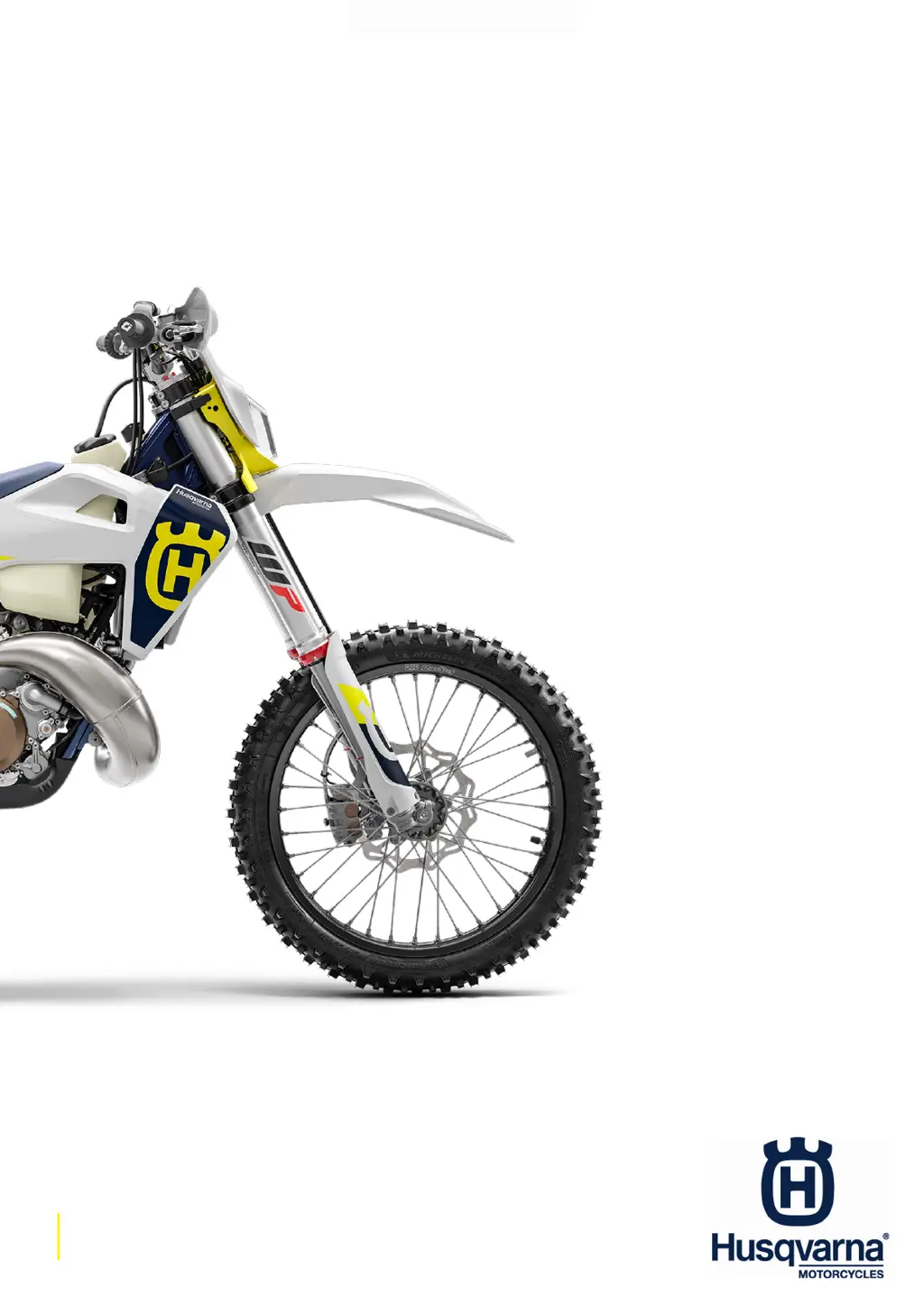
Husqvarna TE 150 2023 - User Manual

Husqvarna TE 150 2023
168 pages
Print Icon
To Next Page IconTo Next Page
Loading...
OWNER'S MANUAL 2023
TE 150
Art. no. 3402634en

Table of Contents

Questions and Answers

  • J
    jmccarthyAug 16, 2025
    Why does my Husqvarna Motorcycle engine have too little power?
    • E
      Edward ThompsonAug 16, 2025
      Several factors can cause a Husqvarna Motorcycle engine to have insufficient power. The air filter, fuel filter, or fuel screen might be very dirty and need cleaning or changing. There could be a malfunction in the electronic fuel injection, a fuel supply interruption, leaks in the exhaust system, or damage to the diaphragm or reed valve housing. Faulty ignition or incorrectly stored ambient pressure can also contribute to this problem. Check the listed parts.
  • K
    Kendra OlsonAug 19, 2025
    What to do if my Husqvarna TE 150 2023 engine overheats?
    • R
      Robert PierceAug 19, 2025
      If your Husqvarna Motorcycle engine overheats, several issues could be the cause. There might be too little coolant in the cooling system, not enough air stream, or very dirty radiator fins. Other potential problems include foam formation in the cooling system, a damaged cylinder head or cylinder head gasket, a bent radiator hose, or a defective thermostat. You can switch off the engine when stationary or check the listed parts.
  • D
    ddominguezAug 22, 2025
    What to do if my Husqvarna TE 150 2023 Motorcycle engine dies during the trip?
    • R
      Roger MillsAug 22, 2025
      If your Husqvarna Motorcycle engine dies during a trip, it could be due to a lack of fuel, so refuel your motorcycle. Another reason may be that the engine is taking in false air, so check that the intake flange is firmly seated. Also, the connector or ignition coil may be loose or oxidized, so clean the connector and treat it with contact spray. Finally, ambient pressure may be incorrectly stored, so program ambient air pressure.
  • M
    Miranda PhillipsAug 25, 2025
    Why is the malfunction indicator lamp lighting up on my Husqvarna TE 150 2023 Motorcycle?
    • R
      Robert WhiteAug 26, 2025
      If the malfunction indicator lamp lights up or flashes on your Husqvarna Motorcycle, it indicates a malfunction in the electronic fuel injection. Check the wiring for damage and the electrical plug-in connectors for corrosion and damage.
  • J
    Jose HarveyAug 28, 2025
    Why is my Husqvarna Motorcycle 12-V battery discharged?
    • D
      David AndrewsAug 28, 2025
      A discharged 12-V battery in your Husqvarna Motorcycle can occur because the battery is not being charged by the alternator. Check the charging voltage and the stator winding of the alternator. It can also be caused by an unwanted electrical power consumer, so check the open-circuit current.
  • J
    jonathan28Aug 31, 2025
    Why does my Husqvarna TE 150 2023 Motorcycle emit white smoke?
    • M
      Melanie SingletonAug 31, 2025
      White smoke emission from your Husqvarna Motorcycle, which appears as steam in the exhaust gas, is caused by a damaged cylinder head or cylinder head gasket. Check the cylinder head and cylinder head gasket.
  • C
    Christopher PhillipsSep 2, 2025
    What causes gear oil to exit at the vent hose on my Husqvarna TE 150 2023 Motorcycle?
    • D
      danielleleeSep 3, 2025
      If gear oil is exiting at the vent hose on your Husqvarna Motorcycle, it's likely because too much gear oil was added. Check the gear oil level.
  • R
    Randy WhiteSep 6, 2025
    Why is there water in the gear oil of my Husqvarna TE 150 2023 Motorcycle?
    • J
      Joshua DoyleSep 6, 2025
      If there is water in the gear oil of your Husqvarna Motorcycle, it is likely due to a damaged radial shaft seal ring or water pump. Check the radial shaft seal ring and the water pump.
  • S
    Shane ClarkeSep 9, 2025
    How to fix a Husqvarna TE 150 2023 Motorcycle engine that does not speed up?
    • A
      Ann JohnsonSep 9, 2025
      If your Husqvarna Motorcycle engine does not speed up, it might be because the ambient pressure is incorrectly stored. Program ambient air pressure.
  • J
    Jennifer KelleySep 12, 2025
    Why were the values in combination instrument deleted on my Husqvarna Motorcycle?
    • M
      Michael WilliamsSep 12, 2025
      If the values in the combination instrument (time, stop watch, lap times) were deleted on your Husqvarna Motorcycle, the combination instrument battery is empty. Change combination instrument battery.

Summary

Means of Representation

Symbols Used

Explains the meaning of symbols used in the manual for warnings and instructions.

Formats Used

Explains typographical formats like proprietary names and underlined terms used in the document.

Safety Advice

Use Definition - Intended Use

Defines the intended use of the vehicle and restrictions for different versions.

Degrees of Risk and Symbols

Explains danger, warning, caution, and note symbols and their meanings.

Safe Operation

Provides essential safety instructions for operating the motorcycle, including dangers.

Important Notes

Manufacturer Warranty, Implied Warranty

Details warranty conditions and potential voiding of claims due to tampering.

Service

Emphasizes the importance of proper service for operation, wear prevention, and longevity.

View of Vehicle

View of Vehicle, Front Left (Example)

Illustrates the front-left view of the motorcycle with numbered components.

View of Vehicle, Rear Right (Example)

Illustrates the rear-right view of the motorcycle with numbered controls.

Serial Numbers

Vehicle Identification Number

Explains how to locate the VIN, typically stamped on the steering head.

Engine Number

Details the location of the engine number, embossed on the engine.

Controls

Clutch Lever

Describes the clutch lever on the handlebar, its hydraulic activation, and automatic adjustment.

Stop Button (TE 150 EU)

Explains the function of the stop button and its two states for ignition circuit control.

Map Switch

Details the function of the map switch for altering engine characteristics and ignition timing maps.

Combination Instrument

Overview

Provides an overview of the combination instrument display, buttons, and indicator lamps.

Adjusting the Combination Instrument

Guides on how to adjust settings like speed units (KM/H or M/H) in the setup menu.

Preparing for Use

Advice on Preparing for First Use

Covers crucial safety advice, pre-ride checks, and getting familiar with controls.

Running in the Engine

Provides guidelines for the engine running-in phase, including performance limits and idle speed.

Riding Instructions

Checks and Maintenance Measures When Preparing for Use

Lists essential pre-ride checks for safety and proper operation, covering various systems.

Starting the Vehicle

Details the process of starting the engine, including safety warnings for exhaust gases.

Service Schedule

Required Work

Outlines periodic maintenance tasks based on operating hours or time intervals.

Recommended Work

Lists recommended maintenance tasks that are not strictly required but beneficial for longevity.

Tuning the Chassis

Checking the Basic Chassis Setting with Riders Weight

Explains how to adjust suspension settings to match rider weight for optimal handling.

Compression Damping of the Shock Absorber

Introduces high-speed and low-speed compression damping concepts for shock absorbers.

Adjusting the Rebound Damping of the Shock Absorber

Guides on adjusting the rebound damping of the shock absorber for improved ride control.

Service Work on the Chassis

Raising the Motorcycle with a Lift Stand

Provides instructions on safely lifting the motorcycle using a lift stand for maintenance.

Bleeding the Fork Legs

Details the procedure for bleeding air from the fork legs to maintain proper suspension function.

Removing the Fork Legs

Explains the steps for removing the front fork legs, including related components.

Brake System

Adjusting the Basic Position of the Hand Brake Lever

Guides on adjusting the hand brake lever for rider comfort and control.

Checking the Front Brake Fluid Level

Explains how to check the brake fluid level and its importance for system function.

Checking the Front Brake Linings

Details how to inspect front brake linings for wear and minimum thickness.

Wheels, Tires

Removing the Front Wheel

Step-by-step instructions for safely removing the front wheel from the motorcycle.

Installing the Front Wheel

Guides on the correct procedure for installing the front wheel, ensuring proper alignment.

Checking the Tire Condition

Explains how to inspect tires for cuts, damage, tread depth, and age.

Electrical System

Removing the 12-V Battery

Provides instructions on safely disconnecting and removing the 12-V battery.

Charging the 12-V Battery

Details the procedure for charging the 12-V battery, including voltage checks and charger use.

Changing Main Fuse

Guides on how to locate and replace the main fuse to resolve electrical issues.

Cooling System

Cooling System

Explains the basic function of the cooling system, water pump, and radiator cap.

Checking the Antifreeze and Coolant Level

Details the procedure for checking coolant and antifreeze levels for proper engine cooling.

Refilling with Coolant

Provides instructions on how to refill the cooling system with the correct coolant.

Tuning the Engine

Checking the Play in the Throttle Cable

Guides on checking and adjusting the throttle cable play for optimal throttle response.

Adjusting the Idle Speed

Explains how to adjust the engine's idle speed for stable running and proper operation.

Service Work on the Engine

Changing the Fuel Screen

Details the process of replacing the fuel screen to maintain fuel system cleanliness.

Checking 2-Stroke Oil Level

Explains how to check the 2-stroke oil level in the tank for proper engine lubrication.

Checking the Gear Oil Level

Guides on checking the gear oil level to ensure adequate lubrication of the transmission.

Cleaning, Care

Cleaning the Motorcycle

Provides a step-by-step guide on how to properly clean the motorcycle, including warnings.

Checks and Maintenance Steps for Winter Operation

Outlines necessary checks and maintenance for protecting the motorcycle during winter storage.

Storage

Storage

Details the steps required for storing the motorcycle for extended periods to prevent damage.

Preparing for Use After Storage

Provides instructions on how to prepare the motorcycle for use after it has been stored.

Troubleshooting

Faults

Lists common faults, their possible causes, and recommended actions for diagnosis and repair.

Blink Code

Blink Code for Malfunction Indicator Lamp

Explains various blink codes displayed by the malfunction indicator lamp for fault diagnosis.

Technical Data

Engine

Lists detailed technical specifications for the motorcycle's engine.

Engine Tightening Torques

Provides a table of specific torque values for various engine fasteners.

Chassis Tightening Torques

Lists specific torque values for chassis-related fasteners and components.

Substances

Brake Fluid DOT 4; DOT 5.1

Specifies recommended brake fluid types and usage guidelines.

Coolant

Details recommended coolant types, antifreeze protection, and mixture ratios.

Auxiliary Substances

Air Filter Cleaner

Lists recommended cleaning agents for the air filter.

Motorcycle Cleaner

Lists recommended cleaning products for the overall motorcycle.

Standards

JASO T903 MA2

Explains the JASO T903 MA2 standard for motorcycle engine oils.

Index of Special Terms

OBD

Defines OBD (On-board diagnosis) as a vehicle system for monitoring electronics.

List of Abbreviations

Art. no.

Defines "Art. no." as an abbreviation for "Article number".

List of Symbols

Red Symbols

Explains red symbols indicating error conditions requiring immediate intervention.

Yellow and Orange Symbols

Explains yellow/orange symbols indicating error conditions or active driving aids needing prompt attention.

Husqvarna TE 150 2023 Specifications

General IconGeneral
Engine Type1-cylinder, 2-stroke engine
Bore x Stroke58 mm x 54.5 mm
Transmission6-speed
Seat Height950 mm
Fuel Tank Capacity8.5 l
StarterElectric starter
Fuel SystemMikuni TMX 38
CoolingLiquid-cooled
Rear SuspensionWP XACT Monoshock with linkage
Front BrakeDisc brake
Rear BrakeDisc brake
Ground Clearance370 mm
Displacement143.99 cm³
Front SuspensionWP XPLOR-USD, Ø 48 mm

Related product manuals