EasyManua.ls Logo

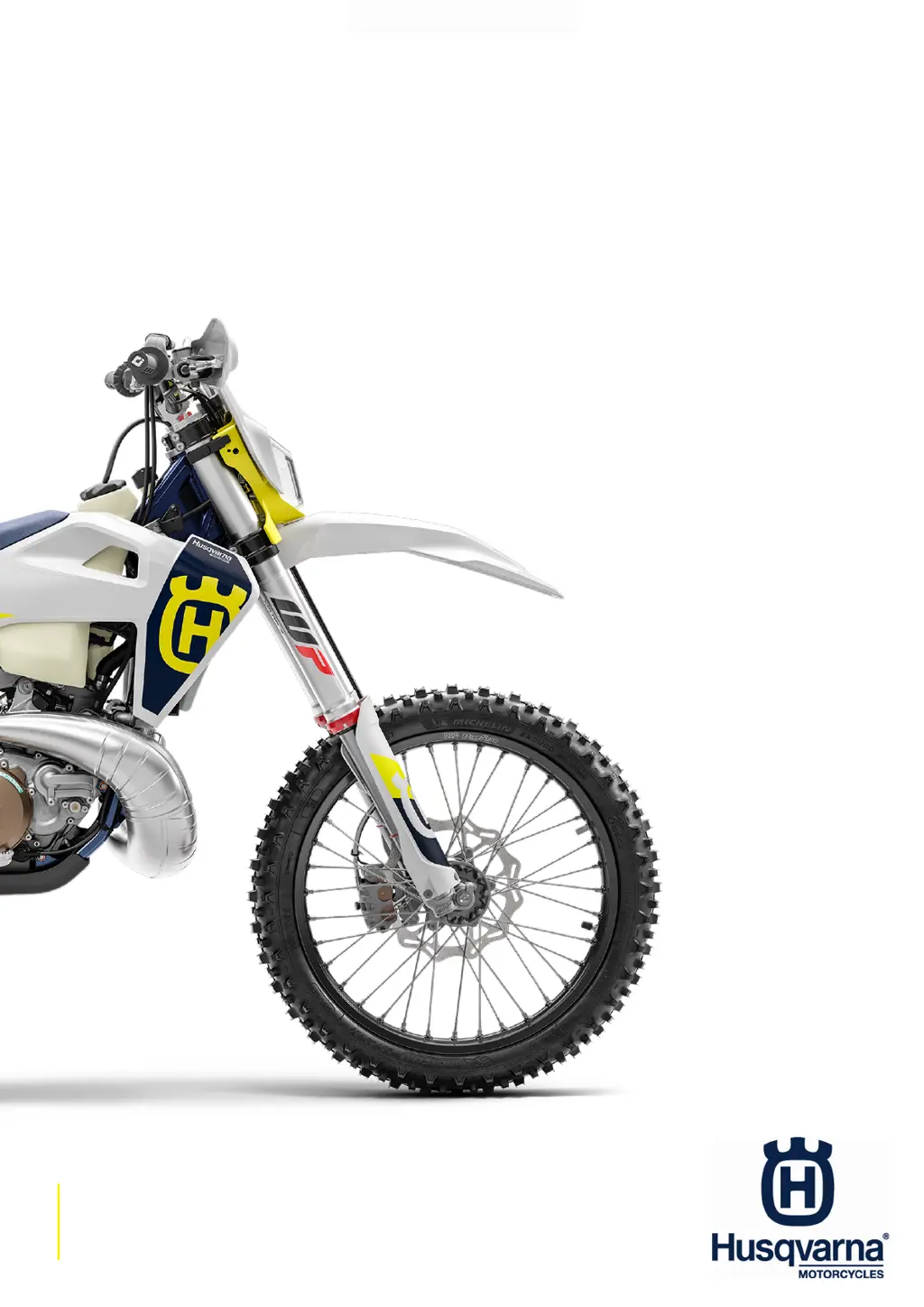
Husqvarna TE 300 - User Manual

Husqvarna TE 300
169 pages
Print Icon
To Next Page IconTo Next Page
Loading...
OWNER'S MANUAL 2023
TE 250
TE 300
Art. no. 3402635en

Table of Contents

Questions and Answers

  • T
    torrespaulSep 12, 2025
    Why is my Husqvarna TE 300 12-V battery discharged?
    • S
      salinasashleySep 12, 2025
      Your Husqvarna Motorcycle 12-V battery might be discharged because it is not being charged by the alternator or because of an unwanted electrical power consumer. Check the charging voltage and the stator winding of the alternator. Also, check the open-circuit current.
  • J
    Jason HessAug 22, 2025
    Why does my Husqvarna Motorcycle engine have too little power?
    • S
      Stephanie HaleAug 23, 2025
      If your Husqvarna Motorcycle engine has too little power, consider these potential causes. The fuel feed might be interrupted, so check the fuel tank breather and clean the fuel tap; also check the carburetor components. A very dirty air filter can restrict airflow, so clean the air filter and air filter box. Inspect the exhaust system for leaks or deformation and replace the glass fiber yarn filling in the main silencer if needed. Also, a fault in the ignition system could be the reason, so check it. Lastly, inspect the diaphragm and reed valve housing for damage.
  • M
    Mrs. Crystal PearsonAug 27, 2025
    Why is my Husqvarna Motorcycle engine overheating?
    • R
      robertmasonAug 27, 2025
      If your Husqvarna Motorcycle engine is overheating, several factors could be responsible. Check for too little coolant in the cooling system, and inspect for leaks and check the coolant level. Ensure there's enough air stream; switch off the engine when stationary. Clean the radiator fins if they're very dirty. If there's foam formation in the cooling system, drain and refill the coolant. Inspect the cylinder head and cylinder head gasket for damage. Finally, replace the radiator hose if it's bent.
  • J
    Jeanette CarneyAug 27, 2025
    What causes a Husqvarna TE 300 Motorcycle engine to stall or pop into the carburetor?
    • D
      David CarterAug 27, 2025
      If your Husqvarna Motorcycle engine stalls or pops into the carburetor, it could be due to a few reasons. Lack of fuel could be the problem; turn the fuel tap to the ON or RES position, or refuel. The engine might be taking in bad air, so check the intake flange and carburetor for tightness. Also, if the connector or ignition coil is loose or oxidized, clean the connector and treat it with contact spray.
  • T
    Tiffany WalshAug 29, 2025
    Why does my Husqvarna TE 300 Motorcycle engine have no idle?
    • A
      Alexis CrosbyAug 29, 2025
      If your Husqvarna Motorcycle engine has no idle, several issues could be the cause. The idling jet might be blocked, so check/set the carburetor components. Distorted adjusting screws on the carburetor may also be the problem; adjust the idle speed. A defective spark plug should be replaced. Finally, a defective ignition system could be the culprit, so check the primary and secondary windings of the ignition coil and the spark plug connector.
  • L
    lee34Aug 31, 2025
    What to do if my Husqvarna TE 300 engine does not speed up?
    • G
      Grace CabreraAug 31, 2025
      If your Husqvarna Motorcycle engine does not speed up, it could be due to several reasons. The carburetor might be running over because the float needle is dirty or worn, so check/set the carburetor components. Loose carburetor jets can also cause this issue, so check/set the carburetor components. Additionally, a fault in the ignition system could be the cause, so check the ignition system.
  • J
    James EdwardsNov 23, 2025
    What to do if my Husqvarna TE 300 Motorcycle engine turns but does not start?
    • S
      Stacy GreeneNov 23, 2025
      If your Husqvarna Motorcycle engine turns over but doesn't start, several things could be wrong. You might be making an operating error, so double-check the start procedure. If the motorcycle has been sitting, old fuel in the float chamber could be the problem; in this case, empty the carburetor float chamber. Check for fuel feed interruptions by inspecting the fuel tank breather and cleaning the fuel tap, and check/set the carburetor components. A spark plug that's oily or wet should be cleaned, dried, or replaced. Ensure the spark plug gap is correctly adjusted. Also, there may be a fault in the ignition system, a short circuit in the wiring harness, or a faulty kill switch. Clean the connector and treat with contact spray if the connector or ignition coil is loose or oxidized. Finally, ...
  • M
    Miranda TorresSep 13, 2025
    Why is there white smoke emission (steam in exhaust gas) from my Husqvarna TE 300?
    • M
      michellekellerSep 13, 2025
      White smoke emission (steam in exhaust gas) from your Husqvarna Motorcycle could be due to a damaged cylinder head or cylinder head gasket. Check these components for damage.
  • M
    Michael GutierrezSep 10, 2025
    What to do if my Husqvarna TE 300 Motorcycle engine dies during the trip?
    • K
      Kimberly GarciaSep 10, 2025
      If your Husqvarna Motorcycle engine dies during the trip, it could be due to a lack of fuel. Refuel if needed. The engine might be taking in false air, so check that the intake flange is firmly seated. The connector or ignition coil could also be loose or oxidized; clean the connector and treat it with contact spray. Finally, incorrectly stored ambient pressure could be the cause, so program the ambient air pressure.
  • S
    Sharon EllisSep 6, 2025
    What to do if my Husqvarna TE 300 Motorcycle engine overheats?
    • J
      Joshua WellsSep 7, 2025
      If your Husqvarna Motorcycle engine is overheating, there could be several reasons. You may have too little coolant, insufficient air stream, or very dirty radiator fins. Other potential causes include foam formation in the cooling system, a damaged cylinder head or gasket, a bent radiator hose, or a defective thermostat. To resolve this, check the coolant level and system for leaks. If stationary, switch off the engine. Clean the radiator fins. Check and if needed replace the cylinder head, cylinder head gasket, and radiator hose. Check the thermostat, it should start opening at 70 °C (158 °F).

Summary

OWNERS MANUAL 2023

2 SAFETY ADVICE

2.1 Use definition - intended use

Defines the intended use of the vehicle and its limitations.

2.4 Degrees of risk and symbols

Explains hazard symbols and their corresponding risk levels.

2.7 Protective clothing

Emphasizes the necessity of wearing appropriate protective gear.

2.2 Misuse

Explains what constitutes misuse of the vehicle and associated dangers.

2.5 Tampering warning

Warning against tampering with noise control systems and legal implications.

2.3 Safety advice

General safety instructions and the importance of warning labels.

2.6 Safe operation

Guidelines for safe operation, including avoiding accidents and poisoning.

3 IMPORTANT NOTES

6 CONTROLS

6.14 Overview of indicator lights (All EU;AR;CN standard models)

Explains the meaning of indicator lights on the dashboard.

6.15 Overview of indicator lamps (All US standard models)

Explains indicator lamps for US models.

7 COMBINATION INSTRUMENT

8 PREPARING FOR USE

8.1 Advice on preparing for first use

Crucial advice and checks before the initial ride.

8.2 Running in the engine

Guidelines for the engine break-in period to ensure longevity.

8.4 Preparing the vehicle for difficult operating conditions

General preparations for various challenging riding environments.

9 RIDING INSTRUCTIONS

9.1 Checks and maintenance measures when preparing for use

Pre-ride checks and maintenance to ensure safe operation.

9.3 Starting off

How to smoothly start moving from a standstill.

9.5 Braking

Important safety advice and techniques for braking.

9.6 Stopping, parking

Procedures and safety precautions for stopping and parking.

9.8 Refueling

Safety precautions and instructions for refueling the vehicle.

9.2 Starting the vehicle

Step-by-step instructions for starting the engine.

9.4 Shifting, riding

Guidance on gear shifting and general riding techniques.

10 SERVICE SCHEDULE

11 TUNING THE CHASSIS

11.1 Checking the basic chassis setting with riders weight

How to set the basic chassis based on rider weight.

11.4 Adjusting the high-speed compression damping of the shock absorber

Step-by-step guide to adjusting high-speed compression damping.

11.5 Adjusting the rebound damping of the shock absorber

Step-by-step guide to adjusting rebound damping.

11.9 Adjusting the spring preload of the shock absorber

Step-by-step guide for adjusting rear shock absorber spring preload.

11.12 Adjusting the compression damping of the fork

Step-by-step guide to adjusting fork compression damping.

11.14 Adjusting the spring preload of the fork

Step-by-step guide for adjusting fork spring preload.

11.13 Adjusting the rebound damping of the fork

Step-by-step guide to adjusting fork rebound damping.

11.3 Adjusting the low-speed compression damping of the shock absorber

Step-by-step guide to adjusting low-speed compression damping.

12 SERVICE WORK ON THE CHASSIS

12.11 Checking the steering head bearing play

How to check for play in the steering head bearing.

12.12 Adjusting steering head bearing play

Step-by-step guide to adjusting steering head bearing play.

12.16 Removing the shock absorber

Step-by-step guide for removing the rear shock absorber.

12.17 Installing the shock absorber

Step-by-step guide for installing the rear shock absorber.

12.30 Removing the fuel tank

Step-by-step guide for safely removing the fuel tank.

12.31 Installing the fuel tank

Step-by-step guide for safely installing the fuel tank.

13 BRAKE SYSTEM

13.3 Checking the front brake fluid level

How to check the front brake fluid level.

13.5 Checking the front brake linings

How to check front brake pad thickness and condition.

13.6 Changing the brake linings of the front brake

Procedure for changing front brake pads.

13.10 Adding rear brake fluid

Step-by-step guide to adding rear brake fluid.

13.11 Checking the brake linings of the rear brake

How to check rear brake pad thickness and condition.

13.12 Changing the rear brake linings

Procedure for changing rear brake pads.

13.4 Adding front brake fluid

Step-by-step guide to adding front brake fluid.

13.9 Checking the rear brake fluid level

How to check the rear brake fluid level.

14 WHEELS, TIRES

14.1 Removing the front wheel

Step-by-step guide for removing the front wheel.

14.2 Installing the front wheel

Step-by-step guide for installing the front wheel.

14.4 Installing the rear wheel

Step-by-step guide for installing the rear wheel.

14.3 Removing the rear wheel

Step-by-step guide for removing the rear wheel.

15 ELECTRICAL SYSTEM

15.3 Charging the 12-V battery

Instructions on how to charge the 12V battery.

16 COOLING SYSTEM

16.3 Checking the coolant level

Detailed procedure for checking the coolant level.

16.6 Changing the coolant

Procedure for a complete coolant change.

16.2 Checking the antifreeze and coolant level

How to check coolant level and antifreeze protection.

17 TUNING THE ENGINE

17.4 Adjusting the idle speed

How to adjust the engine's idle speed.

18 SERVICE WORK ON THE ENGINE

18.6 Changing the gear oil

Step-by-step guide for changing the engine's gear oil.

19 CLEANING, CARE

19.1 Cleaning the motorcycle

General guidelines for washing and cleaning the motorcycle.

20 STORAGE

21 TROUBLESHOOTING

The engine cannot be cranked (starter motor)

Possible causes and actions when the starter motor fails.

Engine has too little power

Diagnosing and fixing issues causing reduced engine power.

The engine turns but does not start

Troubleshooting steps when the engine cranks but doesn't start.

The engine dies during the trip

Troubleshooting steps when the engine stops unexpectedly while riding.

The engine has no idle speed

Causes and solutions for the engine not idling properly.

Engine overheats

Identifying and resolving causes of engine overheating.

Malfunction indicator lamp lights up or flashes

Troubleshooting guide for the malfunction indicator lamp.

Engine does not speed up

Troubleshooting steps when the engine fails to accelerate.

12-V battery discharged

Diagnosing battery discharge issues and charging problems.

22 BLINK CODE

Blink code for malfunction indicator lamp 14

Interprets blink code 14 related to crankcase pressure sensor.

Blink code for malfunction indicator lamp 34

Interprets blink code 34 related to injection valve.

Blink code for malfunction indicator lamp 09

Interprets blink code 09 related to sensor circuits.

Blink code for malfunction indicator lamp 37

Interprets blink code 37 related to ignition coil circuit.

Blink code for malfunction indicator lamp 13

Interprets blink code 13 related to intake air temperature sensor.

Blink code for malfunction indicator lamp 02

Interprets blink code 02 related to crankshaft speed sensor.

Blink code for malfunction indicator lamp 12

Interprets blink code 12 related to coolant temperature sensor.

Blink code for malfunction indicator lamp 42

Interprets blink code 42 related to oil pump signal.

Blink code for malfunction indicator lamp 06

Interprets blink code 06 related to throttle valve position sensor.

Blink code for malfunction indicator lamp 21

Interprets blink code 21 related to battery voltage.

Blink code for malfunction indicator lamp 41

Interprets blink code 41 related to fuel pump circuit.

Blink code for malfunction indicator lamp Malfunction indicator lamp lights up

Interprets constant malfunction lamp for tilt sensor issues.

Blink code for malfunction indicator lamp 33

Interprets blink code 33 related to injection valve.

23 TECHNICAL DATA

23.1 Engine

Engine specifications for TE 250 and TE 300 models.

23.7 Fork

Detailed specifications for the front fork.

23.8 Shock absorber

Detailed specifications for the rear shock absorber.

24 SUBSTANCES

Husqvarna TE 300 Specifications

General IconGeneral
Displacement293.2 cc
Bore x Stroke72 mm x 72 mm
StarterElectric starter
Transmission6-speed
CoolingLiquid cooled
Front SuspensionWP XPLOR-USD, Ø 48 mm
Front BrakeDisc brake
Rear BrakeDisc brake
Seat Height950 mm
Engine Type1-cylinder, 2-stroke
Rear SuspensionWP XACT shock absorber with linkage
Dry Weight105 kg
Fuel Tank Capacity8.5 liters

Related product manuals