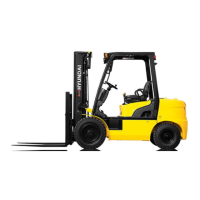
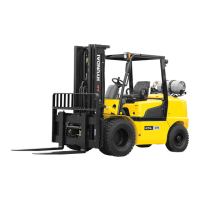
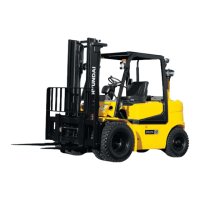
This service manual is designed to enhance the quality of repairs by providing servicemen with a comprehensive understanding of the product and guiding them through correct repair procedures and judgments. It is essential to thoroughly understand the manual's contents and apply them effectively in all repair situations. The manual primarily contains technical information necessary for operations performed in a service workshop. For ease of understanding, the manual is organized into several distinct sections.
This section provides an overview of the machine and includes crucial safety hints for maintenance. It covers essential precautions and guidelines to ensure the safety of personnel and the proper functioning of the equipment during maintenance tasks.
Removal & Installation of Unit
This section details the procedures and techniques for the removal and installation of each component of the machine. It provides step-by-step instructions to ensure that components are handled correctly, preventing damage and ensuring proper reassembly.
Power Train System
This section explains the structure of the transmission, including both older and newer models, as well as the control valve and drive axle. It covers the operational principles, troubleshooting guides, and detailed disassembly and assembly instructions for these critical components. This ensures that technicians can diagnose and repair issues related to the power transmission effectively.
Brake System
This section describes the brake piping, individual components, and their operation. It includes information on operational checks, troubleshooting common brake issues, and detailed instructions for tests and adjustments to maintain optimal braking performance and safety.
Steering System
This section outlines the structure of the steering unit, priority valve, and trail axle, along with an explanation of the steering circuit and its operation. It provides guidance on operational checks, troubleshooting steering problems, and procedures for disassembly and assembly of steering components.
Hydraulic System
This section explains the structure of the gear pump, main control valve, and the work equipment circuit, including each component and its operation. It offers insights into operational checks, troubleshooting hydraulic system issues, and detailed instructions for disassembly and assembly to ensure the hydraulic system functions correctly.
Electrical System
This section provides a comprehensive explanation of the electrical circuit and each component within the system. It is designed to facilitate understanding of the electrical system and serves as a valuable reference for troubleshooting electrical problems. It includes component locations, specifications, connector destinations, and troubleshooting guides.
Mast
This section focuses on the structure of the mast, carriage, backrest, and forks. It includes information on operational checks, troubleshooting common mast issues, adjustment procedures, and instructions for the removal and installation of mast components.
Usage Features
The service manual emphasizes the importance of safety and quality throughout its instructions. Key safety precautions are highlighted with specific symbols. For instance, a warning symbol indicates that special safety precautions are necessary when performing work, with an additional note for tasks involving internal pressure. A caution symbol denotes special technical precautions or other measures required to preserve standards during work.
The manual provides clear instructions on how to read page numbers, including those for additional pages, to ensure easy navigation and correct filing of information. It also includes a conversion table for various units, such as millimeters to inches, kilograms to pounds, liters to U.S. gallons, and liters to U.K. gallons, as well as conversions for torque and pressure. This table is crucial for technicians working with different measurement systems, ensuring accuracy in repairs and adjustments.
Maintenance Features
The manual stresses the importance of performing work safely, advising against carelessness even in seemingly easy tasks. It highlights the dangers of oil and grease, recommending that these substances and oily clothes be kept away from fire or flames. It also advises knowing the location and usage of fire extinguishers.
Personal protective equipment is emphasized, with instructions to wear well-fitting helmets, safety shoes, and protective goggles when drilling, grinding, or hammering. Safety clothes should be properly fastened to avoid snagging on machine parts, and oily clothes should not be worn. Before checking the battery, the battery plug should always be released.
The manual explicitly warns against using flames as lamps and checking for leaks or fluid levels with naked flames. It also highlights the danger of exhaust gas, requiring adequate ventilation when working in enclosed spaces.
Specific warnings are given for removing the radiator cap and hydraulic oil tank filler cap immediately after machine use, as boiled oil may spurt out. To release hydraulic pressure, the fork should be lowered to the ground, the engine stopped, and control levers moved to each position multiple times.
When working on top of the machine, caution is advised to prevent falls. A caution sign should be placed in the operator's compartment to prevent accidental starting or movement of the machine. It is extremely dangerous to check fan belt tension while the engine is running.
For inspecting engine running parts or nearby areas, the engine must always be stopped first. Before checking or servicing the accumulator or piping, the brake pedal should be repeatedly depressed to release pressure. The machine should be parked on firm, flat ground, the fork lowered, the engine stopped, levers returned to neutral, and the brake lock applied.
Any oil or grease on the operator's compartment floor or handrail should be immediately removed to prevent slips. When working with a team, a group leader should be designated, and work should follow their instructions, avoiding any maintenance beyond agreed tasks.
The hydraulic oil circuit is always under pressure, so pressure must be released before feeding or draining oil or performing inspections. Unless otherwise specified, maintenance should always be performed with the engine stopped. If maintenance requires the engine to be running, two people must be present: one in the operator's seat and one performing maintenance, with strict instructions not to touch any moving parts.
Thorough cleaning of the machine, especially filler caps, grease fittings, and dipstick areas, is crucial to prevent dirt or dust from entering the system. Only genuine HYUNDAI Forklift parts should be used for replacement, along with recommended grades of grease and oil, chosen according to ambient temperature. Pure oil or grease should be used from clean containers, and oil checks or changes should be done in a dust-free environment.
Before draining oil, it should be warmed to 30-40°C. After replacing oil, the filter element or strainer, air must be bled from the circuit. If the strainer is in the oil filler, it should not be removed when adding oil. When changing the oil filter, the drained oil and filter should be checked for excessive metal particles or foreign materials.
When removing parts with O-rings, gaskets, or seals, the mounting surface should be cleaned, and new sealing parts installed. Excess grease should be wiped off after injection. Electrical equipment should not be handled in wet conditions to avoid electric shock. Unauthorized persons should not be allowed near the machine during maintenance.
A full understanding of the operation contents, preparation of necessary tools and parts, and maintaining a clean operating area are essential. When checking an open gear case, pockets should be emptied to prevent dropping objects. For difficult maintenance tasks, it is recommended to contact a HYUNDAI Forklift distributor.



 To Next Page

 General