UK
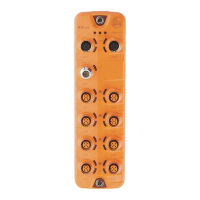
CompactModul Metall CR2033
5
● The COB IDs of the PDOs as well as the transmission type of the individual
PDOs can be configured�
● The module expects a synch object�
The CAN identifier of the synch object can be configured�
● The module supports "node guarding" and "heartbeat"�
The "guard time",the "life time factor" and the "heartbeat time"can be config-
ured� When there are no heartbeat or node guarding signals, the outputs are
automatically switched off by the operating system�
● The module generates an emergency object� The COB ID of the EMCY object
can be configured�
● The module stores the last error�
The error code of the corresponding emergency object is stored�
● The module supports a reset function, i�e� assignment of the parameters to the
factory default values* upon request�
The CR2033 I/O module ist not approved for safety-relevant tasks in the field of
safety of persons�
*) factory default values (→ 8.1 Parameter list)
4 Mounting
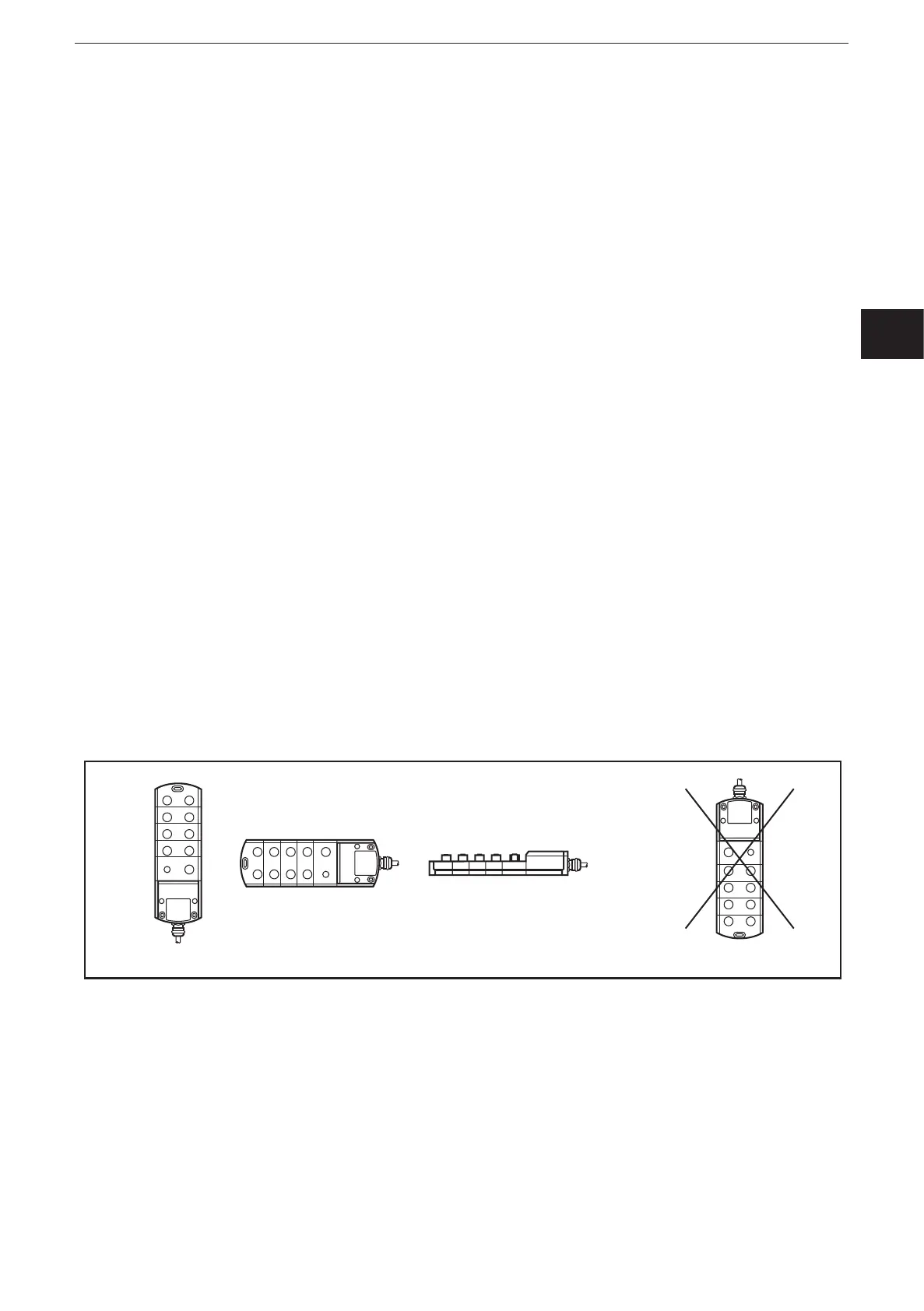
To protect the module against mechanical stress it must be mounted so that it lies
completely flat on an even mounting surface� To do so, three cylinder screws with
hexagon socket (M5 x L) to DIN 912 or DIN 7984 must be used�
preferred Mounting variants
wrong
To avoid contact corrosion between the mounting screws and the module housing,
do not use any stainless steel screws or nickel-plated screws!
In very corrosive environments such as extremely salty air, we recommend to use
screws with surface finishing on a zinc/nickel basis with thick-film passivation and
sealing� For normal corrosive requirements zinc-plated screws are sufficient�


 To Next Page