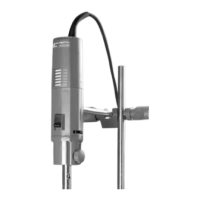
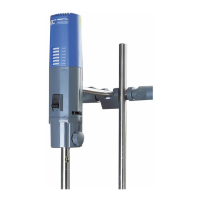
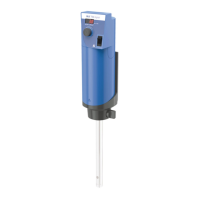
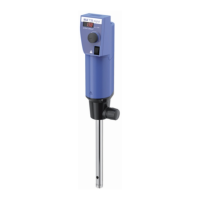
The open up a wide range of possibilities for dispersion techno-
logy in the conventional laboratory with a respective performan-
ce output of approximately 350 watts at 24,000 1/min in the
case of the T25 basic.
The ULTRA-TURRAX
®
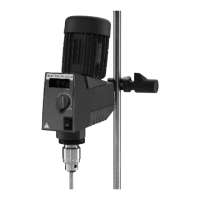
T 25 basic are dispersion units which, in
connection with a dispersion tool, manufacture emulsions and
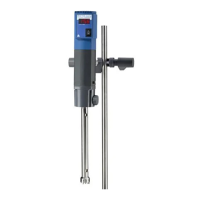
dispersions. The dispersion devices should be operated on a
laboratory stand.
The
ULTRA-TURRAX
®
T 25 basic are entirely pre-assembled.
Please unpack the device and/or dispersion tools carefully and
inspect them for any damage. It is important that any damage is
detected as soon as the items are unpacked. A record of the
relevant facts may be required (railway, mail or carrier). The devi-
ce delivery quantity includes: a driving unit, an extension arm, a
hexagon socket screw, a tool set and an operating manual.
You have acquired a high-quality product. Used in combination
with an
S 25 series dispersion tool, the drive unit is a high-speed
dispersing and emulsifying unit capable of handling free-flowing
and liquid media in batches.
Dispersion is the dissolution and diffusion of a solid, liquid or
gaseous phase in a continuum that is not consolute with that
phase.
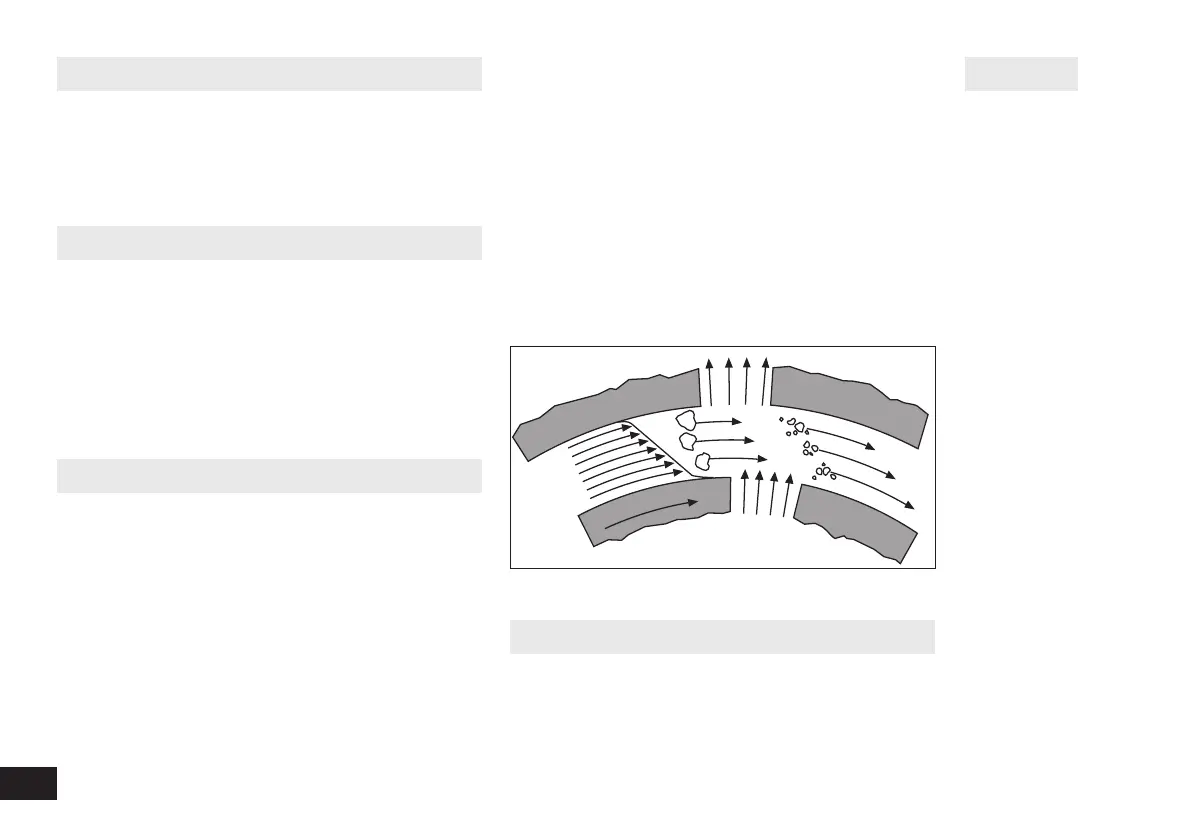
The rotor/stator principle:
Due to the high rotation speed of the rotor, the medium to be
processed is automatically drawn axially into the dispersion
head and then forced radially through the slots in the rotor/stator
arrangement. The high accelerations acting on the material
produce extremely strong shear and thrust forces. In addition,
high turbulence occurs in the shear gap between rotor and
stator, which provides optimum mixing of the suspension.
The dispersion effectiveness is heavily dependent on the
product of the shear gradient and the time the particles spend in
the shear zone. The optimum range for the circumferential
velocity of the rotor/stator arrangement is 10-24 m/s.
A processing time of a few minutes is usually sufficient to
produce the desired fineness. Long processing times bring only
insignificant improvements in the obtainable fineness; the
energy expended serves merely to increase the temperature of
the medium.
18
T25 1096EU
Unpacking
Useful information
Proper use
Drive unit



 To Next Page