40
3.2 High / Low Relay Limits Option “-R”
In the 1250-LTC, the High / Low Relays serve as alarm annunciators for the many
programmable limits associated with expanded LTC monitoring. The (two) relays are
normally open, dry contacts. Each relay may have one or more of the alarm limits assigned to
it. They may be used as feedback in a control system or as an alarm when the parameter has
reached its desired limits.
When the Tap Change Acknowledgement is not used, it is recommended that the
desired alarms be divided into two groups: Warning (LO) and Danger (HI). Less important
parameters should cause one relay (Warning) to turn on and more important parameters
should cause the other relay (Danger) to turn on. This way, the level of seriousness of an
alarm could be communicated, when remotely monitored. When the Tap Change
Acknowledgement is assigned to one relay (HI or LO), all other desired alarms must be
assigned to the other relay (LO or HI).
When the LO relay is asserted, the LED above the DOWN button, below the digital
display, will flash. When the HI relay is asserted, the LED above the UP button, below the
digital display, will flash. Note that the LED’s will flash even if the “-R” Relay Option is
not installed. This will alert an operator that an alarm limit has been reached, even on
an instrument without Relays. In addition to flashing the HI & LO Relay LED’s, an alarm
code(s) will be momentarily displayed, every 10 seconds, to explain which specific alarm(s) is
causing the alarm condition.
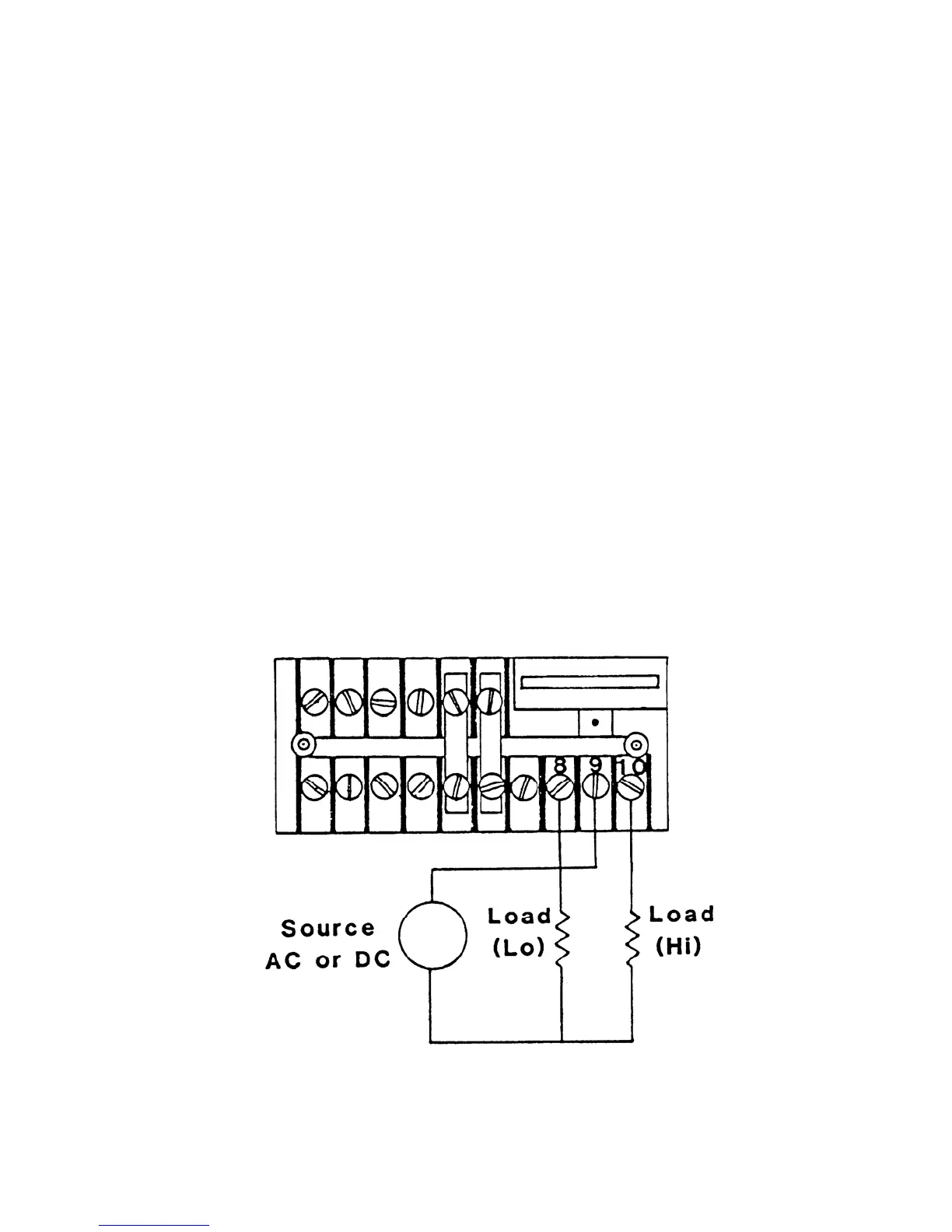
Figure 3.1 Relay Field Wiring Diagram


 To Next Page