EasyManua.ls Logo

Iskra MT440 - User Manual

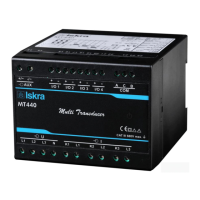
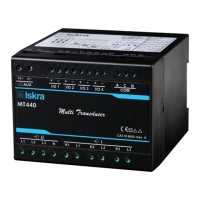
Iskra MT440
60 pages
Print Icon
To Next Page IconTo Next Page
Loading...
User’s Manual
Multifunction Transducer MT440
GB

Table of Contents

Question and Answer IconNeed help?

Do you have a question about the Iskra MT440 and is the answer not in the manual?

Summary

1. SECURITY ADVICE AND WARNINGS

1.1 Welcome

Introduction to the chapter, emphasizing careful reading before starting work with the transducer.

1.2 Introduction

Explains the booklet's content for installation and use of MT440 by qualified persons.

1.3 Health and safety

Provides information for safe installation and handling to ensure correct use and continuous operation.

1.4 Safety warnings and instructions for use

Lists critical checks required before switching on the device.

1.5 Warnings, information and notes regarding designation of the product

Explains used symbols and contents of consignment.

2. BASIC DESCRIPTION AND OPERATION OF MEASURING TRANSDUCER

2.1 Introduction

Explains the meaning of symbols and tables used within the manual for clarity.

2.2 Glossary

Provides definitions for technical terms and abbreviations used in the manual.

2.3 Description of the product

Describes the MT440's purpose, measurement capabilities, and built-in microcontroller functions.

2.4 Purpose and use of measuring transducer

Details the instrument's application for monitoring three-phase electrical power systems.

3. CONNECTION

3.1 Introduction

Instructions for connecting the transducer, emphasizing safe handling of currents and voltages.

3.2 Mounting

Details the DIN rail mounting procedure for the MT440 measuring transducer.

3.3 Electric connection

Explains connecting voltage and current inputs to low-voltage or medium/high-voltage networks.

3.4 Connection of input;output modules

Describes connecting electromechanical, solid-state, and analog output modules.

3.5 Communication connection

Details serial (RS232/RS485) and USB communication port connections and setup.

3.6 Connection of auxiliary power supply

Explains connecting the universal AC/DC auxiliary power supply to the designated terminals.

4. SETTINGS

4.1 Introduction

Explains how instrument settings can be modified remotely via communication or software.

4.2 MiQen software

Information on MiQen software for monitoring, settings, real-time measurements, and upgrading.

4.3 Setting procedure

Steps for modifying instrument settings using MiQen software, including loading parameters.

4.4 General settings

Covers connection, communication, display, and security settings for the transducer.

4.5 Connection

Setting parameters related to input/output connections, voltage, and current ratios.

4.6 Communication

Configuration of serial (COM1) and USB communication parameters for data transfer.

4.7 Security

Explains password settings and security levels for accessing and protecting parameters.

4.8 Energy

Settings related to active tariff, common energy exponent, and counter divider for energy measurement.

4.9 Inputs and outputs

Configuration of analog, fast analog, solid-state, and relay output modules.

4.10 Alarms

Setting up to 16 alarms in two groups for exceeded measured quantities.

4.11 Reset operations

Procedures for resetting energy counters, MD values, and alarm statuses.

5. MEASUREMENTS

5.1 Introduction

Explains that device operation will be detailed in subsequent chapters.

5.2 Supported measurements

Lists measurements supported by the instrument, varying with connection settings.

5.3 Available connections

Describes different electric connection types and their markings for measurement configuration.

5.4 Explanation of basic concepts

Defines sample factor (My) and average interval (Mp) essential for measurement accuracy.

5.5 Calculation and display of measurements

Details how measurements are captured, calculated, and displayed on the device.

5.6 Present values

Explains how voltage, current, power, PF, frequency, energy, MD, and THD are presented.

6. TECHNICAL DATA

6.1 Applied standards

Lists safety, EMC, and measurement standards applied to the transducer.

6.2 Accuracy

Presents total accuracy for measurements and analog output as per IEC/EN 60 688.

6.3 Inputs

Details specifications for voltage and current inputs, frequency, and power supply.

6.4 Connection

Specifies permitted conductor cross-sections for terminal connections.

6.5 I;O modules

Technical specifications for electromechanical, solid-state, and analog output modules.

6.6 Communication

Technical data for RS232, RS485, and USB communication interfaces.

6.7 Electronic features

Details response time for communication and status LED indicators.

6.8 Safety features

Information on protection class, pollution degree, installation category, and EMC compliance.

6.9 Mechanical

Mechanical specifications including dimensions, mounting, and enclosure materials.

6.10 Environmental conditions

Specifies operating and storage temperatures, and humidity limits.

6.11 Dimensions

Provides a diagram with the physical dimensions and mounting details of the transducer.

7. APPENDIX A: MODBUS PROTOCOL

7.1 Modbus communication protocol

Explains Modbus protocol, versions, and register tables for measurements and settings.

8. APPENDIX B: CALCULATIONS & EQUATIONS

8.1 Calculations

Lists symbols and their definitions used in various electrical calculations.

8.2 Equations

Provides detailed mathematical equations for voltage, current, power, THD, and energy.

Summary

1. SECURITY ADVICE AND WARNINGS

1.1 Welcome

Introduction to the chapter, emphasizing careful reading before starting work with the transducer.

1.2 Introduction

Explains the booklet's content for installation and use of MT440 by qualified persons.

1.3 Health and safety

Provides information for safe installation and handling to ensure correct use and continuous operation.

1.4 Safety warnings and instructions for use

Lists critical checks required before switching on the device.

1.5 Warnings, information and notes regarding designation of the product

Explains used symbols and contents of consignment.

2. BASIC DESCRIPTION AND OPERATION OF MEASURING TRANSDUCER

2.1 Introduction

Explains the meaning of symbols and tables used within the manual for clarity.

2.2 Glossary

Provides definitions for technical terms and abbreviations used in the manual.

2.3 Description of the product

Describes the MT440's purpose, measurement capabilities, and built-in microcontroller functions.

2.4 Purpose and use of measuring transducer

Details the instrument's application for monitoring three-phase electrical power systems.

3. CONNECTION

3.1 Introduction

Instructions for connecting the transducer, emphasizing safe handling of currents and voltages.

3.2 Mounting

Details the DIN rail mounting procedure for the MT440 measuring transducer.

3.3 Electric connection

Explains connecting voltage and current inputs to low-voltage or medium/high-voltage networks.

3.4 Connection of input;output modules

Describes connecting electromechanical, solid-state, and analog output modules.

3.5 Communication connection

Details serial (RS232/RS485) and USB communication port connections and setup.

3.6 Connection of auxiliary power supply

Explains connecting the universal AC/DC auxiliary power supply to the designated terminals.

4. SETTINGS

4.1 Introduction

Explains how instrument settings can be modified remotely via communication or software.

4.2 MiQen software

Information on MiQen software for monitoring, settings, real-time measurements, and upgrading.

4.3 Setting procedure

Steps for modifying instrument settings using MiQen software, including loading parameters.

4.4 General settings

Covers connection, communication, display, and security settings for the transducer.

4.5 Connection

Setting parameters related to input/output connections, voltage, and current ratios.

4.6 Communication

Configuration of serial (COM1) and USB communication parameters for data transfer.

4.7 Security

Explains password settings and security levels for accessing and protecting parameters.

4.8 Energy

Settings related to active tariff, common energy exponent, and counter divider for energy measurement.

4.9 Inputs and outputs

Configuration of analog, fast analog, solid-state, and relay output modules.

4.10 Alarms

Setting up to 16 alarms in two groups for exceeded measured quantities.

4.11 Reset operations

Procedures for resetting energy counters, MD values, and alarm statuses.

5. MEASUREMENTS

5.1 Introduction

Explains that device operation will be detailed in subsequent chapters.

5.2 Supported measurements

Lists measurements supported by the instrument, varying with connection settings.

5.3 Available connections

Describes different electric connection types and their markings for measurement configuration.

5.4 Explanation of basic concepts

Defines sample factor (My) and average interval (Mp) essential for measurement accuracy.

5.5 Calculation and display of measurements

Details how measurements are captured, calculated, and displayed on the device.

5.6 Present values

Explains how voltage, current, power, PF, frequency, energy, MD, and THD are presented.

6. TECHNICAL DATA

6.1 Applied standards

Lists safety, EMC, and measurement standards applied to the transducer.

6.2 Accuracy

Presents total accuracy for measurements and analog output as per IEC/EN 60 688.

6.3 Inputs

Details specifications for voltage and current inputs, frequency, and power supply.

6.4 Connection

Specifies permitted conductor cross-sections for terminal connections.

6.5 I;O modules

Technical specifications for electromechanical, solid-state, and analog output modules.

6.6 Communication

Technical data for RS232, RS485, and USB communication interfaces.

6.7 Electronic features

Details response time for communication and status LED indicators.

6.8 Safety features

Information on protection class, pollution degree, installation category, and EMC compliance.

6.9 Mechanical

Mechanical specifications including dimensions, mounting, and enclosure materials.

6.10 Environmental conditions

Specifies operating and storage temperatures, and humidity limits.

6.11 Dimensions

Provides a diagram with the physical dimensions and mounting details of the transducer.

7. APPENDIX A: MODBUS PROTOCOL

7.1 Modbus communication protocol

Explains Modbus protocol, versions, and register tables for measurements and settings.

8. APPENDIX B: CALCULATIONS & EQUATIONS

8.1 Calculations

Lists symbols and their definitions used in various electrical calculations.

8.2 Equations

Provides detailed mathematical equations for voltage, current, power, THD, and energy.

Iskra MT440 Specifications

General IconGeneral
BrandIskra
ModelMT440
CategoryTransducer
LanguageEnglish

Related product manuals