Programmer's Guide PcOS Series 150 Communications
Serial Port
12/14/99 Rev G Page 117
Serial Port
Serial Port Features
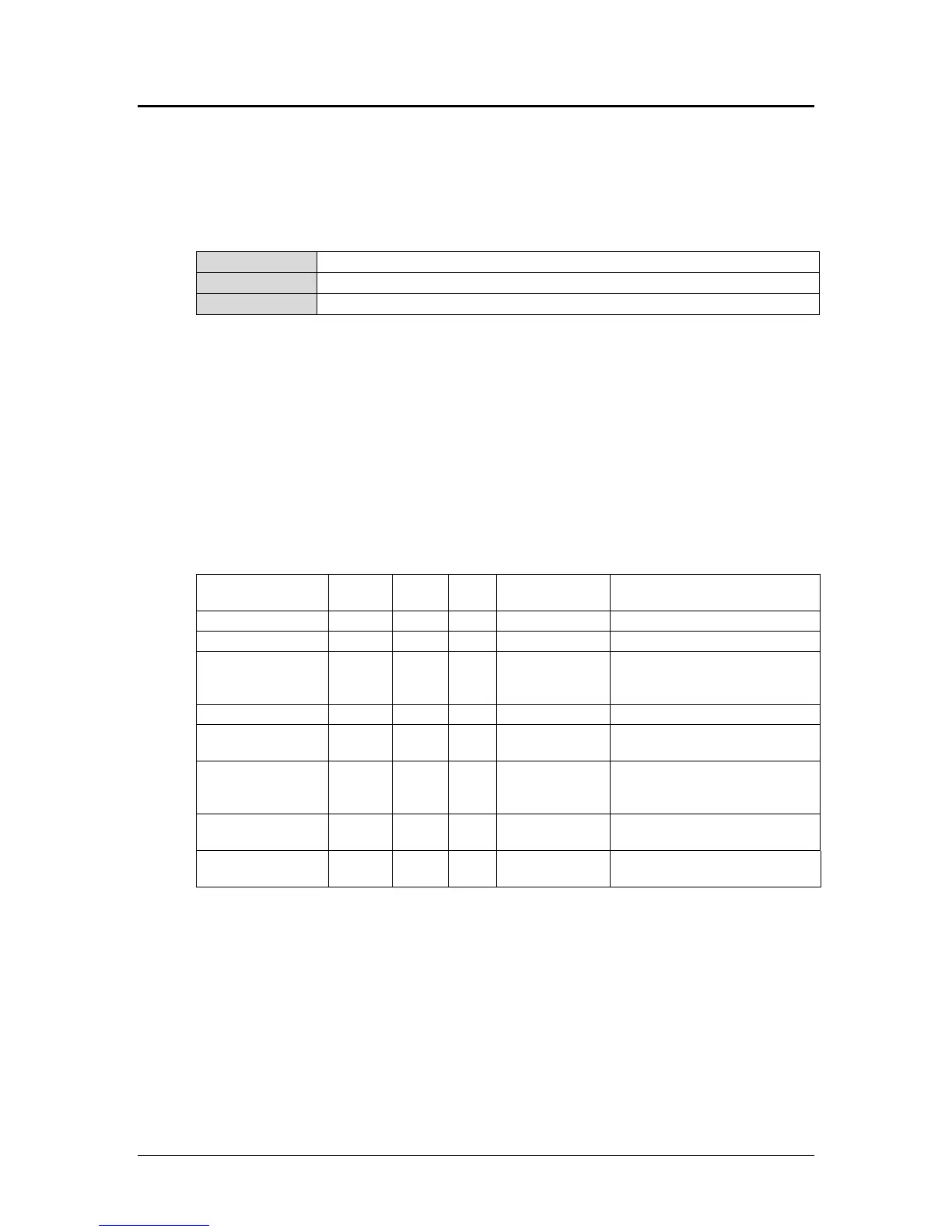
The serial port features are as follows:
Baud rates
300, 600, 1200, 2400, 4800, 9600, 19.2K
Bit patterns
8-bit, no parity; 8-bit odd; 8-bit even; 7-bit no parity; 7-bit odd; 7-bit even
Flow control
DTR and XON/XOFF
Table 14 Serial bit rates
It should be noted that the 7-bit, no parity is in fact an 8-bit format. The implementation of the
hardware UART in the Intel 8051 family will not allow a true 7-bit, no parity format. If the host
provides a true 7-bit, no parity format, it must be configured with two stop bits.
The Series 150 Printer has a 64-character high-speed buffer before the main system buffer. This
high-speed buffer allows the printer to operate at high serial data rates while printing. Because
no data is evaluated in this buffer, the printer will have a delayed response to inquire requests
and [CR]’s in one-line operation. This has a significant effect on one-line mode operation.
Serial Port Pin-out
Not connected Input Pin 1 DCD Data carrier
detect
Not used
Used in printer Input Pin 2 RX Receive data Commands/data to print
Output to host Output Pin 3 TX Transmit data Return data
Ready and/or flow
control signal to
host
Output Pin 4 DTR Data terminal
ready
Printer ready to receive data
(follows buffer)
Pin 5 GND Signal ground
Disable printer
control from host
Input Pin 6 DSR Data set ready Not used in standard printer
(configurable)
Ready and/or flow
control signal to
host
Output Pin 7 RTS Request to
send
Printer ready to receive data
(follows buffer)
Flow control from
host
Input Pin 8 CTS Clear to send Not used in standard printer
(configurable)
*Strapable 12 V or
DTR
Output Pin 9 SSD Secondary
data
Not used in standard printer
(provides power to peripheral)
Table 15 Serial port pin-outs
Because both the host and the printer are DTE's (Data Terminal Equipment), they use the same
serial port pin-outs. If the cable that is used to connect the host to the printer is a pin-to-pin
interconnect, it will not work. For this reason, a null modem or turn-around cable must be used to
interconnect the host and the printer.
Signal levels
The serial interface meets EIA RS-232 requirements.
Logic 1 -15 V to -3 V: mark = off
Logic 0 +3 V to +15 V: space = on


 To Next Page