SECTION
I
INTRODUCTION
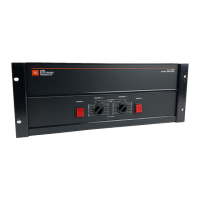
The
JBL Model
6230 and
6260
power
amplifiers
have
been
designed
to
meet
the most
critical
professional sound
requirements.
They are
rugged and road-worthy, conservatively
rated, and
can
handle
reactive
loads with ease.
The engineering
design approach
stresses
the optimization
of
each
stage, allowing high
slew
rate and
relatively low loop
gain.
Overall feedback
has been
held to
a
minimum and is employed
only
to stabilize
the gain and
the operating
point. This
design
approach
results in
amplifiers with
excellent performance under
the most demanding
dynamic
input and load conditions.
As
evidence
of the
stress on dynamic
rather than static or steady-
state distortion
mechanisms, transient
intermodulation distortion
measures
less than
0.03% by the DIM
100 test. (Leinonen, Otala,
and Curl,
"A Method for
Measuring Transient
Intermodulation
Distortion
(TIM)",
Journal of the Audio
Engineering Society
,
Vol.
25,
No.
4,
April,
1977,
pp.
170-177.)
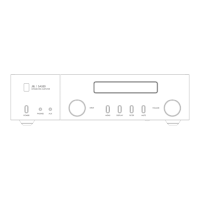
The front
panel and
heat sinks of the
amplifiers are
made
of
heavy
aluminum extrusions;
the chassis
is fabricated
of heavy
gauge
steel. All
internal components
are easily accessible
through
removal
of top and bottom panels.
Front panel graphic
details
are incorporated
on the rear side of
a
polycarbonate
laminate
which is virtually
indestructible.
JBL
amplifiers use
multiple 200-watt
output
devices in
complementary
configuration
for
high
reliability and low distor-
tion.
At rated
power into 8 ohms,
these output devices
are
operated
at less than 25%
of their rated
power dissipation. The
benefit
is high
reliability
and long component
life.
Failsafe
operation of
these amplifiers is
ensured through
the
following
protection modes:
Current
is limited under
improper
load
or drive conditions.
An
output relay,
with front
panel LED
indication,
protects the loudspeaker
load under cond-
itions
of DC offset
or large
low-frequency transients.
The relay
also
provides
power-up, power-down,
and "brown
out" muting to
protect
loudspeakers from
AC power transients
generated anywhere
in the signal
path.
LED's
on
the front panel
indicate the onset
of
clipping and standby mode.
The JBL
amplifiers may be operated
in the
normal stereo-
phonic mode,
dual monophonic
mode, or
bridged monophonic
mode.
Rear
panel switching
sets these
modes,
obviating
the need for
patch
cords,
level matching,
etc.
Active
differential input
circuitry
offers
the benefits of
balanced operation
without the
use
of
input transformers. Input
connections may
be made via 3-pin XL-type
connector, three-cond-
-
1
-



 To Next Page