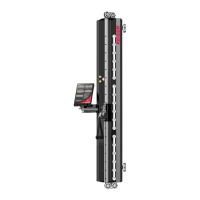
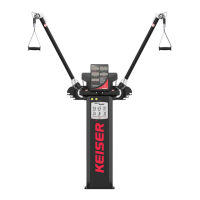
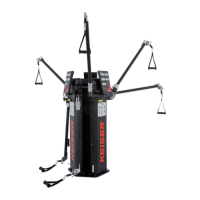
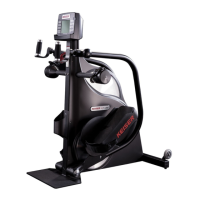
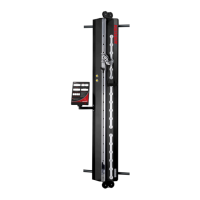
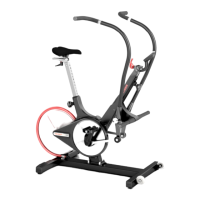
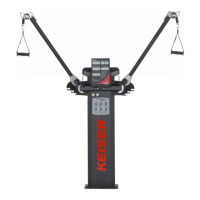
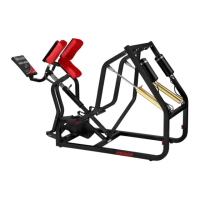
The Keiser AIR300 Leg Extension Pro is a fitness machine designed for physical activity and physiotherapy, focusing on strengthening the quadriceps muscles of the leg. It utilizes Keiser's Dynamic Variable Resistance technology, which allows for safe strength building at any speed, crucial for maximizing power. The machine is intended for individuals aiming to maintain and restore maximum movement and functional ability throughout their lifespan, including those with limitations due to aging, injury, pain, disease, disorders, conditions, or environmental factors. It is suitable for use in training areas where access and control are regulated by a responsible person.
Function Description:
The AIR300 Leg Extension Pro allows users to perform leg extension exercises to target the quadriceps. Resistance is provided by an air-based pneumatic system, offering a smooth and consistent load throughout the range of motion. The machine features independent exercise arms, allowing for unilateral or bilateral training. Users can adjust the resistance and seat position to ensure proper alignment and maximize effectiveness. The integrated Power Display provides real-time workout data, including resistance, repetitions, and peak power, which can be tracked and recorded using an optional eChip.
Important Technical Specifications:
- Resistance Range: 0 - 236 lbs (0 – 107 kg), adjustable in 1 lb/kg increments.
- Range of Motion: 135°.
- Maximum User Weight Limit: 441 lbs (200 kg).
- Dimensions: 45 inches (1,143 mm) high, 40 inches (1,016 mm) deep, 39 inches (991 mm) wide.
- Weight: 150 lbs (68 kg).
- Air Storage Tanks: Two air accumulators with a maximum working pressure of 125 psi (8.6 bar), maximum working temperature of 104°F (40°C), minimum working temperature of 32°F (0°C), and a maximum vessel capacity of 68 in³ (1.11 L) per tank.
- Power Supply: 2 x 1.5V D Alkaline Batteries (Keiser PN 966500) for the Power Display, and 1 x 3V CR2032 Lithium Coin Cell Battery (permanently attached, not serviceable).
- Air Supply: Requires connection to a Keiser Air System (compressor not included), operating with clean, dry, regulated compressed air at 100-120 psi (6.89-8.27 bar).
- Certifications: ISO/EN 20957-1 Accuracy Class A (High accuracy) and Usage Class S (Studio, commercial use); IEC/EN 60601-1 and IEC/EN 60601-1-2. CE, TÜV SÜD, UKCA marked.
Usage Features:
- Resistance Adjustment: Resistance is easily increased or decreased using "+" and "-" thumb buttons located on the handgrips.
- Seat Adjustment: The seat back can be pulled forward or a lever lifted to move it backward, allowing users to align their knees with the machine's pivot point for optimal biomechanics.
- Power Display: The display shows current resistance, number of repetitions, percent of peak power, and peak power output.
- eChip Compatibility (Optional): An eChip can be inserted into the eChip Reader to record and recall workout data, including set count, target reps, target resistance, and machine adjustment settings. This allows for personalized tracking and progression.
- Power Test (KEISER 6-Rep Test): A specific procedure to determine the user's resistance setting for maximum power, involving two sets of three repetitions at low and high resistance levels. This test helps establish a baseline for safe and effective training.
- Concentric and Eccentric Phases: Users are instructed to extend legs at the knee during the concentric (upward) phase, maintaining back support. The eccentric (downward) phase should be performed in a smooth, controlled manner, with a slower speed recommended.
- Breathing: Exhale during the concentric phase and inhale during the eccentric phase.
- Training Tips: Emphasizes maintaining natural spine curvature, avoiding body rocking, holding handgrips for stability, and the option for single-leg exercise by resting one foot under the other leg cushion.
- Safety: Users are advised to consult a physician before starting any exercise program, warm up properly, maintain good form, and stop immediately if pain or faintness occurs. Adjustments should not be made during exercise.
Maintenance Features:
- Daily Maintenance:
- Perform a "Proper Operation Check" to ensure safe and proper function.
- Clean chrome and painted surfaces.
- Wipe down the equipment with a clean cloth, using water and mild soap for areas in contact with sweat, then wipe dry.
- Weekly Maintenance:
- Check susceptible parts (upholstery, belt/linkage system, thumb buttons, hand grips) for damage or wear.
- Wax chrome, paint, and upholstery where applicable.
- Clean hand grips.
- Inspect the air line filter.
- Monthly Maintenance:
- Check externally visible screws for proper fastening.
- Clean and lubricate cylinder rods.
- Inspect air lines for kinks, tears, or breaks.
- Inspect the frame for weakening in weld areas.
- Quarterly Maintenance:
- Lubricate pivot bushings.
- Inspect exhaust mufflers and air filter for discoloration; replace if necessary.
- Verify compressor(s) cycle on/off between 100-120 psi (6.89-8.27 bar).
- Annually and Other Required Maintenance:
- Clean accumulated dust from the frame, belt system, air tanks, and cylinders.
- Replace mufflers if discolored (requires 11/16 inch wrench or adjustable wrench).
- Replace the air filter if the element is dirty (turns pink or red; requires small needle nose pliers and cutter tool).
- Visually inspect air lines and communication wires for damage.
- Lubricate cylinder rods with SAE 30 motor oil or silicon-based spray.
- Visually inspect belts and linkage for cracks, frayed edges, or excessive wear; ensure bolts are tightened.
- Visually inspect moving components, ensuring the seat lever and adjustment mechanism function properly, and all nuts and bolts are tightened.
- Battery Replacement: The Power Display indicates "Lo-bA" when batteries are low. Replacement involves unscrewing the brass nut on the processor box, removing the cover, replacing the two D batteries (observing polarity), and reassembling.
- Important Notes: Service and repair should only be performed by Keiser-certified technicians. Only use replacement parts supplied/recommended by Keiser Corporation. Do not use household or industrial cleaners containing caustic chemicals. Disconnect the equipment from the air supply and release all air before performing routine maintenance.

 Need help?
 General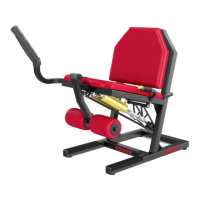

 To Next Page