-17-
SADDLE POSITION — FORE AND AFT
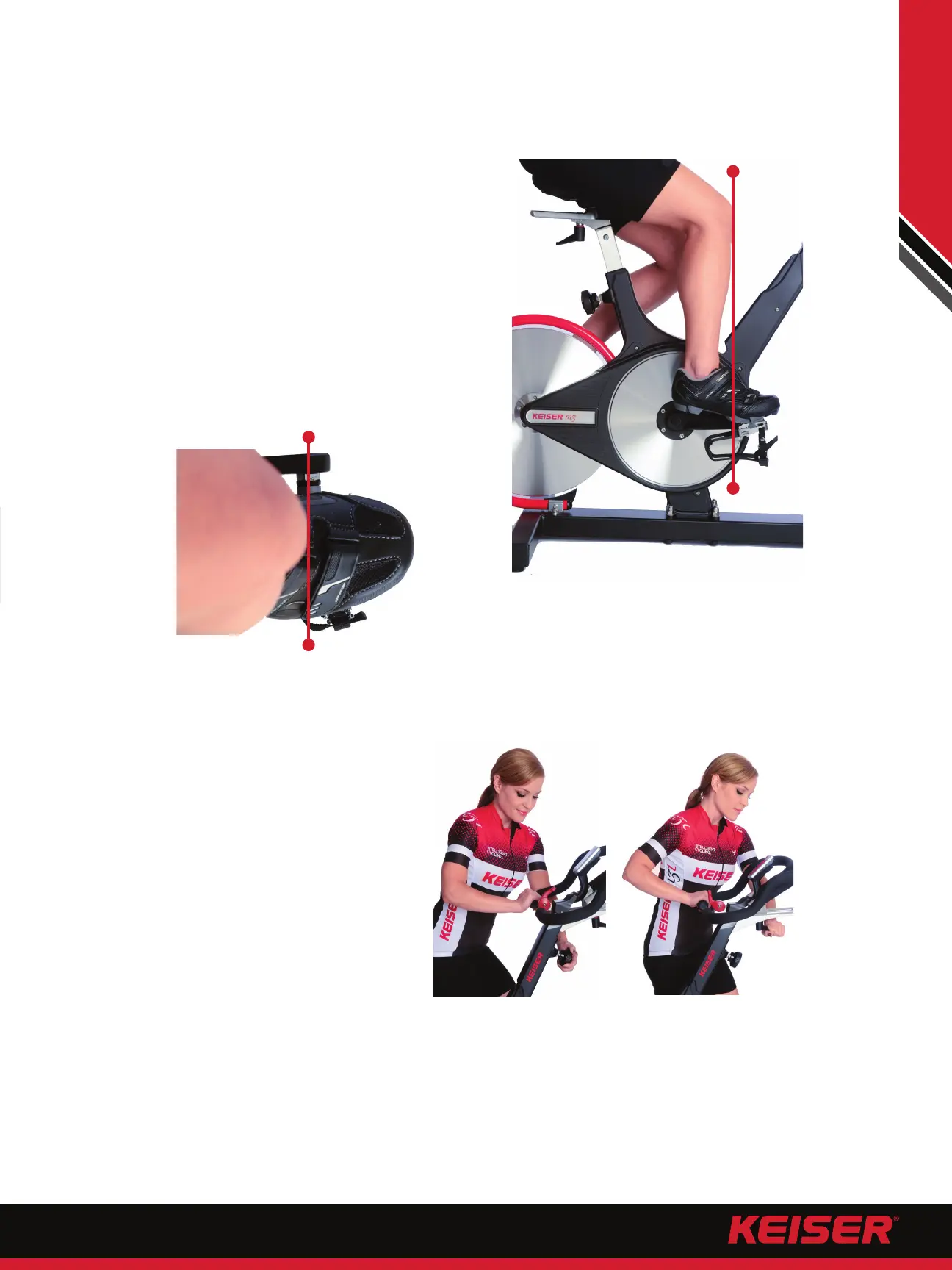
• Ask the rider to bring the right foot halfway down (at
the 3 o’clock position with the crank arms parallel to
the floor) and keep both pedals level
•
With the hands remaining on the handlebars, the front
of the knee should be in line with the center of the
pedal where the pedal attaches to the crank arm
• If the knee is in front of the pedal-attachment bolt,
move the saddle back
• If the knee is behind the pedal-attachment bolt, move
the saddle forward
•
Adjust and re-check the front of the knee alignment
HANDLEBARS — HEIGHT AND FORE AND AFT POSITION
• When first positioning the handlebars, the
lowest part of the handlebars should be
slightly higher than the saddle height
• Handlebars positioning may also be
affected by low back flexibility, hip
flexibility and core stability and may
change as mobility or stability improves
• Adjust the handlebars until neutral spine
is comfortably achieved while pedaling
• New riders or riders who have difficulty
maintaining a forward flexed position
may prefer to have their handlebars
slightly higher
• Outdoor cyclists may want to adjust
the handlebars to mimic their outdoor
training. Allow them to drop their handlebars to a position no lower than the tip of their saddle.
• Keiser’s handlebars are not meant to replace the drop-down position on an outdoor bike. Placing the
handlebars too low may result in the participant’s knees hitting the handlebars or arms.
TECHNICAL ASPECTS


 To Next Page