WATER SOFTENER START-UP
SECTION 1
8
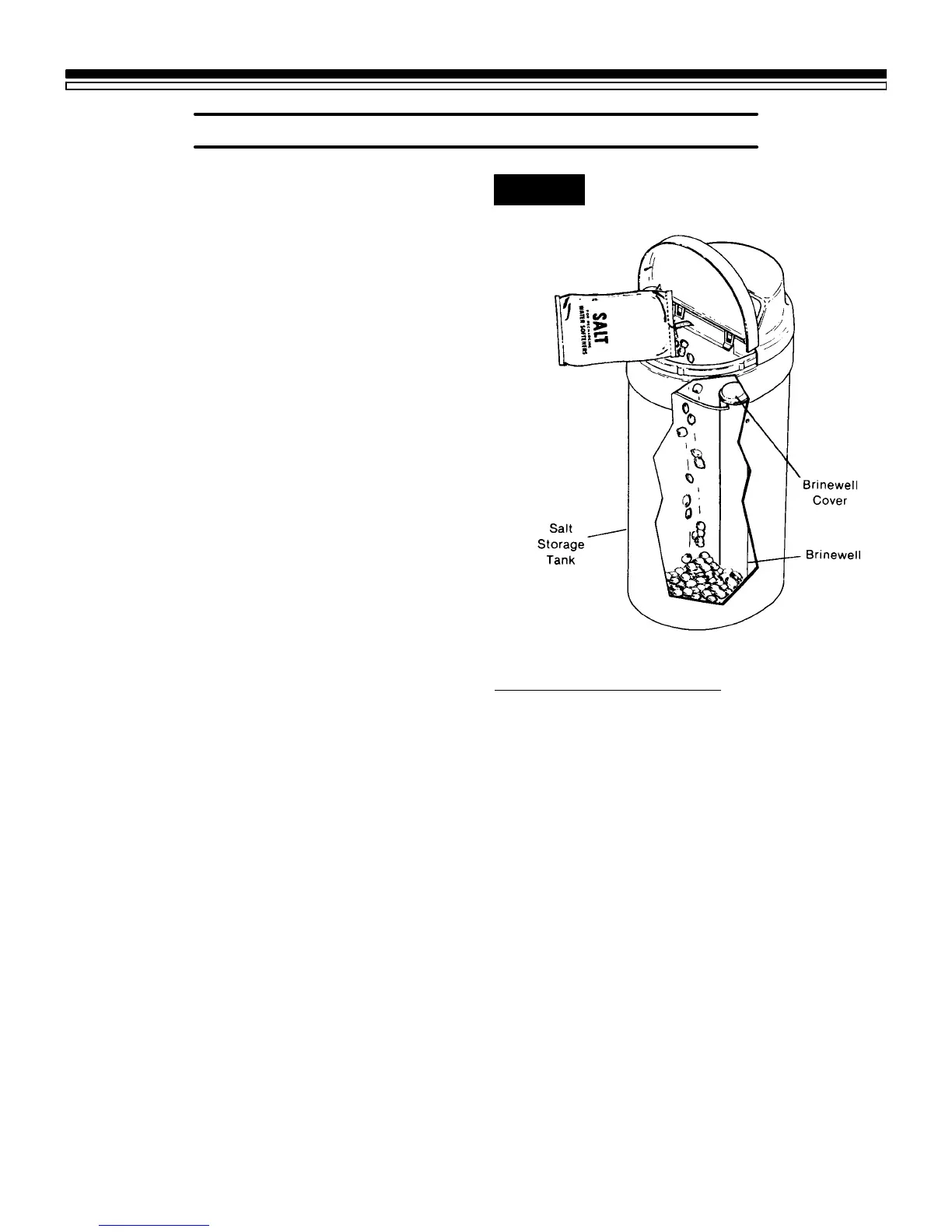
1E. FILL THE STORAGE TANK WITH SALT
Brine(saltdissolvedinwater)isneeded foreach
and every regeneration. The water for making
brine is metered intothe salt storagetank bythe
softener.However,youmustkeepthetankfilled
with salt.
Fill the tank with NUGGET or PELLET water
softener salt. DO NOT use rock salts, as they
have dirt and sediments that will stop the
softener from working.
Before filling, be sure the brinewell cover is in
place on the top of the brinewell. Salt storage
capacity is shown on page 21.
NOTES:
In humid areas, it is best to fill the storage tank
half-full, and to refillitmoreoften.Saltbridging
(seepage 14)occursmoreoftenwhenconditions
are humid.
WATER SOFTENING SALT WITH IRON RE-
MOVING ADDITIVES — Some salts have an
additive to help the softener handle iron in the
water supply. Although this additive may help
to keep the softener resin clean, it may also
release corrosive fumes that will weaken and
shorten the life of some softener parts.
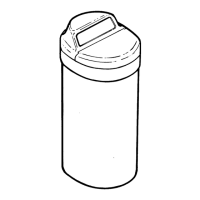
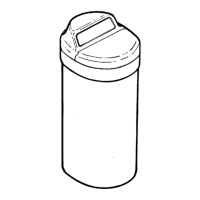
FIG. 4
SODIUM INFORMATION: Water softeners us-
ing sodium chloride for regeneration add so-
dium to the water. Persons who are on sodium
restricted diets should consider the added so-
dium as part of their overall sodium intake.
For example, if your water supply is 15 grains
hard, you would have to drink 3 quarts of
softened water to consume 335 milligrams of
sodium. That isequivalent toeating 2-1/2slices
of white bread.
Personswhoareconcerned about their drinking
water should consider a Sears Drinking Water
System that will remove or reduce in excess of
90% of the sodium and other drinking water
contaminants.
YOU HAVE NOW FINISHED THE WATER SOFTENER START UP. AFTER THE SANITIZING RE-
CHARGE, ON PAGE 7, THE SOFTENER WILL BE GIVING YOU SOFT WATER.




 To Next Page