6
NIRO EV FEATURES & FUNCTIONS GUIDE
Tire Pressure Monitoring
System Video
To view a video on your
mobile device, snap this
QR Code or visit the listed
website.
Refer to page 2 for more
information.
QR CODE
www.youtube.com/KiaFeatureVideos
Tire Pressure Monitoring System (TPMS)
†24
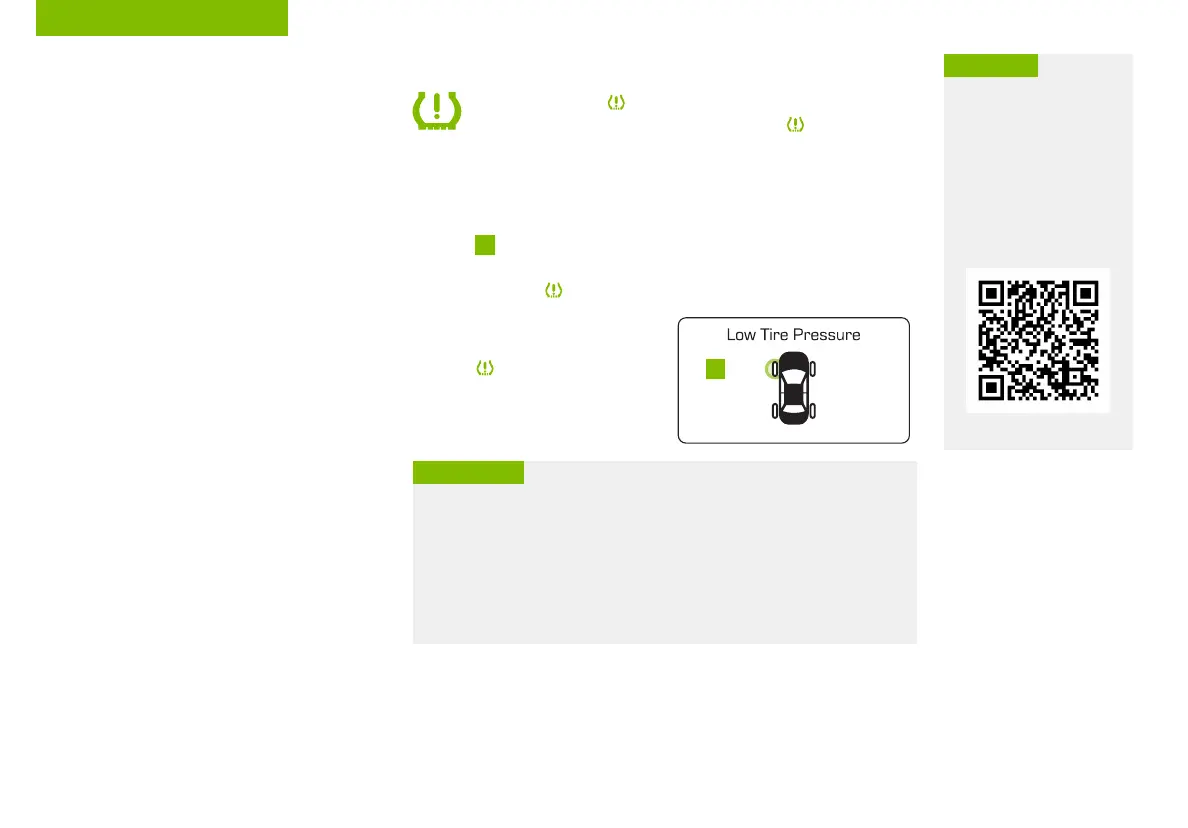
The TPMS indicator functions as both Low Tire Pressure Light
and TPMS Malfunction Indicator. The indicator
will illuminate
if it detects one or more tires is significantly underinflated, the vehicle has
a spare tire installed without TPMS or the outside temperature becomes
significantly lower.
The LCD screen in the instrument cluster will display the Low Tire Pressure
indicator
A
showing which tire(s) is underinflated. Inflate tire(s) to
specifications using an accurate digital tire pressure gauge to turn off Low
Tire Pressure Light . See front driver’s door jamb for PSI specification.
When there is a problem with the
TPMS, the TPMS Malfunction
Indicator will blink for
approximately one minute then
illuminate - see dealer for service.
• Even with TPMS, tire pressure should be checked manually at least once a
month. Only adjust tire pressure on “cold tires,” i.e., tires that are not hot in
temperature from direct sunlight or heat
• For proper maintenance and optimal fuel economy, maintain recommended
tire inflation pressures and stay within the load limits and weight distribution
recommended for your vehicle
• In winter or cold weather, the TPMS light may illuminate if the tire pressure was
adjusted to the recommended tire inflation pressure during warm weather
QUICK TIP
REMINDERS:
• Check the recommended tire pressure label located on the left side of driver's door jamb,
visible when the door is open
• Consult your dealer for service if Low Tire Pressure Light remains illuminated after inflating
your tire(s)
Personal electronic devices (such
as laptops, wireless chargers,
remote start systems, etc.) that have
electronic noise may interfere with
TPMS system, which may cause
the Malfunction Warning Indicator
(Check Engine Light) to illuminate.
Energy Consumption
There are several factors that contribute to
your electric vehicle’s energy consumption,
including maintenance of your vehicle, driving
style, environmental conditions, vehicle weight
and vehicle aerodynamics.
Below are tips on how to help reduce energy
consumption:
• Keep your vehicle in good condition
with regular maintenance
• Don’t “ride” the brake pedal
• Drive at a moderate speed, accelerating
smoothly and at a moderate rate
• Keep tires inflated to the recommended
pressure
• Travel lightly, without carrying unnecessary
weight in your vehicles
• Ensure wheels are aligned correctly
• Avoid placing large or heavy items on
roof racks
• Avoid hilly, winding or poorly maintained
roads
• Use ECO or ECO+ Drive Modes in certain
weather conditions (rain, snow, wind)
*IF EQUIPPED †LEGAL DISCLAIMERS ON BACK INSIDE COVER
INSTRUMENT CLUSTER
25
32
32
PSI32
A



 To Next Page