Introduction
WHAT IS OBD?
Introduction
WHAT IS OBD?
The D900 CanScan is designed to work on all OBD 2 compliant vehicles.
All 1996 and newer vehicles (cars, light trucks and SUVs) sold in the
United States are OBD 2 compliant.
One of the most exciting improvements in
the automobile industry was the addition of
on-board diagnostics (OBD) on vehicles, or
in more basic terms, the computer that
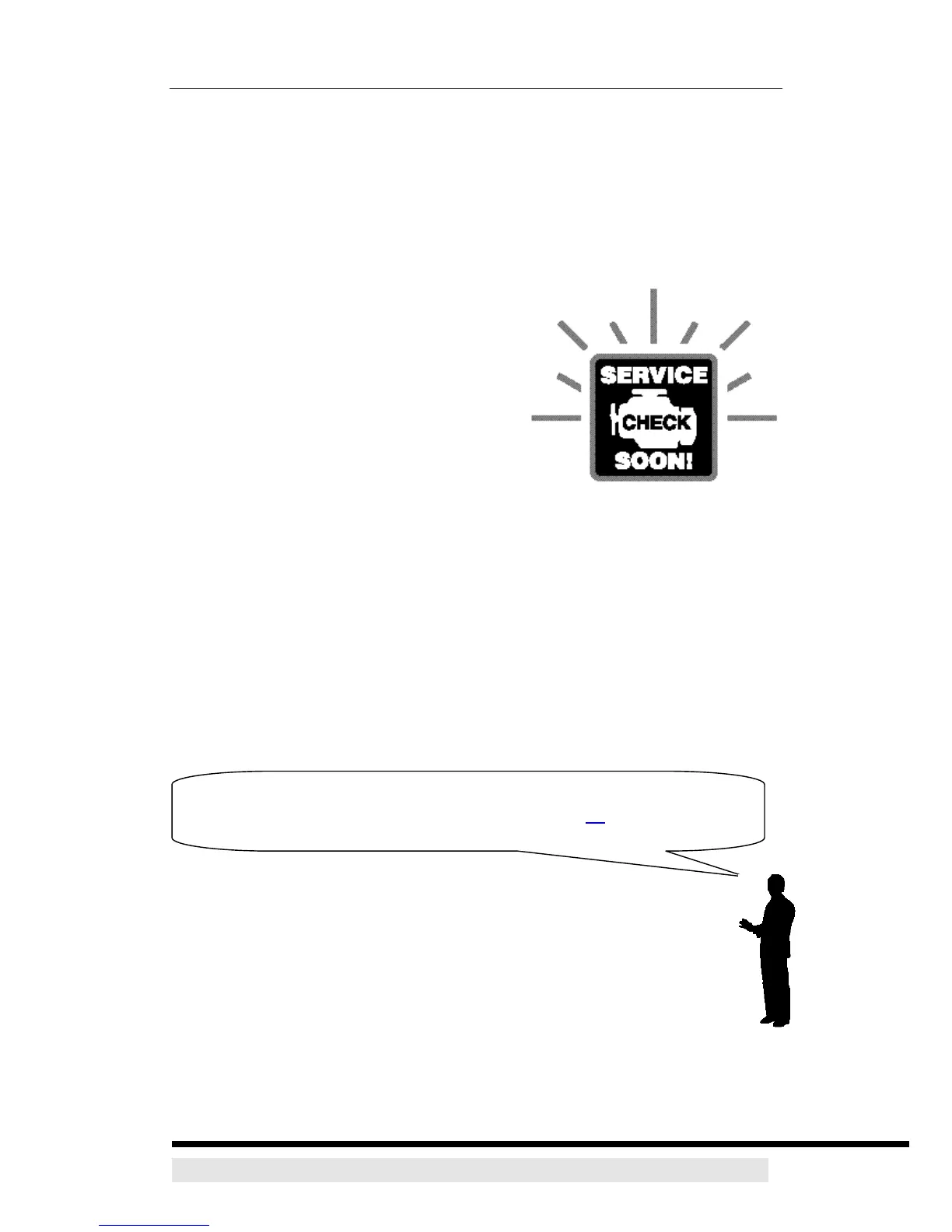
activates the vehicle’s “CHECK ENGINE”
light. OBD 1 was designed to monitor
manufacturer-specific systems on vehicles
built from 1981 to 1995. Then came the
development of OBD 2, which is on all 1996
and newer vehicles sold in the U.S. Like its predecessor, OBD 2 was adopted
as part of a government mandate to lower vehicle emissions. But what makes
OBD 2 unique is its universal application for all late model cars and trucks –
domestic and import. This sophisticated program in the vehicle’s main
computer system is designed to detect failures in a range of systems, and can
be accessed through a universal OBD 2 port, which is usually found under the
dashboard. For all OBD systems, if a problem is found, the computer turns on
the “CHECK ENGINE” light to warn the driver, and sets a Diagnostic Trouble
Code (DTC) to identify where the problem occurred. A special diagnostic tool,
such as the D900 CanScan, is required to retrieve these codes, which
consumers and professionals use as a starting point for repairs.
D900 CanScan 2
To learn more about vehicle Computer Control Systems and OBD 2,
see COMPUTER ENGINE CONTROLS on page 12.


 To Next Page