SW2 Series
5
Combustible Items Include: Moving Objects Include:
• Wood • Overhead doors
• Paper • Vehicles on lifts
• Fabric • Cranes
• Chemicals • Hoists
• Wall or roof insulation • Car wash equipment
• Plastics
When installing the infrared heater system, the minimum clearances to combustibles must be
maintained. These distances are shown in Chart 1.3 and on the heater. If you are unsure of the potential
hazards,consultyourlocalremarshal,reinsurancecarrier,orotherqualiedauthoritiesonthe
installation of infrared heaters for approval of the proposed installation.
A critical safety factor to consider before installation is the clearances to combustibles. Clearance to
combustiblesisdenedas
the minimum distance you must have between the indicated surface and
the combustible item
. Considerations must also be made for moving objects around the infrared heater.
The following is a partial list of items to maintain clearances from:
Hazards Include:
For maximum safety the building must be evaluated for hazards before installing the heater system.
Examples include, but are not limited to:
• Gasandelectricallines
• Combustible and explosive materials
• Chemical storage areas
• Areas of high chemical fume concentrations
• Provisions for accessibility to the heater
• Adequate clearances around air openings
• Vehicle parking areas
• Vehicles with lifts or cranes
• Storage areas with stacked materials
• Lights
• Sprinkler heads
• Overhead doors and tracks
• Dirty, contaminated environment
Signs shall be posted specifying the maximum permissible stacking height in order
to maintain clearances to combustibles.
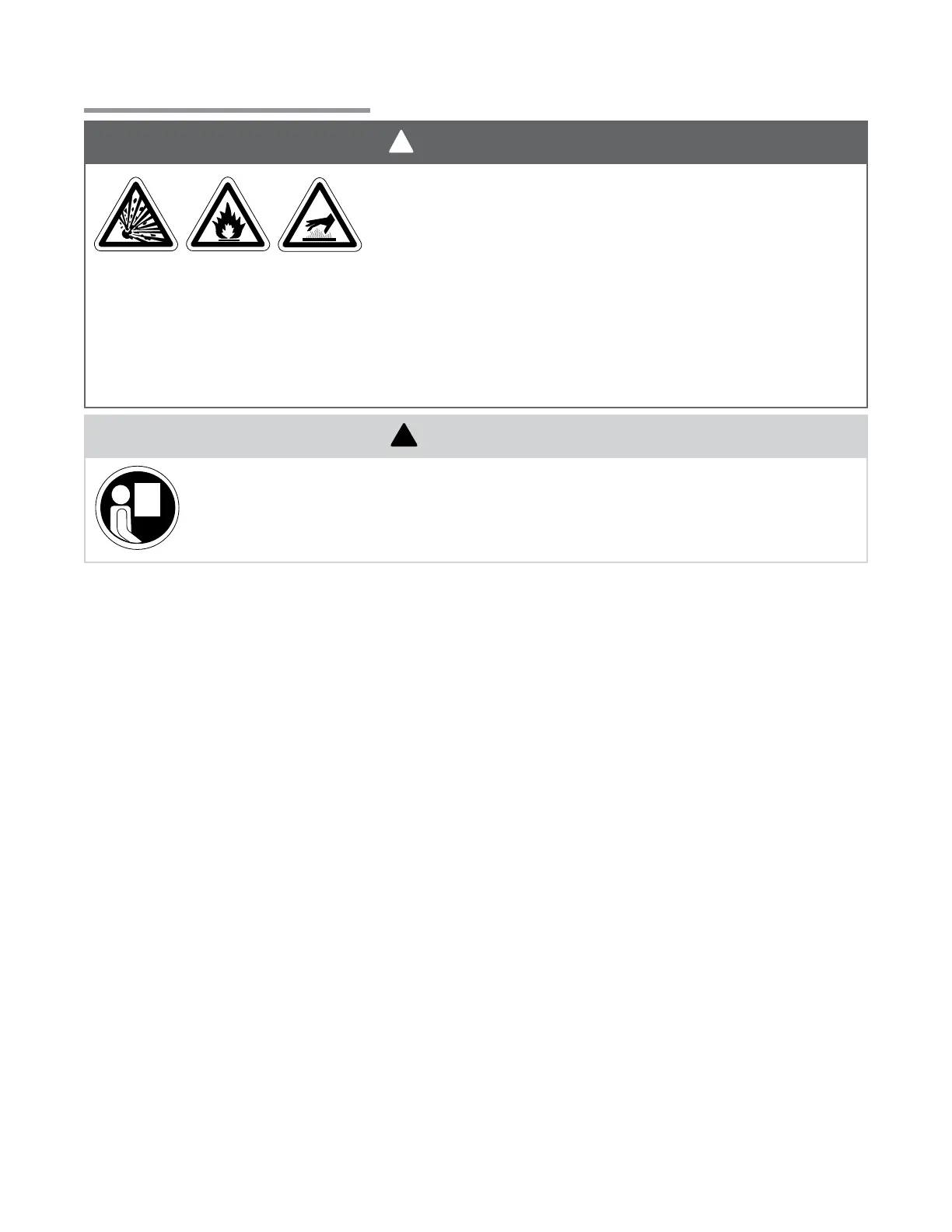
Placementofexplosiveobjects,ammableobjects,liquids,and
vaporsclosetotheheatermayresultinexplosion,re,
property damage, serious injury, or death. Do not store or use
explosive objects, liquids, or vapors in the vicinity of the heater.
Failure to comply with the published clearances to combustibles could result in personal injury, death,
and/or property damage.
The outside surfaces of the heater are hot during operation and after operation. If contact is made,
permanent skin damage may occur. Do not move, handle, or service the unit during operation or while
hot.
1.0 Safety • Clearances to Combustibles
Clearances to Combustibles
WARNING
CAUTION


 To Next Page