
 Need help?
Do you have a question about the Kooper 5917144 and is the answer not in the manual?
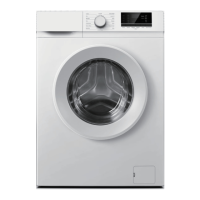
This document provides comprehensive instructions for the Kooper 5917144 washing machine, a domestic appliance designed for efficient and safe laundry care.
The Kooper 5917144 is a washing machine designed for domestic use, offering various programs and features to effectively clean different types of fabrics. Its primary function is to wash clothes using water, detergent, and mechanical action, followed by rinsing and spinning to remove excess water. The machine incorporates features to optimize energy and water consumption, and includes safety mechanisms to protect users and the appliance.
The washing machine is designed to operate on alternating current only and requires connection to a grounded outlet with a minimum capacity of 10 Amps.
The Kooper 5917144 offers a user-friendly interface with a program selection knob, a display, and various buttons for auxiliary functions.
Control Panel Components:
Program Selection and Customization: The machine offers a variety of programs tailored for different fabric types and soiling levels, including:
Auxiliary Functions:
Detergent and Softener Use: The detergent drawer has three compartments: for prewash, main wash, and softener. Users should follow detergent packaging instructions for dosage, considering laundry quantity, soiling, and water hardness. Liquid detergents should be used with a dedicated cup in the main wash compartment, and gel/tablet detergents can be placed directly in the drum for optimal results.
Child Lock: The Child Lock function prevents children from tampering with the machine, avoiding accidental program changes. It is activated by pressing and holding the third and fourth auxiliary function buttons for 3 seconds.
Energy Saving Tips:
Regular maintenance is crucial for extending the product's lifespan and preventing issues.
Cleaning the Detergent Drawer: The detergent drawer should be cleaned regularly (every 4-5 washing cycles) to prevent powder detergent accumulation. This involves removing the drawer, cleaning it and the siphon with lukewarm water, and then reinserting it.
Cleaning the Loading Door and Drum: For models with a "Drum Clean" program, this should be used periodically (every 1-2 months). For models without, a cotton program without pre-wash at a recommended temperature with a drum cleaning agent (or anti-limescale powder/tablet) should be run without laundry. After cleaning, the bellow inside the drum should be wiped dry. Foreign metal substances should be removed to prevent rust stains, and stainless steel cleaning agents can be used for existing stains. Sponges or abrasive materials should be avoided.
Cleaning the Body and Control Panel: The machine's body should be wiped with soapy water or mild gel detergents and dried with a soft cloth. The control panel should be cleaned with a soft, damp cloth.
Cleaning Water Intake Filters: Filters located at the end of each water intake valve and hose connection should be cleaned when dirty (recommended every 6 months in hard water areas). This involves closing taps, removing hose nuts, and cleaning the filters with a brush or pliers under running water.
Draining Remaining Water and Cleaning the Pump Filter: The pump filter prevents solid objects from clogging the pump impeller. If the machine fails to drain, the filter is clogged and needs cleaning (every 3 months or when clogged). Before cleaning, the machine must be unplugged, and the water inside must cool down. Water should be drained into a container by loosening the pump filter anticlockwise, then the filter and surrounding area should be cleaned of residues and fibers before reinstallation.
Transportation: Before transporting the machine, it must be unplugged, water supply and drain hoses removed, all remaining water drained, and the transportation safety bolts reinstalled in reverse order of removal. The machine should never be moved without these bolts properly secured.

 To Next Page
 General