EasyManua.ls Logo

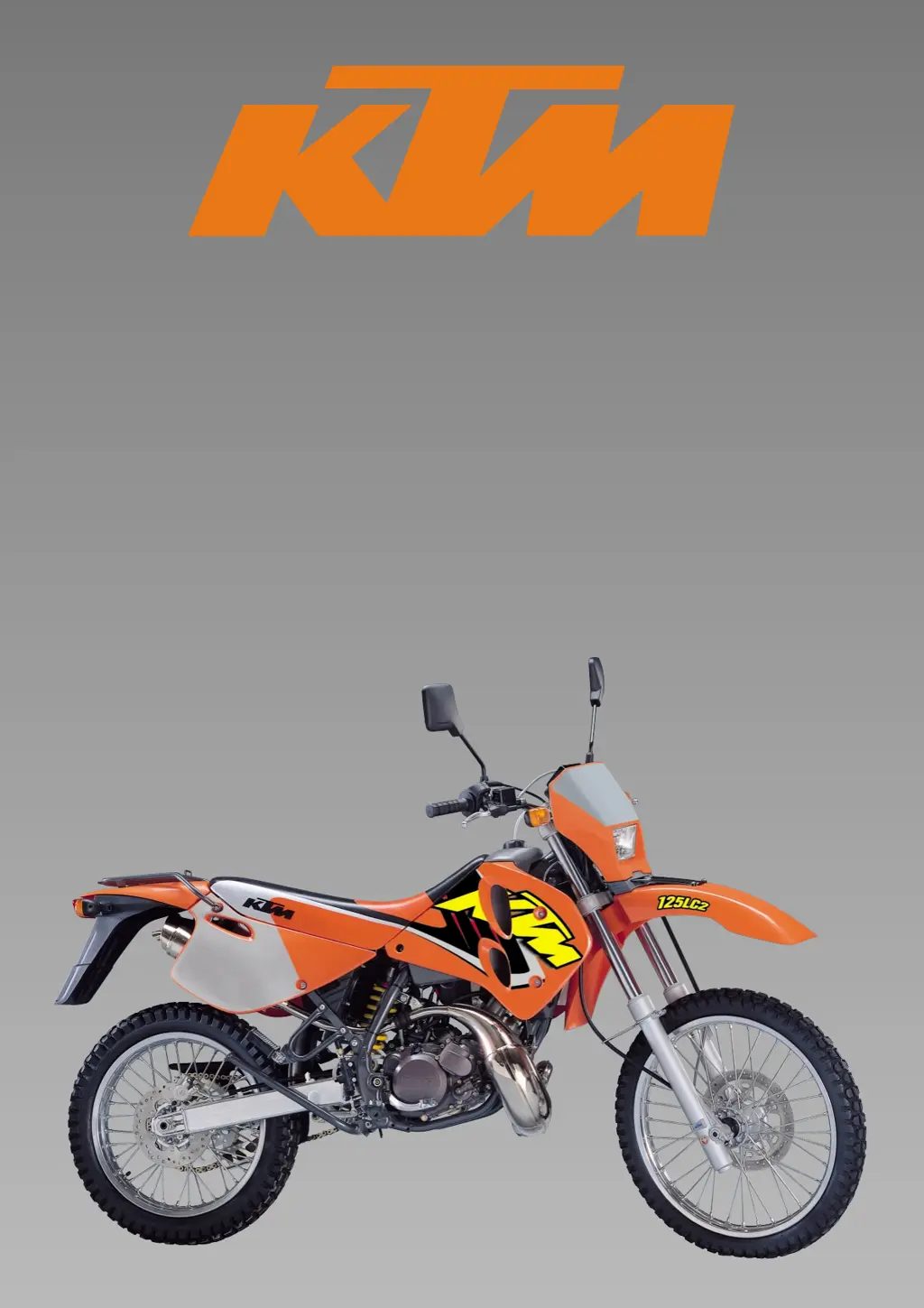
KTM 125 LC2 1998 - User Manual

KTM 125 LC2 1998
32 pages
Print Icon
To Next Page IconTo Next Page
Loading...
BEDIENUNGSANLEITUNG
OWNER’S HANDBOOK
MANUEL D’UTILISATION
125 LC2 ‘98
ART. NR.
320531
2/98

Questions and Answers

  • D
    Danielle BushAug 18, 2025
    How to troubleshoot a KTM 125 LC2 1998 when the engine does not crank?
    • F
      floydrobertAug 18, 2025
      If the KTM Motorcycle engine doesn't crank, possible causes include an operating error, a blown main fuse, a discharged battery, or a defective ignition lock or emergency OFF switch. First, ensure the ignition is switched on. If that doesn't work, replace the main fuse. If the battery is discharged, recharge it and determine the cause of the discharge. If the issue persists, check the ignition lock and emergency OFF switch.
  • C
    Christopher BanksAug 22, 2025
    What to do if my KTM 125 LC2 1998 engine overheats?
    • S
      Stephanie McneilAug 22, 2025
      If your KTM Motorcycle engine is overheating, it could be due to several reasons: not enough cooling liquid, extremely dirty radiator fins, foam in the cooling system, a bent radiator hose, or a defective thermostat. You should: 1. Replenish the cooling liquid, checking the cooling system for leaks. 2. Clean the radiator fins with a water jet. 3. Replace the cooling liquid, using a branded antifreeze agent. 4. Shorten or replace the radiator hose. 5. Check or replace the thermostat (opening temperature: 65° C).
  • J
    Jessica BishopAug 26, 2025
    Why does my KTM 125 LC2 1998 Motorcycle engine have too little power?
    • A
      Anna RothAug 26, 2025
      If your KTM Motorcycle engine has too little power, the causes might be a partially interrupted fuel supply, a dirty carburetor, a control roller malfunction, incorrect adjustment of control roller cables, high fuel level in the carburetor, extremely dirty air filters, a leaking or deformed exhaust system or faulty electronic ignition timing. To address this, clean and check the fuel system and carburetor. Turn on the ignition and check if the cleaning cycle of the control roller is executed; if not, check the control roller for smooth running or check the servomotor. Adjust the cables, disassemble and clean the carburetor, and check it for wear. Clean or replace the air filter, and check the exhaust system for damage. If problems persist, have the ignition system checked.
  • C
    carlhernandezAug 29, 2025
    What causes a KTM 125 LC2 1998 Motorcycle battery to discharge and how to fix it?
    • L
      Lisa CamachoAug 29, 2025
      If your KTM Motorcycle battery is discharged, it might be because the ignition (power consumer) was not turned OFF, due to discharge caused by residual current, or no charge. To solve this, charge the battery according to instructions. Also, perform an electric loss test and check the connections and components of the charging system.
  • C
    christina78Aug 31, 2025
    How do I fix a KTM 125 LC2 1998 Motorcycle engine that fails to idle?
    • R
      Ryan GarciaSep 1, 2025
      If your KTM Motorcycle engine fails to idle, it could be due to a clogged idling jet, incorrect adjustment of the adjusting screws on the carburetor or a defective ignition system. Disassemble the carburetor and clean the jets. Have the carburetor adjusted and the ignition system checked.
  • V
    vcampbellSep 4, 2025
    What causes a KTM Motorcycle engine to misfire or backfire?
    • J
      juliegarciaSep 4, 2025
      If your KTM Motorcycle engine misfires or backfires into the carburetor, it could be due to a fuel shortage or the engine taking in unmetered air. Check and clean the fuel system and carburetor. Also, check the intake flange and carburetor for a tight fit.
  • G
    Gregory StewartSep 7, 2025
    Why does my KTM Motorcycle engine fail to rev high?
    • G
      gomezvirginiaSep 7, 2025
      If the KTM Motorcycle engine fails to rev high, it might be because the fuel level in carburetor is too high, there is a leaking float needle valve, the float is not tight or has no axial play, carburetor jets are loose or the electronic ignition timing is faulty. Disassemble and clean the carburetor, and check it for wear. Replace the float needle valve, replace the float, resurface the float, and tighten the jets. Have the ignition system checked.
  • D
    Donald OrtegaSep 12, 2025
    What causes all lamps to blow out on a KTM Motorcycle?
    • V
      Virginia CarrilloSep 12, 2025
      If all activated lamps are blown out on your KTM Motorcycle, it is likely due to a defective voltage regulator. Remove the seat and fuel tank, and check the connections, then check the voltage regulator.
  • R
    Ryan GarciaNov 14, 2025
    What to do if my KTM Motorcycle cranks but won't start?
    • T
      Tracy ClarkNov 14, 2025
      If your KTM Motorcycle engine cranks but doesn't start, it could be due to several reasons. The emergency OFF switch may be in the wrong position, or it may be defective. The fuel tank could be empty, or the fuel contaminated. Other potential issues include a loose or defective float, an extremely dirty air filter, interrupted fuel supply, a flooded engine, a sooty or wet spark plug, incorrect electrode gap, worn electrodes, a defective spark plug or connector, oxidized connectors, a defective pulse generator coil, water in the carburetor, clogged jets, or improper carburetor fitting. Position the emergency OFF switch correctly. If it's defective, disconnect the 4-pole connector of the switch (underneath the headlamp mask), shift to 2nd gear, and push the motorcycle. If the engine starts, ...

Summary

Introduction

Locating Serial Numbers

Frame and Engine Identification Numbers

Identifies frame and engine numbers for motorcycle identification and registration.

Operation Instruments - Controls

Clutch and Choke Lever Operation

Explains the operation, adjustment, and required play of clutch and choke levers.

Hand Brake, Speedometer, and Indicator Lamps

Details hand brake operation, dashboard instruments, warning lights, and their functions.

Ignition Lock and Combination Switch Functions

Explains ignition lock positions and combination switch operations for lights and horn.

Starter and Emergency OFF Switches

Covers the electric starter operation and the emergency shut-off switch functions.

Fuel Filler Cap and Fuel Tap Operation

Instructions for opening/closing the fuel filler cap and operating the fuel tap.

Fuel and Oil Tank Details

Information on fuel type, capacity, reserve, and engine oil requirements.

Gear Shift, Brake Pedal, and Steering Lock

Explains gear shifting, foot brake pedal adjustment, and steering lock mechanisms.

Baggage Carrier Capacity and Use

Information on the load capacity and proper use of the baggage carrier.

Driving Instructions

Pre-Ride Checks and Running-In Procedure

Essential pre-ride checks and the initial engine break-in procedure for longevity.

Riding Techniques and Safety Precautions

Guidance on proper riding posture, handling, and general safety precautions.

Engine Starting Procedures (Cold and Warm)

Step-by-step guides for starting the engine when cold and warm.

Starting Off and Handling Flooded Engine

Procedures for beginning to ride and addressing a flooded engine situation.

Shifting, Braking, and Parking Procedures

Covers gear shifting, braking techniques, and stopping and parking procedures.

Periodic Maintenance Schedule

Maintenance Work on Chassis and Engine

Tool Kit and Seat Removal;Installation

Location of the tool kit and steps for seat removal and installation.

Steering Head Bearings and Shock Absorber Preload Adjustment

Procedures for checking steering head bearings and adjusting rear shock absorber preload.

Chain Tension Check and Adjustment

Instructions for checking and adjusting the drive chain tension.

Chain Maintenance, Wear, and Disc Brake Information

Guidance on chain care, wear checks, and disc brake system details.

Brake Fluid Type and Reservoir Checks

Information on brake fluid type, reservoirs, and recommended fluid for optimal braking.

Hand Brake Lever Adjustment and Front Brake Fluid Check

Setting hand brake pressure point and checking front brake fluid level.

Front Brake Pad Inspection

Procedure for inspecting the thickness of front brake pads for safety.

Foot Brake Pedal Adjustment and Rear Brake Fluid Check

Adjusting foot brake pedal free play and checking rear brake fluid level.

Rear Brake Pad Inspection

Procedure for inspecting the thickness of rear brake pads for safety.

Front Wheel Removal and Installation Procedures

Detailed steps for removing and mounting the front wheel safely.

Rear Wheel Removal and Installation Procedures

Detailed steps for removing and mounting the rear wheel safely.

Tire Pressure, Condition, and Spoke Tension

Guidelines for checking tire pressure, condition, and wheel spoke tension.

Main Fuse Location and Function

Location and function of the main fuse protecting electrical circuits.

Lighting Bulb Replacement Guide

Procedures for replacing headlight and parking light bulbs.

Battery Maintenance and Safety Precautions

Information on battery maintenance, safety precautions, and proper handling.

Battery Charging and Cooling System Overview

Procedures for charging the battery and an overview of the cooling system's operation.

Cooling Liquid Level and Cable Adjustments

How to check cooling liquid level and adjust clutch, choke, and throttle cables.

Idle Speed Adjustment Procedure

How to adjust the engine's idle speed using the idle screw.

Gear Oil Level Check and Change

Procedures for checking and changing the engine's gear oil.

Oil Pump Bleeding Procedure

Steps to bleed the oil pump and lines after the oil tank has been emptied.

Trouble Shooting

Engine Starting Problems and Solutions

Common causes and remedies for engine not cranking or failing to start.

Engine Performance and Overheating Issues Troubleshooting

Troubleshooting for low power, misfires, and engine overheating problems.

Electrical and Battery System Issues

Addresses problems with lamps, voltage regulator, and battery discharge.

Cleaning and Conservation

Motorcycle Cleaning and Winter Operation Precautions

Guidelines for cleaning the motorcycle and precautions for winter operation.

Storage Procedures

Technical Specifications - Chassis

Chassis Details and Torque Specifications

Technical data for frame, suspension, brakes, and required torque values.

Technical Data - Engine

Engine Specifications and Carburetor Settings

Details on engine components, lubrication, and basic carburetor settings.

KTM 125 LC2 1998 Specifications

General IconGeneral
Year1998
ManufacturerKTM
Model125 LC2
CategoryMotorcycle
Engine TypeSingle cylinder, two-stroke
Displacement124.8 cc
Fuel systemCarburetor
IgnitionCDI
Transmission6-speed
Rear SuspensionMono Shock
Front BrakesSingle disc
Rear BrakesSingle disc
Bore x Stroke54 mm x 54.5 mm
Cooling SystemLiquid-cooled

Related product manuals