EasyManua.ls Logo

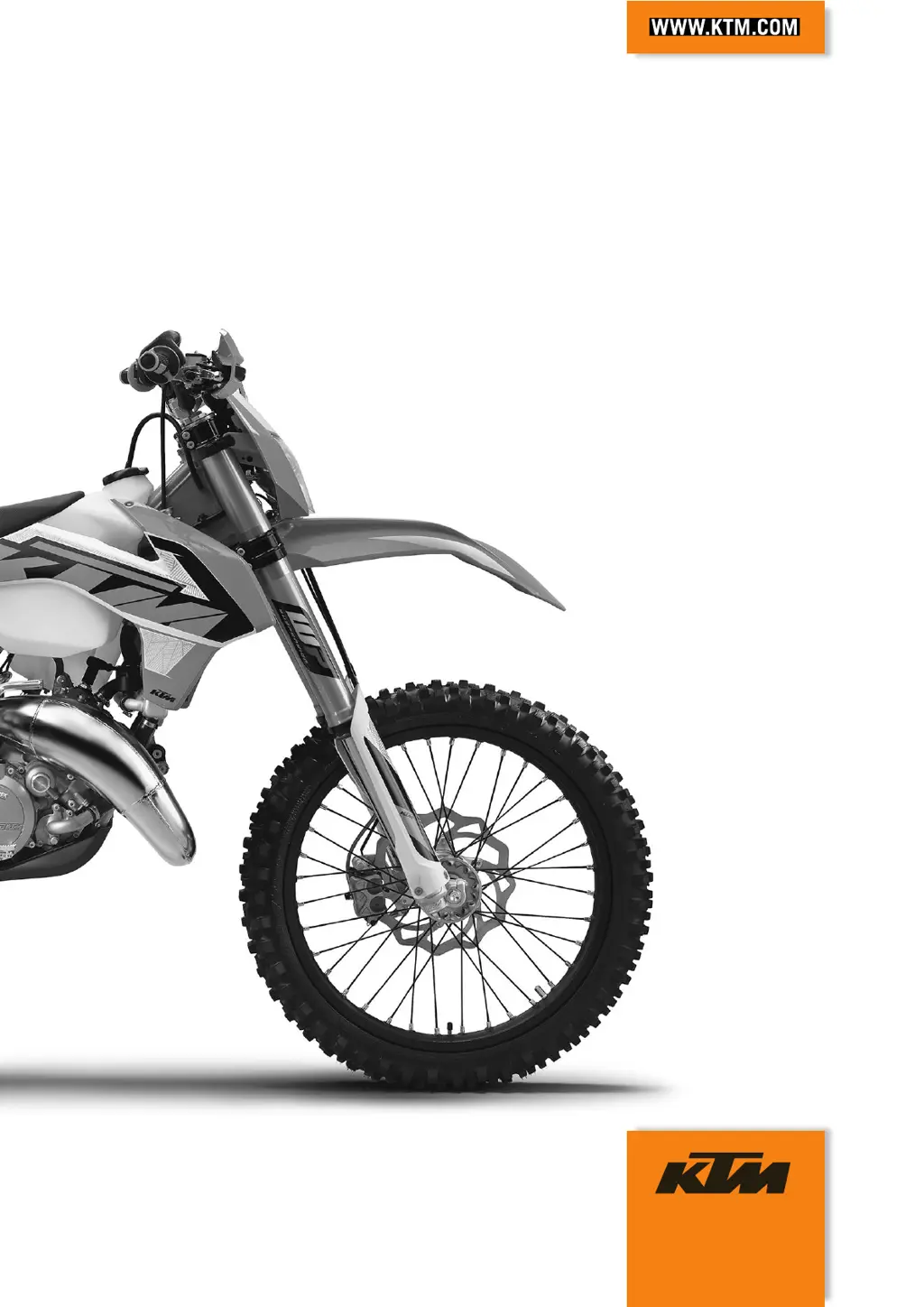
KTM 125 EXC - User Manual

KTM 125 EXC
154 pages
Print Icon
To Next Page IconTo Next Page
Loading...
OWNER'S MANUAL 2016
125 EXC EU
125 EXC Six Days EU
200 EXC EU
200 EXC AU
200 XCW US
250 EXC EU
250 EXC AU
250 EXC Six Days EU
250 XCW US
300 EXC EU
300 EXC AU
300 EXC Six Days EU
300 EXC BR
300 XCW US
300 XCW Six Days US
Art. no. 3213334en

Table of Contents

Other manuals for KTM 125 EXC

Questions and Answers

  • C
    Crystal BrewerAug 21, 2025
    Why KTM Motorcycle engine does not speed up?
    • S
      Sergio TurnerAug 21, 2025
      If the KTM Motorcycle engine does not speed up, it could be due to: the carburetor running over because the float needle is dirty or worn (check/set the carburetor components); loose carburetor jets (check/set the carburetor components); or a fault in the ignition system (check the ignition system).
  • D
    David DayAug 23, 2025
    Why KTM Motorcycle engine cannot be cranked?
    • A
      Adam RobinsonAug 23, 2025
      The KTM motorcycle engine might fail to crank due to several reasons. It could be an operating error during the start procedure. Alternatively, the battery might be discharged, requiring you to recharge it, check the charging voltage, closed current, and alternator. Other potential causes include a blown main fuse (replace it), a faulty starter relay (check it), or a defective starter motor (check it).
  • J
    john39Aug 26, 2025
    Why does my KTM 125 EXC engine overheat?
    • J
      Jacob CharlesAug 26, 2025
      Your KTM Motorcycle engine may be overheating due to several reasons: insufficient coolant in the cooling system, so check for leaks and the coolant level; not enough air stream, so switch off engine when stationary; dirty radiator fins (clean them); foam formation in the cooling system (drain and refill the coolant); a damaged cylinder head or cylinder head gasket (check them); a bent radiator hose (replace it); or an incorrect ignition point due to a loose stator (adjust the ignition for All 125 models).
  • T
    Theresa MaciasAug 27, 2025
    Why KTM Motorcycle engine has too little power?
    • A
      Aaron GregoryAug 27, 2025
      A KTM Motorcycle engine might have reduced power for several reasons: interrupted fuel feed (check the fuel tank breather, clean the fuel tap, and check/set the carburetor components); a very dirty air filter (clean the air filter and air filter box); a leaky or deformed exhaust system, or insufficient glass fiber yarn filling in the main silencer (check the exhaust system for damage and replace the glass fiber yarn filling of the main silencer); a fault in the ignition system (check the ignition system); or a damaged diaphragm or reed valve housing (check them).
  • G
    George WarrenAug 29, 2025
    What to do if KTM 125 EXC Motorcycle engine stalls or is popping into the carburetor?
    • C
      campbellpennyAug 29, 2025
      If your KTM Motorcycle engine stalls or pops into the carburetor, it might be taking in bad air, so check the intake flange and carburetor for tightness. Another possibility is that the connector or ignition coil is loose or oxidized, so clean the connector and treat it with contact spray.
  • A
    Anne WhiteSep 1, 2025
    Why KTM Motorcycle engine has no idle?
    • J
      jimmyrossSep 1, 2025
      If your KTM Motorcycle engine has no idle, the possible causes are: the idling jet is blocked (check/set the carburetor components); adjusting screws on carburetor distorted (adjust the idle speed); spark plug defective (change the spark plug); ignition system defective (check the ignition coil and the spark plug connector).
  • N
    Nathan LucasSep 3, 2025
    Why is there white smoke emission (steam in exhaust gas) from KTM Motorcycle?
    • M
      Michael HullSep 3, 2025
      White smoke (steam) from the KTM Motorcycle exhaust gas is likely due to a damaged cylinder head or cylinder head gasket, so check the cylinder head and cylinder head gas- ket.
  • J
    Jeremy WallSep 5, 2025
    Why gear oil exits at the vent hose of KTM 125 EXC Motorcycle?
    • A
      Ashley MaySep 5, 2025
      If gear oil is exiting at the vent hose of your KTM Motorcycle, it's likely because too much gear oil was added. Check the gear oil level.
  • M
    mayjoshuaSep 7, 2025
    Why there is water in the gear oil of KTM 125 EXC?
    • J
      James ReyesSep 7, 2025
      If you find water in the gear oil of your KTM Motorcycle, it's probably due to a damaged shaft seal ring or water pump. Check the shaft seal ring and water pump.
  • P
    Paul LynchSep 9, 2025
    How to fix KTM Motorcycle engine stalling or popping into the carburetor?
    • H
      Heather PattonSep 9, 2025
      If your KTM Motorcycle engine stalls or pops into the carburetor, it might be taking in bad air. In this case, check the intake flange and carburetor for tightness. Also, the connector or ignition coil may be loose or oxidized; if so, clean the connector and treat it with contact spray.

Summary

Means of Representation

Symbols Used

Explains the meaning of various symbols used in the manual for better understanding.

Formats Used

Details the typographical formats used, such as specific names, brand names, and underlined terms.

Safety Advice

Use Definition and Intended Use

Defines the intended use of KTM sport motorcycles and compliance with regulations.

Degrees of Risk and Symbols

Explains different degrees of risk (Danger, Warning, Caution) and their associated symbols.

Safe Operation

Covers safe operating practices, including avoiding impairment and proper ventilation.

Protective Clothing

Emphasizes the importance of wearing appropriate protective clothing for riding safety.

Important Notes

Guarantee and Warranty

Details conditions for warranty claims and voiding the warranty.

Service and Maintenance

Stresses the importance of proper service for optimal operation and wear prevention.

Vehicle Overview

Front Left Vehicle View

Illustrates and labels major components of the vehicle from the front left side.

Rear Right Vehicle View

Illustrates and labels major components of the vehicle from the rear right side.

Serial Numbers and Identification

Chassis Number Location

Specifies the location of the chassis number on the steering head.

Engine Number Location

Specifies the location of the engine number on the left side of the engine.

Vehicle Controls

Clutch Lever Operation

Explains the clutch lever's location and hydraulic, self-adjusting operation.

Hand Brake Lever Operation

Describes the hand brake lever's location and its function for activating the front brake.

Kill Switch (EXC Models)

Details the kill switch location and its two states: ON (circuit closed) and OFF (circuit interrupted).

Electric Starter Button

Describes the electric starter button's location and operation for starting the engine.

Fuel Tap Control

Explains the fuel tap positions (OFF, ON, RES) for controlling fuel flow to the carburetor.

Speedometer Functions

Speedometer Overview and Buttons

Introduces the speedometer display and its control buttons.

Clock Setting Procedure

Explains how to set the clock on the speedometer display.

SPEED;ODO (Odometer) Display

Details the SPEED/ODO display mode for viewing total traveled distance.

Preparing Vehicle for Use

Initial Use Advice and Precautions

Offers crucial advice and safety precautions for the first use of the motorcycle.

Engine Break-In Procedure

Details the recommended procedure for running in the engine to ensure longevity.

Preparing for Difficult Riding Conditions

Outlines preparations needed for riding in challenging conditions like sand or mud.

Riding Instructions

Pre-Ride Checks and Maintenance

Lists essential checks and maintenance tasks before riding the motorcycle.

Braking Procedures and Safety

Details proper braking techniques and safety warnings related to braking.

Refueling Procedure and Safety

Explains the correct and safe procedure for refueling the motorcycle.

Service Schedule

Regular Service Schedule

Lists maintenance tasks required at regular operating hour intervals.

Additional Service Work

Details service tasks that are performed as additional orders or at specific intervals.

Chassis Tuning

Basic Chassis Setup with Rider Weight

Explains how to adjust basic suspension settings to match rider weight.

Adjusting Low-Speed Compression Damping

Provides instructions on how to adjust the low-speed compression damping of the shock absorber.

Adjusting Fork Compression Damping

Guides on how to adjust the compression damping of the front fork legs.

Adjusting Fork Rebound Damping

Details how to adjust the rebound damping of the front fork legs.

Chassis Service Work

Raising Motorcycle with Lift Stand

Explains how to safely raise the motorcycle using a lift stand.

Removing Fork Legs

Guides on how to remove the front fork legs from the motorcycle.

Installing Fork Legs

Details the procedure for installing the front fork legs correctly.

Checking Steering Head Bearing Play

Explains how to check for play in the steering head bearing for proper handling.

Removing Shock Absorber

Details the steps for removing the rear shock absorber.

Installing Shock Absorber

Guides on how to install the rear shock absorber.

Cleaning Air Filter and Box

Details the procedure for cleaning the air filter and its box.

Adjusting Chain Tension

Provides instructions on how to adjust the drive chain tension correctly.

Brake System

Checking Front Brake Fluid Level

Guides on checking the front brake fluid level and identifying potential issues.

Adding Front Brake Fluid

Provides instructions on how to add front brake fluid safely.

Changing Front Brake Linings

Guides on the procedure for changing the front brake linings, including safety warnings.

Checking Rear Brake Fluid Level

Guides on checking the rear brake fluid level and identifying potential issues.

Adding Rear Brake Fluid

Provides instructions on how to add rear brake fluid safely.

Wheels and Tires

Removing Front Wheel

Explains the steps for removing the front wheel from the motorcycle.

Installing Rear Wheel

Provides instructions for correctly installing the rear wheel.

Checking Tire Air Pressure

Guides on checking and correcting tire air pressure for optimal performance and safety.

Electrical System

Recharging Battery

Provides instructions and recommendations for recharging the motorcycle battery.

Changing Main Fuse

Details the process for locating and changing the main fuse in the electrical system.

Changing Headlight Bulb

Provides instructions for replacing the headlight bulb.

Cooling System

Checking Antifreeze and Coolant Level

Guides on checking the antifreeze protection and overall coolant level.

Refilling with Coolant

Guides on the correct procedure for refilling the cooling system with coolant.

Engine Tuning

Carburetor Idle Setting

Highlights the importance of correct carburetor idle setting for starting and response.

Carburetor Idle Speed Adjustment

Provides detailed steps for adjusting the idle speed and mixture of the carburetor.

Engine Service Work

Checking Gear Oil Level

Explains how to check the gear oil level while the engine is cold.

Changing Gear Oil

Details the procedure for changing the motorcycle's gear oil.

Cleaning and Care

Cleaning the Motorcycle

Outlines the steps for cleaning the motorcycle, including safety precautions for pressure washing.

Winter Operation Checks and Maintenance

Provides essential checks and maintenance procedures for storing the motorcycle during winter.

Storage

Storage Procedures

Lists recommended actions for putting the motorcycle into long-term storage.

Preparing for Use After Storage

Details the steps required to prepare the motorcycle for use after a storage period.

Troubleshooting

Engine Not Cranking; Not Starting

Addresses common causes and solutions when the engine fails to crank or start.

Engine Overheating

Discusses causes and solutions for engine overheating issues.

Technical Data

Engine Specifications

Provides detailed technical specifications for the motorcycle's engine variants.

Fork Specifications

Details the technical specifications for the front fork, including damping and oil type.

Shock Absorber Specifications

Provides detailed technical specifications for the rear shock absorber.

Carburetor Tuning

Carburetor Tuning (125 Models)

Provides tuning charts for the carburetor based on altitude and temperature for 125cc models.

Carburetor Tuning (200 Models)

Offers carburetor tuning charts for 200cc models based on environmental conditions.

Substances

Engine Oil Specifications

Lists specifications and recommendations for engine oil (15W/50 and 2-stroke).

Super Unleaded Fuel Types

Details the types of super unleaded fuel suitable for the motorcycle, including ethanol content.

Auxiliary Substances

Air Filter Cleaner

Recommends a specific cleaner for the air filter.

Motorcycle Cleaner

Recommends a specific cleaner for the motorcycle's exterior.

Standards

JASO T903 MA Standard

Explains the JASO T903 MA standard for 4-stroke motorcycle engine oils.

List of Symbols

Yellow and Orange Symbols

Explains the meaning of yellow and orange symbols indicating errors or warnings.

KTM 125 EXC Specifications

General IconGeneral
Displacement124.8 cc
Bore x Stroke54 mm x 54.5 mm
StarterKickstarter
Transmission6-speed
Rear SuspensionWP Xplor PDS shock absorber
Ground Clearance370 mm
Seat Height960 mm
Fuel SystemCarburetor
CoolingLiquid cooled
Engine TypeSingle cylinder, 2-stroke
Front SuspensionWP Xplor 48
Front BrakeDisc brake
Rear BrakeDisc brake
FrameCentral double-cradle type in chrome molybdenum steel

Related product manuals