EasyManua.ls Logo

KTM 250 SX 2018 - User Manual

KTM 250 SX 2018
130 pages
Print Icon
To Next Page IconTo Next Page
Loading...
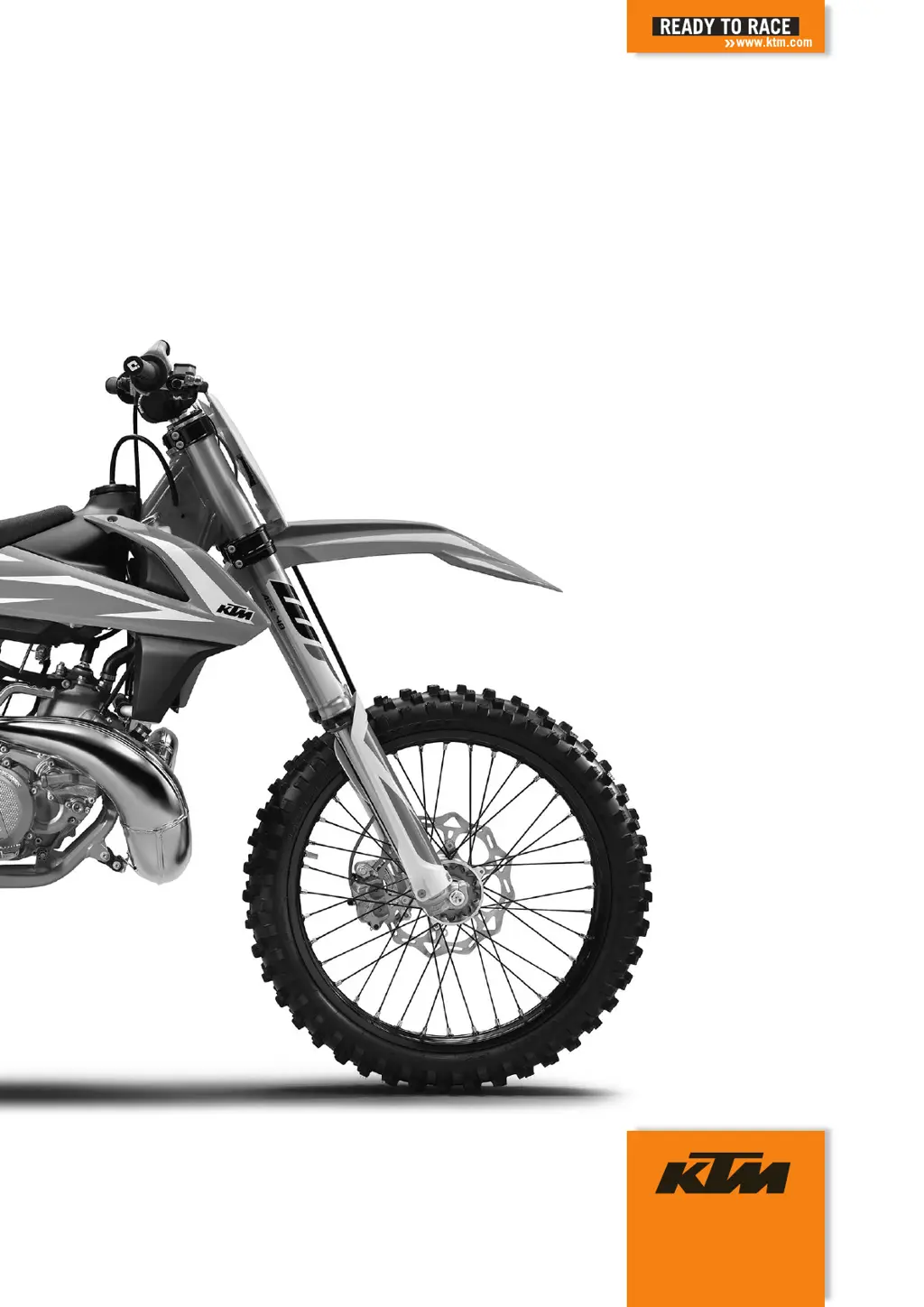
OWNER'S MANUAL 2018
250 SX
250 XC
300 XC
Art. no. 3213637en

Table of Contents

Questions and Answers

  • M
    Mrs. Kristen Perez DVMAug 16, 2025
    Why does my KTM 250 SX 2018 engine have too little power?
    • M
      moorekaylaAug 16, 2025
      If your KTM Motorcycle engine has too little power, several factors could be responsible. A fuel feed interruption could be the cause; check the fuel tank breather, clean the fuel tap, and check/set the carburetor components. A very dirty air filter can also restrict power, so clean the air filter and air filter box. Additionally, a leaky or deformed exhaust system, or too little glass fiber yarn filling in the main silencer, could reduce power; check the exhaust system for damage and change the glass fiber yarn filling in the main silencer. A fault in the ignition system or a damaged diaphragm or reed valve housing can also lead to reduced power, requiring you to check these components.
  • K
    klinejenniferAug 19, 2025
    Why KTM 250 SX 2018 engine does not speed up?
    • J
      Jason CaseAug 19, 2025
      If your KTM Motorcycle engine does not speed up, the issue might stem from several carburetor-related problems. The carburetor may be running over because the float needle is dirty or worn, or the carburetor jets could be loose; in either case, check and set the carburetor components. Additionally, a fault in the ignition system could prevent the engine from speeding up, requiring you to check the ignition system.
  • S
    spencerclayAug 25, 2025
    How to troubleshoot a KTM 250 SX 2018 that won't crank with the electric starter?
    • P
      Paul LopezAug 26, 2025
      If your KTM Motorcycle engine cannot be cranked by the electric starter, there are several potential causes. First, ensure you are following the correct start procedure. A discharged battery could be the problem; recharge the battery, and check the charging voltage, closed current, and alternator. A blown main fuse can also prevent the engine from cranking, so replace the main fuse. Additionally, a faulty starter relay or starter motor could be the cause, requiring you to check these components.
  • J
    Jasmine OrtegaAug 28, 2025
    What causes a KTM 250 SX 2018 Motorcycle engine to overheat?
    • K
      Kenneth ChenAug 28, 2025
      If your KTM Motorcycle engine overheats, several issues could be the cause. Begin by checking the cooling system for leakage and ensure the coolant level is adequate. If stationary, switch off the engine to prevent overheating due to too little air stream. Also, clean the radiator fins if they are very dirty. Foam formation in the cooling system can also lead to overheating; drain the coolant and refill it. Finally, inspect the cylinder head and cylinder head gasket for damage, and check for any bent radiator hoses, replacing them if necessary.
  • M
    Michael GrayAug 31, 2025
    What to do if KTM 250 SX 2018 Motorcycle engine stalls or is popping into the carburetor?
    • C
      Casey SanchezAug 31, 2025
      If your KTM Motorcycle engine stalls or pops into the carburetor, a lack of fuel could be the issue. For all SX models, turn the handle of the fuel tap to the ON position and refuel if necessary. For all XC models, turn the handle of the fuel tap to the ON or RES position and refuel if needed. Another potential cause is the engine taking in bad air, so check the intake flange and carburetor for tightness. Also, ensure that the connector or ignition coil is not loose or oxidized; clean the connector and treat it with contact spray.
  • Q
    qmccartySep 3, 2025
    What causes a KTM 250 SX 2018 engine to have no idle?
    • M
      Melissa WiseSep 3, 2025
      If your KTM Motorcycle engine has no idle, several factors could be responsible. A blocked idling jet could be the cause, so check and set the carburetor components. Also, distorted adjusting screws on the carburetor can prevent proper idling; adjust the idle speed on the carburetor. Additionally, a defective spark plug or a defective ignition system (ignition coil, spark plug connector) can cause idling issues; change the spark plug and check the ignition system components.
  • E
    Evan SmithSep 6, 2025
    Why is my KTM 250 SX 2018 emitting white smoke?
    • M
      Melissa FullerSep 6, 2025
      If you observe white smoke emission (steam in exhaust gas) from your KTM Motorcycle, it may indicate a damaged cylinder head or cylinder head gasket. In this case, check the cylinder head and cylinder head gasket.
  • Y
    youngstevenSep 9, 2025
    Why is gear oil exiting at the vent hose of my KTM 250 SX 2018?
    • E
      Erica MullinsSep 9, 2025
      If gear oil is exiting at the vent hose of your KTM Motorcycle, it indicates that too much gear oil was added. To resolve this, check the gear oil level.
  • S
    Sergio MoonSep 12, 2025
    How to fix water in the gear oil of my KTM 250 SX 2018 Motorcycle?
    • J
      John AndersonSep 12, 2025
      If there is water in the gear oil of your KTM Motorcycle, it suggests a damaged shaft seal ring or water pump. In this case, check the shaft seal ring and water pump.
  • S
    Shawn RuizNov 21, 2025
    What to do if my KTM 250 SX 2018 engine turns but does not start?
    • K
      kevin79Nov 21, 2025
      If your KTM Motorcycle engine turns over but refuses to start, several factors could be at play. First, ensure you're following the correct start procedure. If the motorcycle has been sitting unused for an extended period, old fuel in the float chamber might be the culprit; in this case, empty the carburetor float chamber. Also, a fuel feed interruption could be the reason, so inspect the fuel tank breather and clean the fuel tap. Check and set the carburetor components. A spark plug that's oily or wet should be cleaned and dried, or replaced if necessary. Also, verify that the spark plug electrode distance (plug gap) is correctly adjusted to 0.60 mm (0.0236 in). Additionally, a fault in the ignition system or a defective kill switch could prevent the engine from starting, requiring you to...

Summary

2 Safety Advice

2.1 Use definition - intended use

Defines the intended purpose and limitations of the vehicle.

2.2 Misuse

Describes improper uses of the vehicle and potential dangers.

2.3 Safety advice

Provides general safety instructions and warnings for vehicle operation.

2.4 Degrees of risk and symbols

Explains risk symbols (Danger, Warning, Caution, Note) and their meanings.

2.6 Safe operation

Details safe operating practices, including rider fitness and environmental compatibility.

3 Important Notes

3.1 Manufacturer and implied warranty

Explains warranty conditions and the importance of authorized service.

7 Preparing for Use

7.1 Advice on first use

Offers initial advice for new riders, including safety and vehicle familiarization.

7.2 Running in the engine

Provides guidelines for the engine break-in period to ensure longevity.

8 Riding Instructions

8.1 Checks and maintenance measures when preparing for use

Lists pre-ride checks to ensure vehicle safety and operability.

8.2 Starting

Guides on starting the engine, including safety warnings and procedures.

8.3 Starting off

Instructions on how to safely start moving the motorcycle.

8.4 Shifting, riding

Covers gear shifting, riding techniques, and throttle control.

8.5 Applying the brakes

Details proper brake application techniques and warnings.

8.6 Stopping, parking

Provides instructions for safely stopping and parking the motorcycle.

8.8 Refueling

Covers the procedure for refueling the vehicle with safety precautions.

9 Service Schedule

9.2 Required work

Lists essential maintenance tasks based on operating hours or races.

9.3 Recommended work

Outlines recommended maintenance tasks for optimal performance and longevity.

10 Tuning the Chassis

10.1 Checking the basic chassis setting with the riders weight

Explains how to adjust chassis settings based on rider weight.

10.2 Air suspension AER 48

Details the AER 48 air suspension system used in the fork.

10.4 Adjusting the low-speed compression damping of the shock absorber

Guides on adjusting the low-speed compression damping of the rear shock absorber.

10.5 Adjusting the high-speed compression damping of the shock absorber

Guides on adjusting the high-speed compression damping of the rear shock absorber.

10.6 Adjusting the rebound damping of the shock absorber

Explains how to adjust the rebound damping of the rear shock absorber.

10.10 Adjusting the spring pretension of the shock absorber

Provides instructions for adjusting the rear shock absorber's spring pretension.

10.11 Adjusting the riding sag

Guides on adjusting the riding sag of the shock absorber, including spring rates.

10.13 Adjusting the fork air pressure

Explains how to adjust the air pressure in the front fork for tuning.

10.14 Adjusting the compression damping of the fork

Guides on adjusting the fork's compression damping.

10.15 Adjusting the rebound damping of the fork

Details how to adjust the fork's rebound damping.

11 Service Work on the Chassis

11.12 Adjusting the steering head bearing play

Guides on adjusting the steering head bearing play for proper steering.

11.37 Adjusting the chain tension

Provides instructions for adjusting the drive chain tension accurately.

11.44 Checking;correcting the fluid level of the hydraulic clutch

Guides on checking and topping up hydraulic clutch fluid.

12 Brake System

12.3 Checking the brake discs

Details how to check the thickness and condition of the brake discs.

12.4 Checking the front brake fluid level

Guides on checking the brake fluid level in the front reservoir.

12.6 Checking the front brake linings

Explains how to check the minimum thickness of the front brake pads.

12.10 Checking the rear brake fluid level

Explains how to check the brake fluid level in the rear reservoir.

12.12 Checking the rear brake linings

Guides on checking the minimum thickness of the rear brake pads.

15 Cooling System

15.2 Checking the antifreeze and coolant level

Guides on checking the antifreeze and coolant levels with safety warnings.

15.3 Checking the coolant level

Details how to check the coolant level in the radiator.

16 Tuning the Engine

16.1 Checking the play in the throttle cable

Explains how to check throttle cable free play for proper engine response.

16.2 Adjusting the play in the throttle cable

Guides on adjusting throttle cable play for optimal engine performance.

16.3 Carburetor setting

Introduces carburetor components and their role in engine tuning.

16.4 Carburetor - idle

Details the importance of idle settings and factory specifications.

16.5 Carburetor - adjusting the idle speed

Guides on adjusting the idle speed and mixture for stable idling.

16.6 Plug-in connector of ignition timing map adjustment

Explains ignition timing map adjustment options (Soft/Performance).

16.7 Changing the ignition timing map

Guides on switching between ignition timing maps for rideability or performance.

17 Service Work on the Engine

17.2 Checking the gear oil level

Explains how to check the gear oil level for the transmission.

17.3 Changing the gear oil

Provides instructions for changing the gear oil.

18 Cleaning, Care

18.1 Cleaning the motorcycle

Details the correct procedure for cleaning the motorcycle safely and effectively.

19 Storage

19.1 Storage

Outlines steps for preparing the motorcycle for long-term storage.

20 Troubleshooting

Engine Cannot Be Cranked (Electric Starter)

Addresses issues preventing the engine from cranking via the electric starter.

Engine Turns But Does Not Start

Troubleshoots reasons why the engine cranks but fails to start.

Engine Has No Idle

Helps diagnose and resolve issues with the engine not idling properly.

Engine Does Not Speed Up

Addresses problems with the engine failing to accelerate or rev.

Engine Has Too Little Power

Troubleshoots causes for reduced engine power output.

Engine Stalls or Is Popping Into The Carburetor

Diagnoses engine stalling or backfiring issues related to the carburetor.

Engine Overheats

Helps identify and resolve causes of engine overheating.

White Smoke Emission (Steam In Exhaust Gas)

Diagnoses the cause of white smoke from the exhaust, often related to coolant.

Gear Oil Exits At The Vent Hose

Troubleshoots issues where gear oil is leaking from the vent hose.

Water In The Gear Oil

Addresses potential contamination of gear oil with water.

21 Technical Data

21.1 Engine

Provides detailed technical specifications for the engine.

21.2 Engine tightening torques

Lists torque specifications for various engine screws and nuts.

21.3 Carburetor

Details specifications and tuning data for the carburetor.

21.8 Fork

Details technical data and settings for the front fork.

21.10 Chassis tightening torques

Lists torque specifications for chassis components.

KTM 250 SX 2018 Specifications

General IconGeneral
Displacement249 cm³
Bore x Stroke66.4 mm x 72 mm
StarterKickstarter
Transmission5-speed
Rear SuspensionWP shock absorber with linkage
Fuel Capacity7.5 liters
Front Tire80/100-21"
Rear Tire110/90-19"
Ground Clearance375 mm
Seat Height960 mm
Engine TypeSingle-cylinder, 2-stroke
Front SuspensionWP AER 48, USD fork
Front BrakeDisc brake
Rear BrakeDisc brake
IgnitionDigital CDI
Wheelbase1485 mm
FrameCentral double-cradle-type frame
Fuel SystemCarburetor

Related product manuals