G-26
ZD18(F) · ZD21(F) · ZD28(F), WSM
G GENERAL
Battery Charging
To avoid serious injury or death:
• When the battery is being activated, hydrogen and oxygen
gases in the battery are extremely explosive. Keep open
sparks and flames away from the battery at all times,
especially when charging the battery.
CAUTION
• When charging battery, ensure that the vent caps are
securely in place (if equipped).
• When disconnecting the cables from the battery, start with
the negative terminal first.
When connecting the cables to the battery, start with the
positive terminal first.
• Never check battery charge by placing a metal object across
the posts.
Use a voltmeter or hydrometer.
(For accessible maintainable type batteries with removable vent
caps.)
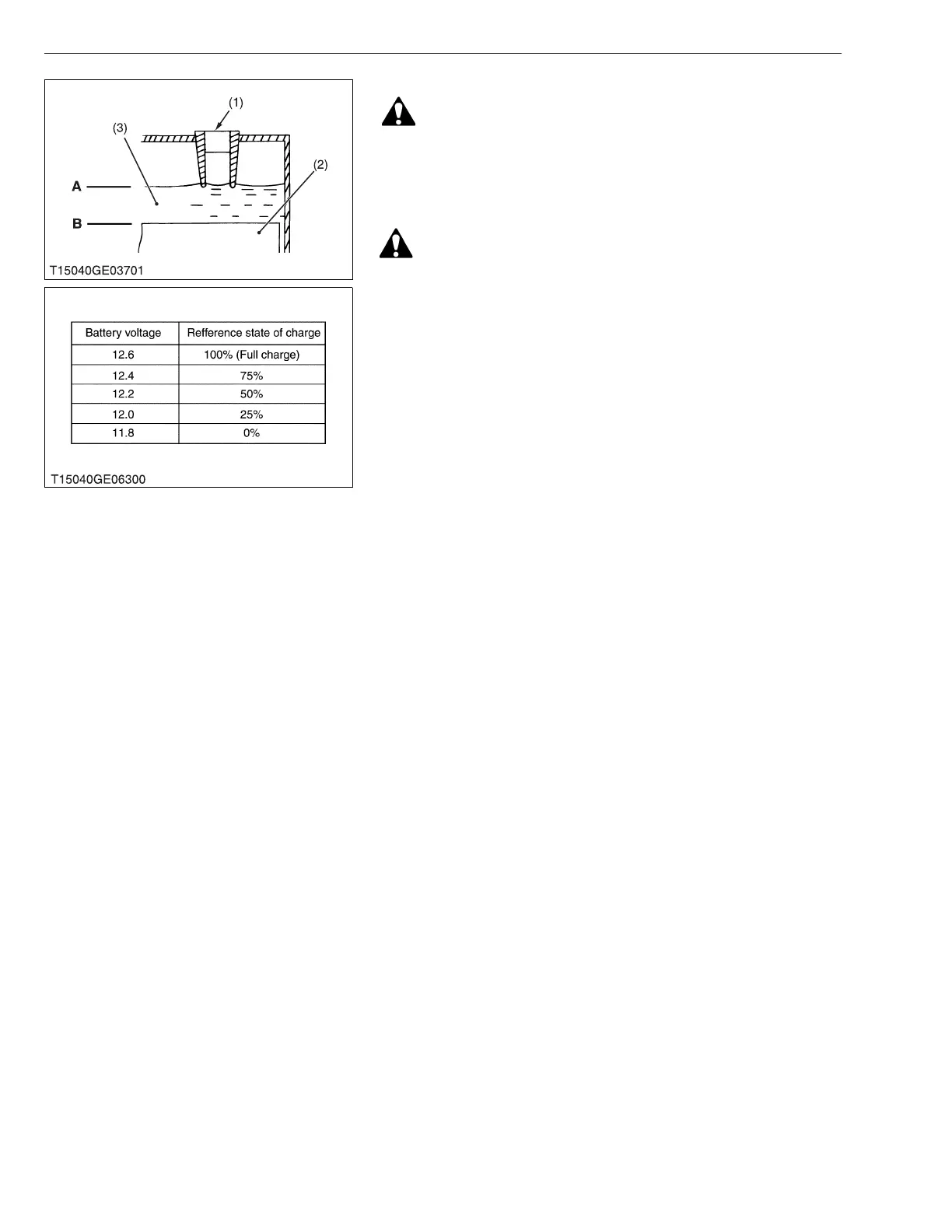
1. Make sure each electrolyte level is at the bottom of vent wells, if
necessary add distilled water in a well-ventilated area.
2. The water in the electrolyte evaporates during recharging. Liquid
shortage damages the battery. Excessive liquid spills over and
damages the machine body.
3. To slow charge the battery, connect the battery positive terminal
to the charger positive terminal and the negative to the negative,
then recharge in the standard fashion.
4. A boost charge is only for emergencies. It will partially charge the
battery at a higher rate and in a short time.
When using a boost-charged battery, it is necessary to recharge
the battery as soon as possible.
Failure to do this will shorten the battery’s service life.
5. When the specific gravity of electrolyte reaches 1.27 to 1.29,
charge has completed.
6. When exchanging an old battery with new one, use a battery of
equal specification shown in “SPECIFICATIONS”.
(For non-accessible maintenance-free type batteries.)
Maintenance-free, non-accessible batteries are designed to
eliminate the need to add water. Yet the volume of electrolyte
above plates may eventually become depleted due to abnormal
conditions such as high heat or improper regulator setting. Use
a voltmeter to check the state of charge. (See reference chart to
determine if charging is necessary.)
W1035046
(1) Vent well
(2) Separator
(3) Electrolyte
(A) Highest Level
(B) Lowest Level
DANGER



 To Next Page