Before first use
• Unpack the appliance and keep the original packaging carton and
materials in a safe place. It will help prevent any damage if the product
needs to be transported in the future. In the event it is to be disposed of,
please recycle all packaging materials where possible.
• Plastic wrapping can be a suffocation hazard for babies and young
children, so ensure all packaging materials are out of their reach and
disposed of safely.
• Inspect the cord and plug for damage or wear before each use. Do not use
if any part is damaged.
• Make sure the appliance is disconnected from the power supply. Wash the
kneading blades, measuring spoon and measuring cup with a soft cloth
or sponge in warm water and a little washing-up detergent to remove any
dust from transport. Do not use any abrasives in order not to damage the
non-stick coating. Rinse with clean water and dry thoroughly.
Getting Started (Cont.)
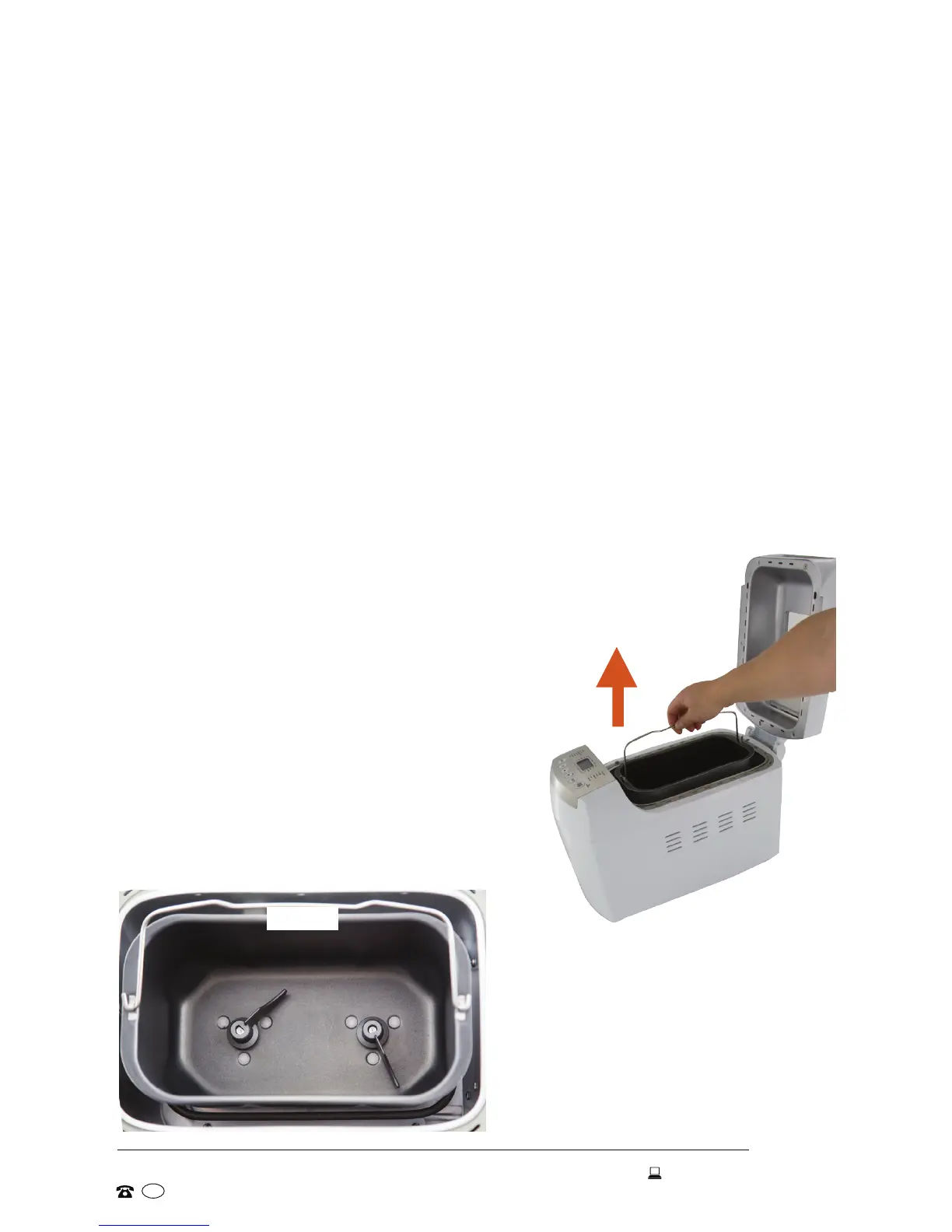
Fig. 1
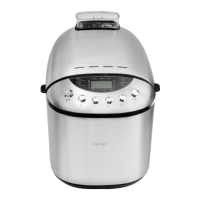
Fig. 2
• Lift the baking tin out of the bread
maker (Fig. 1) and wipe it with a soft,
damp cloth, then dry thoroughly.
Reinsert the tin rmly into the bread
maker until it clicks securely into place.
If it does not seem to t properly, or
gets stuck at an angle, move the pan
a little and press down rmly on both
sides of the rim until it clicks securely
into place.
• Place the kneading blades onto the
spindles inside the baking tin (Fig. 2).
They only t one way.
• Your new bread maker is now
ready for use.


 To Next Page