EasyManua.ls Logo

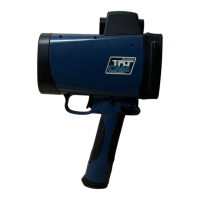
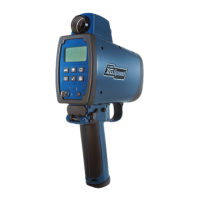
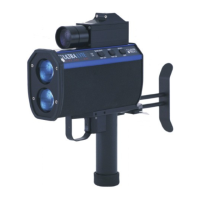
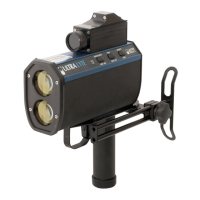
Laser Technology TruSpeed LTI 20/20 - Sensors; LCD Screen; Serial Port; Sighting Scope

Laser Technology TruSpeed LTI 20/20
46 pages
Print Icon
To Next Page IconTo Next Page
To Previous Page IconTo Previous Page
Loading...
Section
#1
-
Getting
Started
Page
5
Sensors
The
TruSpeed
has
two
lenses
on
the
front
panel.
The
top
lens
transmits
the
infrared
laser
signals.
The
bottom
lens
receives
the
signals
back
from
the
target
and
feeds
signal
information
to
the
internal
circuitry.
The
internal
circuitry
consists
of
a
laser
range
sensor
and
timing,
analysis,
computation,
and
display
circuits.
The
TruSpeed
determines
distance
through
its
laser
range
sensor,
by
measuring
the
time
of
flight
of
short
pulses
of
infrared
light.
The
TruSpeed
has
a
broad
spectrum
of
sensitivity
and
can
work
with
both
reflective
and
non-reflective
targets.
The
maximum
measurement
distance
varies
with
target
and
environmental
conditions.
The
absolute
maximum
is
about
650
meters.
Long
Range
(optional
feature)
absolute
maximum
is
about
1,200
meters.
LCD
Screen
The
LCD
Screen
displays
menu
items,
option
indicators,
error
codes,
and
speed
measurement
results.
Serial
Port
Your
TruSpeed
includes
a
serial
port
located
on
the
rear
panel.
The
serial
port
allows
you
to
connect
the
instrument
to
a
data
collector
or
remote
computer.
For
information
about
the
Serial
Data
Interface,
see
page
35.
Sighting
Scope
Mounted
on
top
of
the
TruSpeed
is
a
single-power
sighting
scope.
The
polarizing
light
filter
is
adjustable
to
optimize
viewing
contrast.
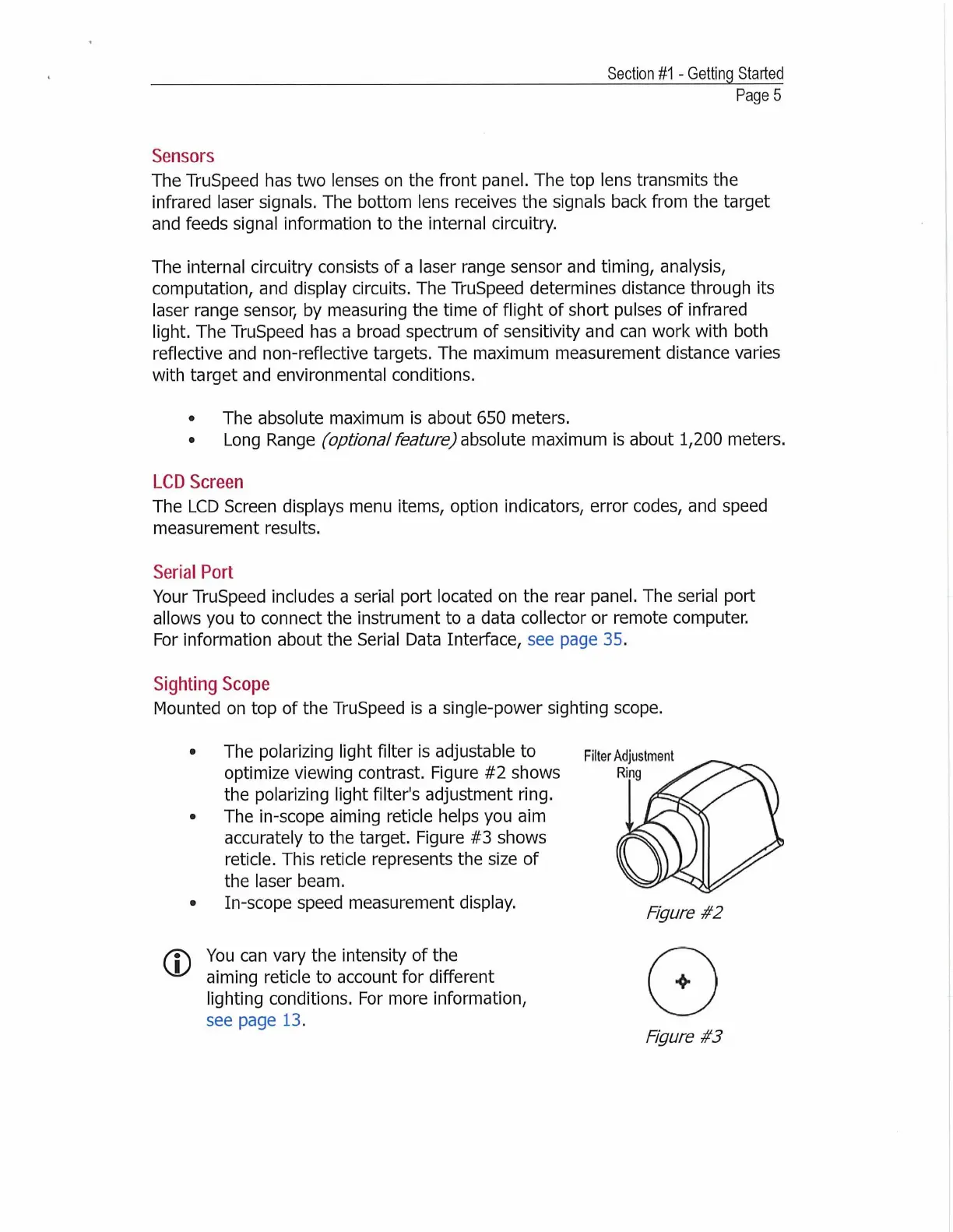
Figure
#2
shows
the
polarizing
light
filter's
adjustment
ring.
The
in-scope
aiming
reticle
helps
you
aim
accurately
to
the
target.
Figure
#3
shows
reticle.
This
reticle
represents
the
size
of
the
laser
beam.
In-scope
speed
measurement
display.
You
can
vary
the
intensity
of
the
^
aiming
reticle
to
account
for
different
lighting
conditions.
For
more
information,
see
page
13.
0
Figure
#3

Table of Contents