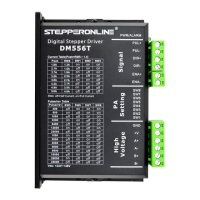
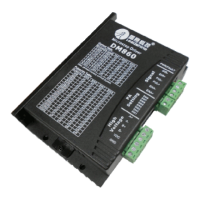
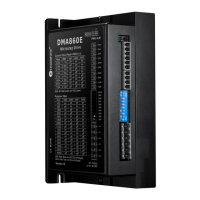
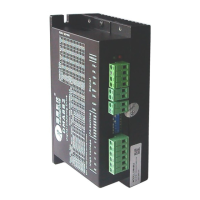
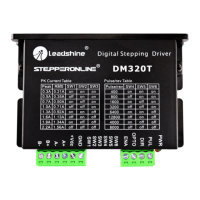
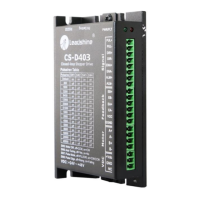
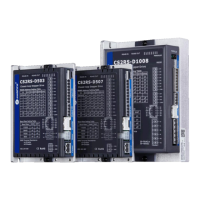
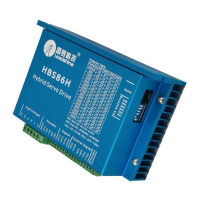
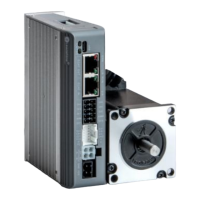
The DM860 is a fully digital 2-phase microstep driver designed for controlling stepping motors. It incorporates an advanced DSP control algorithm, leveraging the latest motion control technology to deliver smooth motor movement, optimal torque, and effective nullification of mid-range instability. This makes it a superior alternative to traditional analog drives, offering significantly lower noise, reduced heating, and smoother operation. The DM860 is particularly well-suited for applications demanding high precision, high speed, low noise, and minimal heating.
Function Description
The DM860 driver is designed to interface with a controller (pulse generator) and a stepping motor, along with a power supply, to form a complete stepping system. It accepts control signals from the controller and translates them into precise current pulses to drive the motor. The driver supports both 2-phase and 4-phase hybrid stepping motors, making it versatile for various motor types.
Key functional features include:
- Anti-Resonance: This feature optimizes torque output and eliminates mid-range instability, ensuring stable and efficient motor operation across different speeds.
- Multi-Stepping: The DM860 can convert low-resolution step inputs into higher microstep outputs. This capability results in smoother motor movement, reducing vibrations and improving overall system performance.
- Microstep Resolution Selection: The driver offers a wide range of selectable microstep resolutions, allowing users to fine-tune the motor's step angle for specific application requirements. This is configured via DIP switches.
- Current Control: The DM860 provides selectable peak current settings, enabling users to match the driver's output current to the motor's specifications. This is crucial for achieving optimal torque and preventing motor overheating.
- Automatic Idle-Current Reduction: This intelligent feature automatically reduces the motor current when the motor is at a standstill. This significantly reduces both motor and driver heating, improving efficiency and extending component lifespan.
- Protection Functions: To enhance reliability and prevent damage, the DM860 includes built-in over-voltage and over-current protections. These safeguards automatically activate if the peak current exceeds limits or if the drive working voltage becomes too high.
- Optically Isolated Inputs: The control signal inputs (PUL, DIR, ENA) are optically isolated. This isolation minimizes or eliminates electrical noise coupled onto the drive control signals, improving noise immunity, especially in environments with interference.
- Pulse/Direction Control: The driver operates in a single pulse (pulse/direction) mode, where a pulse signal dictates movement and a direction signal determines the motor's rotation. An enable signal allows for activating or deactivating the driver.
Usage Features
The DM860 is designed for ease of use and flexibility in various applications:
- Wide Motor Compatibility: It is suitable for a broad range of stepping motors, from NEMA size 17 to 42, making it adaptable for different machine sizes and power requirements.
- Application Versatility: The driver can be integrated into various machines, including X-Y tables, engraving machines, labeling machines, laser cutters, and pick-place devices.
- DIP Switch Configuration: Microstep resolution and current settings are easily configured using an 8-bit DIP switch, providing a straightforward method for customization without complex software.
- Motor Connection Flexibility: The DM860 supports 4-lead, 6-lead, and 8-lead motors. For 6-lead motors, users can choose between half-coil (higher speed) or full-coil (higher torque) configurations. For 8-lead motors, both series (higher torque at lower speeds) and parallel (more stable, higher torque at higher speeds) connections are supported, offering a high degree of flexibility to system designers.
- Power Supply Selection: Both regulated and unregulated power supplies can be used. Unregulated power supplies are generally preferred due to their ability to withstand current surges. The manual provides guidance on selecting appropriate supply voltages to optimize high-speed performance, reduce noise, and manage heating.
- Multiple Driver Support: Multiple DM860 drivers can share a single power supply, provided the supply has sufficient capacity. This helps reduce overall system cost. It is recommended to connect each driver separately to the power supply to avoid cross-interference.
- Control Signal Interface: The DM860 can accept differential and single-ended inputs (open-collector and PNP output), accommodating various controller types.
Maintenance Features
Proper installation and adherence to wiring guidelines are crucial for the longevity and reliable operation of the DM860:
- Heat Dissipation: Effective heat management is vital. The driver's reliable working temperature should be below 70°C (158°F), and the motor's working temperature below 80°C (176°F).
- Automatic Idle-Current Mode: Utilizing the automatic idle-current reduction feature is highly recommended. This reduces current to 50% when the motor stops, significantly decreasing driver and motor heating.
- Mounting Orientation: Mounting the driver vertically maximizes the heat sink area, aiding in natural cooling. For systems with higher heat loads, forced cooling methods (e.g., fans) may be necessary.
- Side Mounting: The manual specifically recommends using side mounting for better heat dissipation.
- Wiring Recommendations:
- Twisted Pair Shield Cable: To improve anti-interference performance, using twisted pair shield cables for wiring is recommended.
- Signal Separation: Pulse/direction signal wires and motor wires should be kept separate, ideally by at least 10 cm. This prevents disturbing signals from the motor from interfering with control signals, which could lead to motor position errors or system instability.
- Power Supply Connections: When multiple drivers share a power supply, connect each driver separately to the supply rather than daisy-chaining them to prevent cross-interference.
- Hot-Plugging Prohibition: It is strictly prohibited to connect or disconnect the motor (connector P2) while the driver is powered ON. High currents flowing through the motor coils, even at standstill, can generate extremely high back-EMF voltage surges, potentially damaging the driver.
- Troubleshooting: The manual includes a comprehensive section on frequently asked questions and problem symptoms with possible causes. This aids in diagnosing issues such as the motor not rotating, rotating in the wrong direction, erratic motion, stalling, or excessive heating.
- Systematic Diagnosis: When a problem occurs, the first step is to determine if it's electrical or mechanical. Then, isolate the faulty component by testing individual parts. Documenting each step is important for future reference and for technical support.
- Resetting Protections: If over-current or over-voltage protections are activated (indicated by a blinking red LED), the motor shaft will be free. The driver can be reset by repowering it after resolving the underlying problem.
- Current Setting Considerations: Due to motor inductance, the actual current in the coil might be lower than the dynamic current setting, especially at high speeds. This should be considered when setting the current to ensure optimal performance without overheating.

 Need help?
 General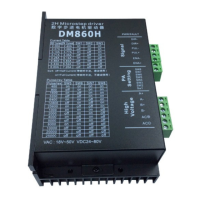

 To Next Page