cabin altitude. Above 20,000 feet, 100% oxygen
must be selected. With the selector in the 100%
position, 100% oxygen is delivered at any cabin
altitude. The 100% position should be used
when smoke or fumes are present in the
pressurized compartment.
The Robertshaw regulator has two controls–the
NORM–EMERGENCY selector on the
pressure-regulator control, and the 100% lever
on the diluter control. With NORMAL selected,
the regulator delivers diluted oxygen, on
demand, up to 30,000 feet cabin altitude. Above
30,000 feet, the regulator automatically delivers
100% oxygen and maintains a slight positive
pressure. With EMERGENCY selected (at any
altitude) and the 100% lever depressed, the
regulator delivers 100% oxygen and maintains a
slight positive pressure for respiratory protection
from smoke and fumes.
The Puritan-Bennett regulator has two controls
on the pressure-regulator control—the
NORM–EMERGENCY selector and the 100%
lever. With NORM selected, the regulator
delivers diluted oxygen, on demand, up to
33,000 feet cabin altitude. Above 33,000 feet,
the regulator automatically delivers 100%
oxygen. At 39,000 feet it provides positive-
pressure breathing. To obtain 100% oxygen at
any time, 100% must be selected on the
pressure-regulator control. With EMER selected,
the regulator delivers 100% oxygen and
maintains a slight positive pressure in the mask
cup at all times for respiratory protection from
smoke and fumes. At 39,000 feet, automatic
pressure breathing is supplied.
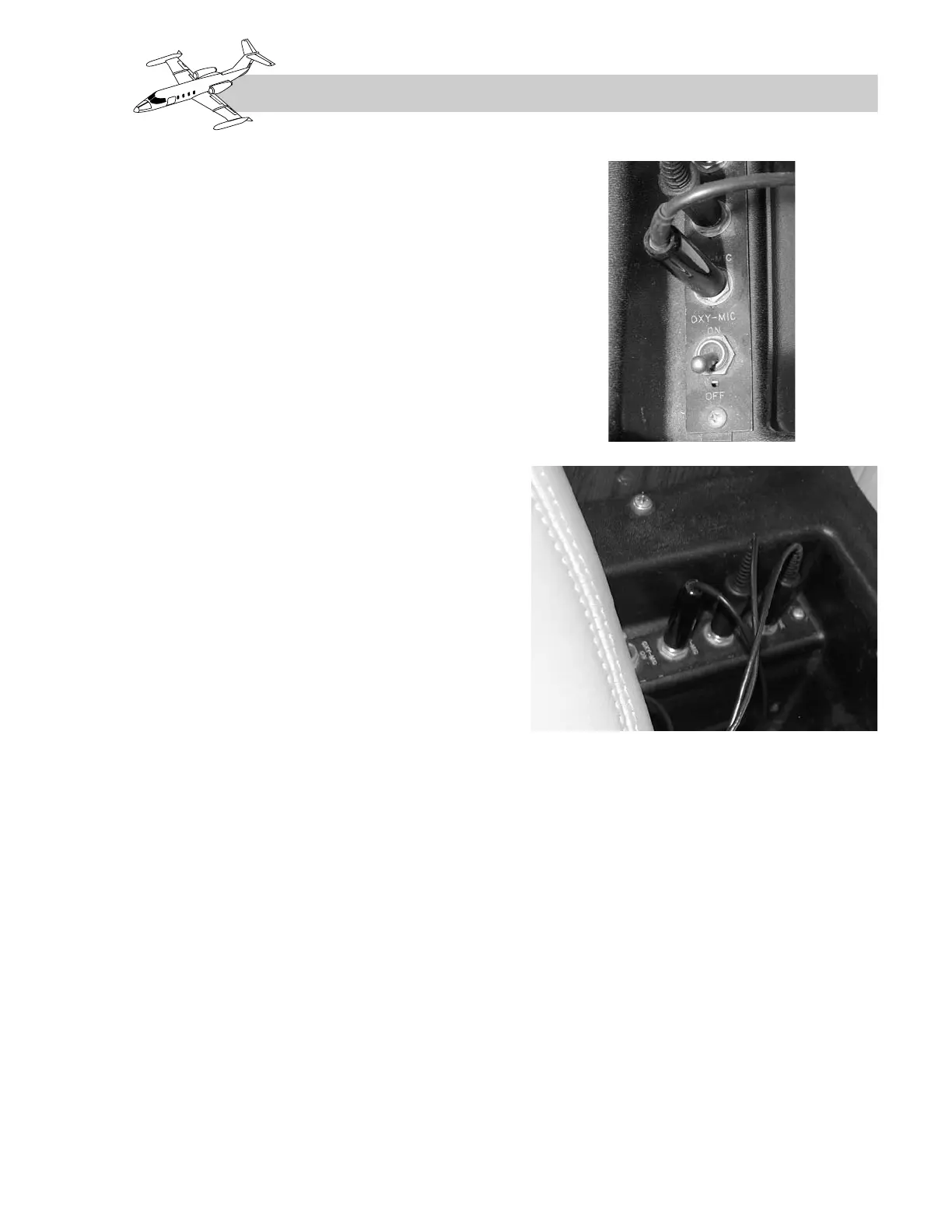
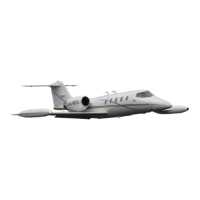
Each mask assembly includes a microphone and
has an electrical cord which is plugged into the
OXY–MIC jack on the respective OXY–MIC
panel (Figure 17-7) located on each side panel.
To operate the mask microphone, the OXY–MIC
switch must be in the ON position and the
microphone keyed, using the microphone switch
on the outboard switch on the outboard horn on
the control wheel. Communication between
crewmembers can be accomplished by using the
INPH function of the audio control panel and
increasing the MASTER VOL level.
PASSENGER DISTRIBUTION
SYSTEM
The passenger distribution system (see Figures
17-1 through 17-3) is used to provide oxygen to
the passengers in case of a pressurization system
failure or any other time that oxygen is required.
Oxygen is available in the crew oxygen
distribution lines whenever the oxygen cylinder
shutoff valve is open; however, oxygen is not
available to the passenger distribution system
until required.
Oxygen supply to the passengers’ system is
controlled with three valves. Two valves are
manually operated with control knobs on the
17-7
FOR TRAINING PURPOSES ONLY



 To Next Page