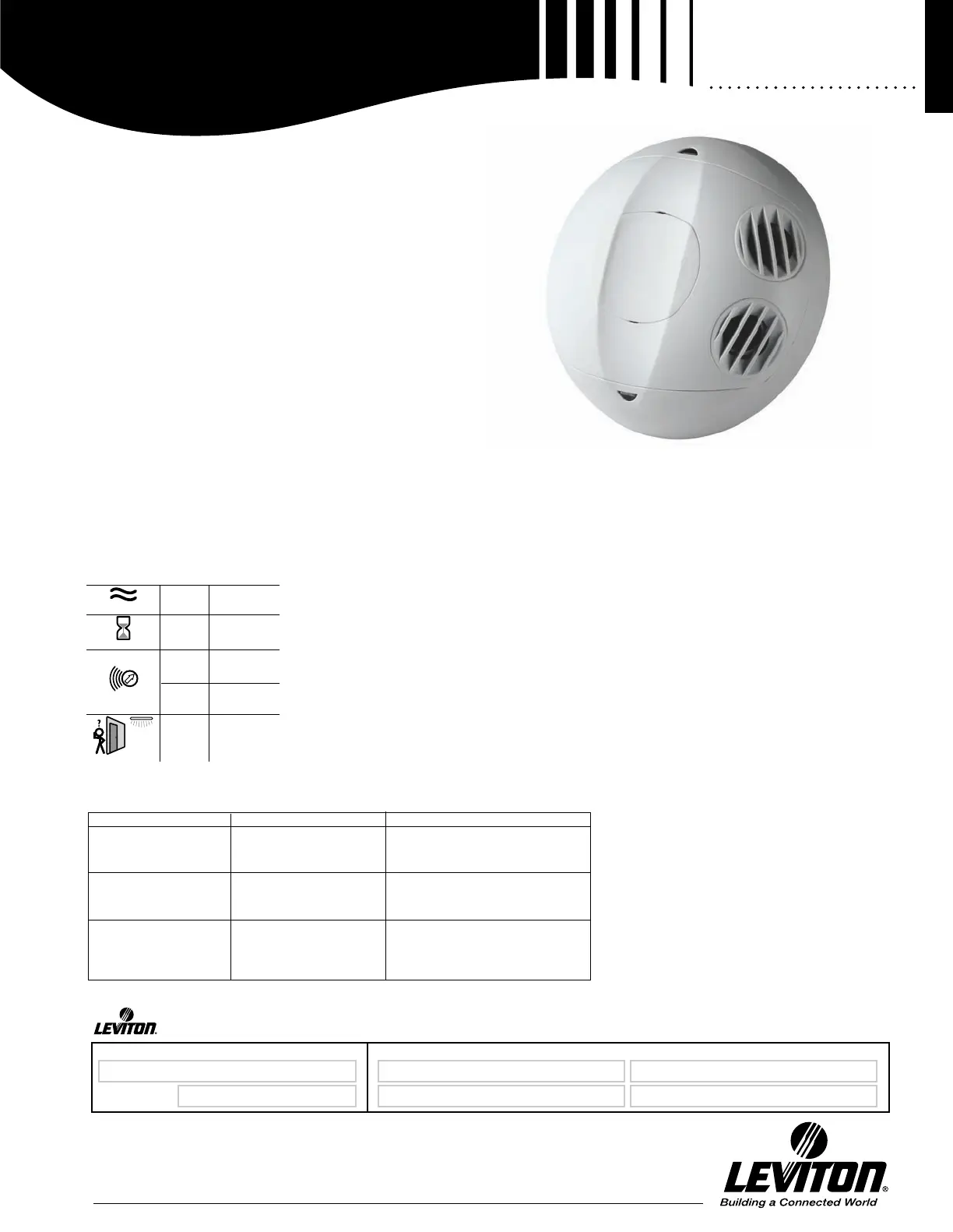
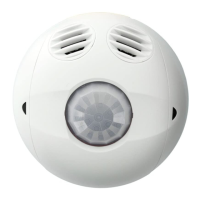
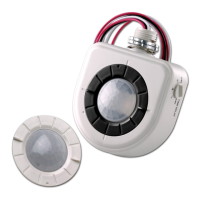
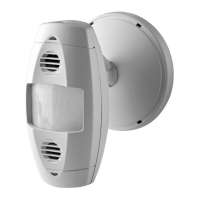
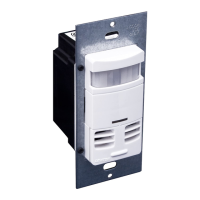
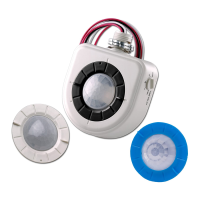
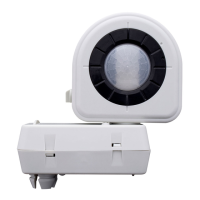
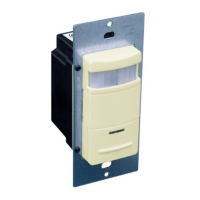
Occupancy Sensor
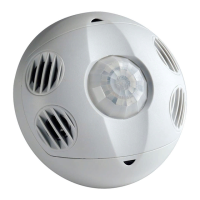
Ultrasonic Ceiling Sensor
OSC20–UOW
OSC10–UOW
OSC05–UOW
Microprocessor based, the OSCxx-U
has a self adapting feature that compensates
for air flow, giving it excellent immunity to
air currents and other interference.
THE OSCxx-U OCCUPANCY SENSOR
• ULTRASONIC SENSING TECHNOLOGY (US)
• EXCELLENT RANGE AND SENSITIVITY
• SIMPLE, FAST INSTALLATION
• SELF-ADJUSTING
• DIGITAL TECHNOLOGY, COMPLETE RELIABILITY
• PHOTOCELL CONTROL
GENERAL OPERATION
The OSCxx-U is a low voltage occupancy sensor that controls
indoor lighting. The sensor fills the room with continuous high
frequency (ultrasonic) sound waves. Any movement within the
sensor’s range causes a shift in the original emitted frequency.
The sensor’s receiver identifies any change in frequency as
motion and either turns the lights on or maintains lights on.
Small Size: Installed sensor appears almost invisible.
Fast, Simple Installation: Easy ceiling mount, three wire connection
(low voltage) and twist-lock sensor attachment.
Maximum Reliability, Low Cost: All digital circuitry uses a minimum
of components.
Small Motion Sensitivity: The ultrasonic technology provides
excellent small motion sensitivity.
Timer Setting: Automatic - and Manual 30 sec. to 30 min.
Test mode - 6 sec.
Non-Volatile Memory: Learned and adjusted settings saved in
protected memory are not lost during power outages.
Wide Coverage: Units from 500 to 2000 sq. ft. available.
Ambient Light Recognition: The photocell prevents lights from
turning on when the room is adequately lit by natural light.
A dedicated internal microprocessor continually
analyzes the room environment and adjusts
itself automatically. The internal timer and
ultrasonic sensitivity are automatically adjusted.
Once installed, the OSCxx-U does not require
manual adjustment or calibration.
Timer Left In Test Mode - The
sensor remains in an 6 sec.
test mode.
False-On - The sensor
incorrectly turns the lights on.
False-Off - The sensor
incorrectly turns the lights off.
An installer accidentally leaves
the sensor in the 6 sec. timer
test mode and the lights may go
off or on every 6 sec.
The sensor detects movement
in the corridor or hallway and
the room lights turn on.
The sensor does not detect
movement because an
occupant sits virtually
motionless at a desk and the
lights turn off.
The sensor automatically resets the timer
to 10 min . after 15 min of test mode..
After an initial movement is sensed,
if another movement is not sensed within
the timer setting then the delayed off time
setting is automatically reduced.
Condition Example Adaptive Reaction
If motion is sensed within a short period after
the lights go off, then the current delayed
off-time setting is increased.


 To Next Page