This document is an owner's manual for an LG Set-Top Box, model STB-6500-ZA. It provides comprehensive information on the device's setup, operation, and maintenance, ensuring users can maximize its functionality and lifespan.
The primary function of this device is to act as a Set-Top Box, facilitating the reception and processing of television signals. It supports both digital and analogue television systems, including DVB-S/S2, DVB-T/T2, DVB-C, and PAL/SECAM standards, allowing for a wide range of channel coverage. The box is designed to connect to various external devices, such as HD receivers, DVD players, VCRs, audio systems, USB storage devices, PCs, and gaming consoles, enhancing its versatility as a central entertainment hub.
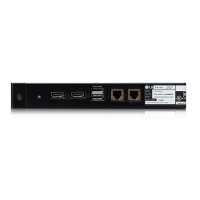
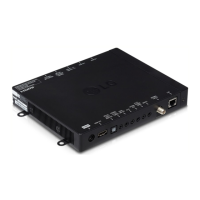
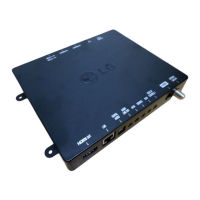
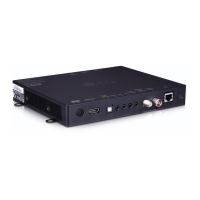
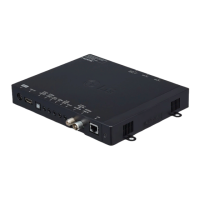
Key usage features include multiple connectivity options. The front panel of the Set-Top Box features HDMI IN 1 and HDMI IN 2 (ARC) ports, along with two USB IN ports (USB IN 1 and USB IN 2), indicated by arrows. These ports allow for easy connection of external media devices and storage. The rear panel offers a more extensive array of connections, including POWER, EXTERNAL RS-232C CONTROL, EXTERNAL IR IN, SERVICE, ANTENNA/CABLE IN, HDMI OUT, OPTICAL DIGITAL AUDIO OUT, AUDIO LINE OUT, RS-232C TELEVISION CONTROL, 13/18V-700mA Max LNB Satellite IN, and LAN. This comprehensive set of ports ensures compatibility with a wide range of audio-visual equipment and network connections.
For optimal picture and audio quality, users are advised to connect external devices using HDMI cables. The manual specifies that HDMI cables and USB devices should have bezels less than 10 mm thick and 18 mm wide. If a USB cable or memory stick does not fit, an extension cable supporting USB 2.0 is recommended. When connecting two USB devices simultaneously, each should have bezels less than 8.5 mm thick. Certified HDMI cables with the HDMI logo are recommended to prevent display issues or connection errors. The manual also suggests using HDMI cables that are 3 meters or less in length.
Antenna connection involves connecting the Set-Top Box to a wall antenna socket using a 75 Ω RF cable. For satellite dish connection, the device connects to a satellite dish via a satellite RF cable (75 Ω) to the 13/18V-700mA Max LNB Satellite IN port. An AC-DC power adapter is used for power, and users are instructed to connect the Set-Top Box to the adapter before plugging the adapter into a wall power outlet.
The manual provides instructions for optional accessories like rubber feet and Dual Lock™ fasteners. The rubber feet can be attached to the bottom of the Set-Top Box to prevent sliding, especially if the box does not fit perfectly on the rear side of a TV. The Dual Lock™ fasteners are used to secure the Set-Top Box to the TV. This involves attaching pairs of Dual Lock™ fasteners to each other, then sticking one side to the back of the Set-Top Box. Spacers are also used, attached to a VESA screw hole on the back of the TV, and then the Set-Top Box is affixed to the TV using the Dual Lock™ fasteners and a screw. It is emphasized not to mount the Set-Top Box using Dual Lock™ alone without the screw, and to allow the Dual Lock™ to dry for at least three days before attaching the Set-Top Box to the TV.
The Set-Top Box supports various photo, audio, and video formats. Supported photo formats include JPEG (.jpeg, .jpg, .jpe), PNG (.png), and BMP (.bmp), with specific minimum and maximum resolutions. Audio formats supported are MP3 (.mp3), WAV (.wav), OGG (.ogg), WMA (.wma), and FLAC (.flac), each with specified bit rates, sample frequencies, and channel configurations. Video formats include ASF/WMV (.asf, .wmv), AVI (.avi), MP4/M4V/MOV (.mp4, .m4v, .mov), 3GP/3G2 (.3gp, .3g2), MKV (.mkv), TS/TRP/TP/MTS (.ts, .trp, .tp, .mts), MPG/MPEG/DAT (.mpg, .mpeg, .dat), and VOB (.vob), supporting various codecs like VC-1, Xvid, H.264/AVC, MPEG-4, HEVC, AV1, VP8, VP9, and audio codecs like WMA, MPEG-1 Layer I, II, III (MP3), Dolby Digital, LPCM, ADPCM, AAC, AMR-NB, and Dolby AC-4. The device also supports external subtitles in formats like SMI, SRT, SUB, ASS, SSA, TXT, PSB, and DCS, and embedded subtitles in Matroska (MKV) and MP4.
Maintenance features are crucial for the device's longevity and performance. The manual advises regular cleaning of the Set-Top Box and its AC-DC adapter. For light dirt, a dry, soft cloth is sufficient. For major dirt, a soft cloth dampened with clean water or a mild detergent should be used, followed by immediate wiping with a dry cloth. Users are warned to turn off the power and disconnect all cables before cleaning. It is also recommended to disconnect the power cord from the wall outlet if the Set-Top Box will be unused for a long time, to prevent damage from lightning or power surges. Users should avoid pushing, rubbing, or hitting the screen surface with sharp objects, using chemicals, or spraying liquids directly onto the device, as these actions can cause damage, electric shock, or malfunction.
Safety instructions are paramount. The manual highlights the risk of electric shock and warns against opening the device or attempting repairs by unqualified personnel. It advises against exposing the product to rain or moisture and keeping open flames away from it. The Set-Top Box should be placed in a well-ventilated area, away from direct sunlight, high humidity, heat sources, and flammable objects. Proper grounding is emphasized for devices with a three-prong grounded AC plug. In case of damage, water ingress, smoke, or lightning storms, users are instructed to unplug the product immediately and contact customer service. Unauthorized modifications are strongly discouraged.
Troubleshooting tips are provided for common issues. If the remote control does not work, users should check the remote control sensor, ensure no obstacles are present, and verify battery functionality. If there is no video or audio output, users should check if the product is turned on, if the power cord is connected to a wall outlet, and if the wall outlet is functioning. For sudden power-offs, power control settings should be checked. If "No signal" or "Invalid Format" is displayed when connecting to a PC via HDMI, users are advised to turn the Set-Top Box off/on, reconnect the HDMI cable, and restart the PC with the Set-Top Box on. The manual also mentions that software updates may be available to improve performance and ensure compatibility with LGE software. To disconnect the wireless network connection or wireless device, users simply need to turn off the unit.


 To Next Page

 General
 Weight and Dimensions