EasyManua.ls Logo

LONCIN 1P91F - User Manual

LONCIN 1P91F
10 pages
Print Icon
To Next Page IconTo Next Page
Loading...
1P96F
1P91F
Owner's Manual
Question and Answer IconNeed help?

Do you have a question about the LONCIN 1P91F and is the answer not in the manual?

Summary

General Information

Understanding the Manual and Safety Symbols

Explains manual emphasis notes, directional references, and safety symbols.

General Safety Standards

Operator Training Requirements

Emphasizes reading instructions, learning to stop the engine, and operator responsibility.

Pre-Operation Safety Preparation

Covers clothing, cooling the engine before refueling, and fuel safety.

Maintenance and Storage Guidelines

Highlights routine maintenance, fuel storage, cooling before storage, and fire hazard prevention.

Engine Components and Controls

Engine Components Identification

Lists key engine parts like oil filler, drain plug, air cleaner, and spark plug.

Accelerator Control and Operation

Explains the throttle trigger and its symbols for starting and operating.

Engine Performance Factors

Environmental Conditions and Fuel

Discusses temperature/altitude impact on performance and fuel quality requirements.

Oil Specifications and Air Filter Care

Details oil classification, viscosity, and the importance of a clean air filter.

Spark Plug Selection and Checks

Advises on using the correct spark plug type, checking thread length, and electrode gap.

Operational Standards and Procedures

Pre-Use Checks and Starting Procedures

Outlines pre-checks (oil, air filter, spark plug cap), and cold/hot starting steps.

Engine Operation and Safety

Advises setting throttle to "FAST" for performance and highlights operational safety warnings.

Engine Stopping and Storage

Stopping Engine During and After Mowing

Covers procedures for stopping the engine mid-operation and after mowing, including cooling.

Cleaning and Storage Instructions

Guidance on cleaning the engine exterior and storing it safely, including long-term storage.

Maintenance Overview and Safety

Maintenance Safety Recommendations

General safety advice before performing maintenance, emphasizing tools and knowledge.

Maintenance Schedule and Oil Change

Presents the maintenance schedule and detailed steps for changing engine oil.

Specific Maintenance Tasks

Cleaning Silencer, Air Filter, and Spark Plug

Instructions for cleaning silencer, air filter, and performing spark plug service.

Tuning and High Altitude Carburetor Adjustments

Covers tuning throttle cable/carburetor and modifications for high altitude operation.

Troubleshooting and Technical Data

Common Engine Problems and Solutions

Lists common issues like hard starting, inconsistent working, and power loss with their solutions.

Refilling Materials and Technical Specs

Lists specifications for fuel, engine oil, oil capacity, spark plug type, and gap.

Overview

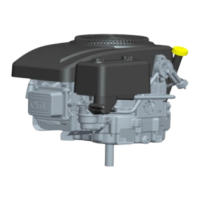
This document is an owner's manual for a small internal combustion engine, specifically models 1P91F and 1P96F. It provides comprehensive information on the engine's operation, maintenance, and safety.

Function Description:

The device is a four-stroke endothermic engine designed for various applications, likely powering outdoor equipment such as lawnmowers, given the references to "lawnmower" and "mowing." Its primary function is to convert fuel into mechanical energy to drive machinery.
Important Technical Specifications:

  • Fuel: Unleaded gasoline, minimum 90 octane. It's crucial to use clean, fresh fuel and avoid fuel containing Methanol or any additives. Fuel should be purchased in quantities that can be used within 30 days to prevent gum formation.
  • Engine Oil: High-quality detergent oil classified SF-SG. The recommended SAE viscosity grade varies with operating temperature:
    • From 5 to 35 °C: SAE 30
    • From -15 to +5 °C: 5W-30 or 10W-30 (Multi-viscosity)
    • From -25 to +35 °C: Synthetic oils 5W-30 or 10W-30 (Multi-viscosity)
    • Oil level must be at the "MAX" mark; overfilling can cause smoking, spark plug fouling, or air filter fouling, leading to hard starting.
  • Oil Capacity: Approximately 1.6 liters.
  • Spark Plug: F7RTC or equivalent.
  • Spark Plug Gap: 0.6-0.8 mm.
  • Operation Angle: Do not operate on inclines over 20° to prevent engine malfunction.
  • Emissions: Engines emit carbon monoxide; never run in an enclosed area.
  • High Altitude Operation: The standard carburetor air-fuel mixture may be too rich at high altitudes (above 5,000 feet or 1,500 meters), leading to decreased performance, increased fuel consumption, and spark plug fouling. Specific carburetor modifications are available for sustained high-altitude use to maintain performance and meet emission standards.

Usage Features:

  • Accelerator Control: The engine's speed is controlled by a throttle trigger (usually a lever) on the machine, connected by a cable. Positions typically include:
    • "CHOKE": For starting from cold.
    • "FAST": Corresponds to maximum revolutions per minute (RPM) for working.
    • "SLOW": Corresponds to minimum RPM.
  • Starting Procedure (Cold):
    1. Open the fuel stopcock.
    2. Move the throttle to "CHOKE."
    3. Turn the starter key (as per machine's manual).
    4. After a few seconds, slowly move the throttle from "CHOKE" to "FAST" or "SLOW." If the engine starts but doesn't keep running, repeat with the throttle on "FAST."
  • Starting Procedure (Hot): Follow the cold-starting procedure with the throttle control in the "FAST" position.
  • Stopping the Engine (During Mowing):
    1. Move the throttle to "SLOW."
    2. Allow the engine to run at minimum speed for 15-20 seconds.
    3. Stop the engine as per the machine's manual.
  • Stopping the Engine (After Mowing):
    1. Move the throttle to "SLOW."
    2. Allow the engine to run at minimum speed for 15-20 seconds.
    3. Stop the engine as per the machine's manual.
    4. Once cold, disconnect the spark plug and remove the starter key (if present).
    5. Close the fuel stopcock.
    6. Remove any debris, especially around the exhaust silencer, to reduce fire risk.
  • Environmental Considerations:
    • Temperature: Extreme temperatures can affect starting. Use appropriate oil for the operating temperature.
    • Altitude: Higher altitudes reduce maximum power. Reduce load and avoid heavy work at considerable altitudes.
  • Safety Symbols: The manual highlights symbols for reading instructions, flammable gasoline (allow 2 minutes to cool before refueling), and carbon monoxide emissions (do not run in enclosed areas).
  • General Safety Standards: Emphasizes reading manuals, preventing unauthorized use, keeping people and pets away, operator responsibility for accidents, wearing appropriate clothing (no loose items, tie up long hair), cooling the engine before refueling, refueling outdoors with a funnel, no smoking during refueling, and proper fuel storage.

Maintenance Features:

  • Routine Maintenance: Essential for safety and performance. A maintenance schedule is provided, indicating tasks to be performed after the first 5 hours, every 5 hours or daily, every 50 hours or every season, and every 100 hours.
  • Check Oil Level: Before every use, place the engine level, clean around the oil fill, unscrew the cap, clean the dipstick, insert without screwing down, remove and check oil level (between "MIN" and "MAX" marks). Add oil if needed, being careful not to spill. Fully tighten the fillercap.
  • Check Air Cleaner: Before every use, ensure the filtering element is intact, clean, and in perfect working order. Do not start the engine if the element is missing or broken.
  • Air Filter Maintenance:
    • Clean around the filter cover.
    • Remove the cover and filtering element.
    • Tap the cartridge on a solid surface and blow compressed air from the inside to remove dust.
    • Do not use water, petrol, detergents, or other products to clean the cartridge.
    • The sponge pre-filter must NEVER be oiled.
    • Clean the inside of the filter housing, block the inlet duct with a rag, then install the filtering element and refit the cover.
    • Clean more frequently in dusty areas.
    • Replace if damaged.
  • Change Oil: Drain oil when the engine is warm (be careful of hot engine/oil). Place the machine on a flat surface, clean around the filler cap, unscrew the cap, collect old oil, unscrew the drain plug, refit the drain plug with a new gasket, fill with fresh oil to the "MAX" mark, close the cap, and clean any spills. Change oil every 25 hours under heavy load or hot weather.
  • Clean Silencer and Engine: Clean when the engine is cold. Use compressed air to remove debris from the silencer and its protective cover. Ensure cooling air intakes are not blocked. Clean plastic components with a sponge soaked in water and detergent.
  • Spark Plug Service:
    • Remove the spark plug with a socket wrench.
    • Clean electrodes with a metal brush, remove carbonaceous build-up.
    • Check the gap (0.6-0.8mm) with a thickness gauge.
    • Install and tighten the spark plug.
    • Replace if electrodes are burnt or porcelain is broken.
    • Do not check the ignition system with the spark plug removed (fire hazard).
    • Use only recommended spark plugs.
  • Fuel Filter Check: To be carried out by a specialized center.
  • Long Storage (over 30 days):
    • Empty the fuel tank by unscrewing the carburetor float chamber plug to prevent deposit formation.
    • Remove the spark plug, pour about 3 cl of clean engine oil into the spark plug hole, block the hole with a rag, run the starter motor briefly to distribute the oil, then replace the spark plug without connecting the cable cap.
    • Store the machine in a dry, sheltered, and well-ventilated place.
    • Allow the engine to cool before storing in any enclosure.
    • Keep the engine, silencer, and fuel storage area free of grass, leaves, or grease to reduce fire hazard.
    • Improper storage can lead to fuel deterioration, hard starting, and gum deposits, which are not covered by warranty.
  • Safety during Maintenance: Always remove the spark plug cap and read instructions before any cleaning, repair, or maintenance. Wear proper clothing and working gloves. Do not perform operations without necessary tools and technical knowledge. Never dispose of used oil, fuel, or pollutants in unauthorized places.
  • Parts Replacement: On safety grounds, never use the engine with worn or damaged parts. Parts must be replaced, not repaired, using genuine spare parts to avoid damage to the engine and safety impairment.
  • Troubleshooting: A table is provided for common issues like hard starting, inconsistent working, and loss of power, listing likely causes and solutions.

LONCIN 1P91F Specifications

General IconGeneral
BrandLONCIN
Model1P91F
CategoryEngine
LanguageEnglish

Related product manuals