4. For the suppression of nitrification, we recommend adding nitrification inhibitor B. This should
especially be taken into consideration in the low measurement range of 0 - 40 mg/l, e.g. for final
effluent. The recommendation for an optimal dosage of nitrification inhibitor B (=allylthiourea /
ATH) depends on the measurement range (see 6.1 Selection of sample volume).
Comment: Nitrifying bacteria also consume oxygen. This consumption can already occur within the
first five days, especially in samples with low BOD values. For the BOD testing the oxygen consump-
tion of nitrifiers is not normally recorded. With nitrification inhibitor B, the activity of these bacteria
can be suppressed by means of enzymatic suppression such that only the degradation of organic
substances constitutes the BOD of a sample. If the oxygen consumption in the course of the nitri-
fication (N-BOD) should be determined, a comparison of the sample with and without nitrification
inhibitor can be The difference between BOD values then corresponds to the oxygen requirement
of the nitrifying bacteria.
5. Add a clean magnetic stir bar to each test bottle and fill the dry seal cup with 3-4 drops of 45%
potassium hydroxide solution (for binding of the carbon dioxide). Then place the seal cup in the
test bottle.
ATTENTION! The sample may never come into contact with the potassium hydroxide
solution. This could result in falsified measurement values.
ATTENTION! Never use greases or other lubricants as an additional sealing aid for the seal
cups for the BOD sensors. Such products can contain solvents which corrode the body
of the sensors. This can result in severe damage to the plastic housing or even complete
destruction of the sensors. No warranty is accepted for damages resulting from the use of
sealing grease!
6. The prepared sample must be brought to ± 1 °C of the desired temperature before the start of the
measurement. (e.g. 20 °C ± 1 °C). This can be take place, for instance, with constant stirring of the
sample on the inductive stirring system in the thermostat cabinet.
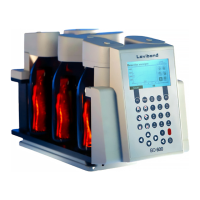
The BD 600 has an optional autostart function which allows the use of samples with a temperature
of 15 to 21 °C. With the autostart function switched on, the system checks in specific intervals
whether a pressure drop has taken place in the BOD bottle and then starts the time measurement
(the time begins running no later than three hours after the BOD sensors is started, regardless of
whether a pressure drop has been detected or not).
7. Place the BOD sensors on the test bottles and carefully screw them in place. This is especially
important, because the system must be absolutely tight. Then place the BOD bottle with sensor
screwed on in the bottle rack. This can take place directly in the thermostat cabinet. Alternatively,
due to the user-friendly design of the BD 600, it is also possible to remove the entire BOD base unit
with the integrated bottle rack from the thermostat cabinet, while the inductive stirring system
remains in the cabinet. In the process, it may be necessary to disconnect the mains power supply
from the BD 600.
ATTENTION! Do not pull on the cable.
After the rack has been loaded with BOD bottles, it must be positioned on the inductive stirring
system such that the 4 adjusting screws engage in the corresponding recesses on the stirrer drive.
8. Start the test (see section 5.5.2 Start measurement/measurement series)
9. Incubate the sample according to specifications (e.g. BOD5 at 20 °C for 5 days).


 To Next Page