50
model no. 055-6767-0 | contact us 1-888-670-6682
OPERATION
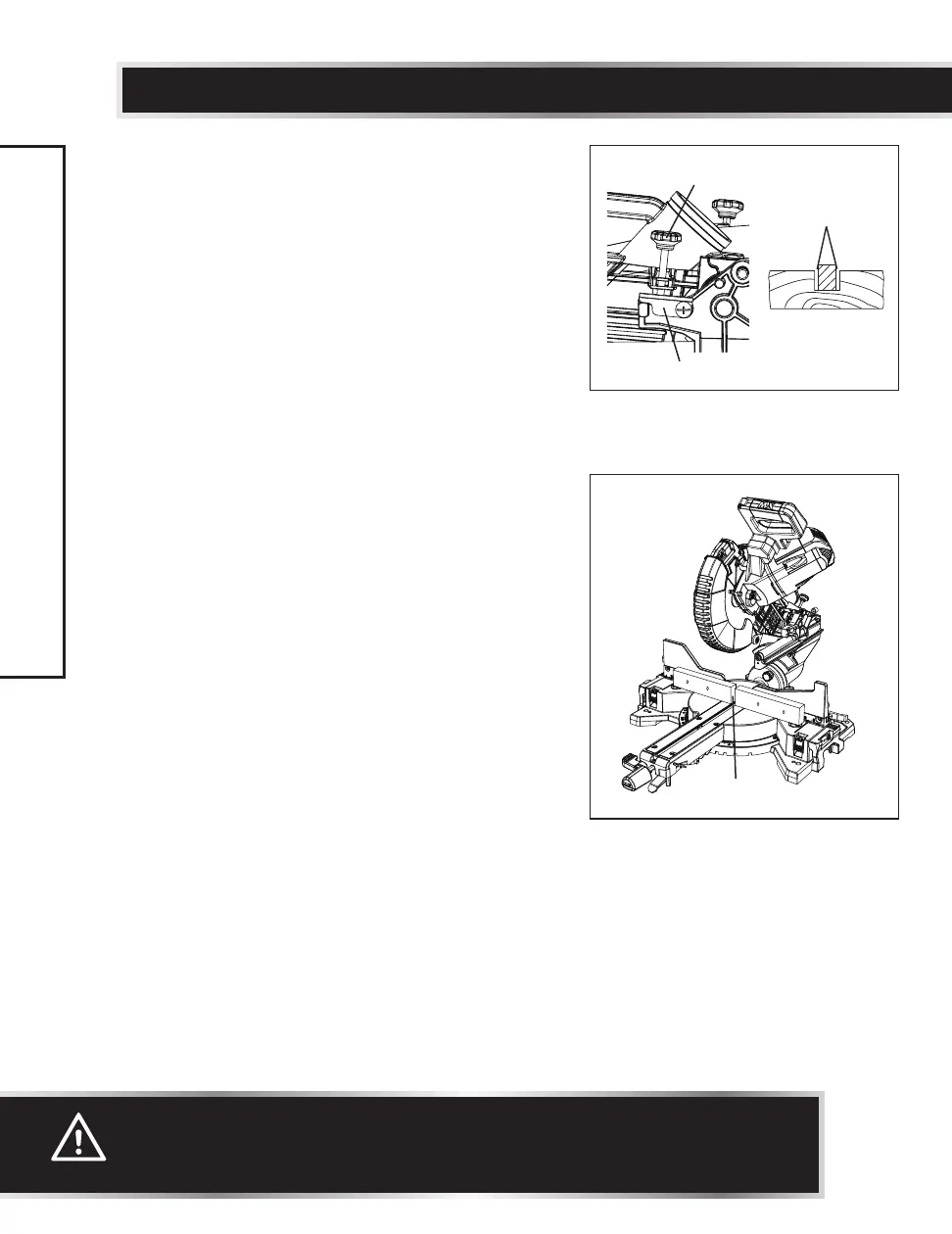
CUTTING GROOVES (Fig. 46)
• Mark lines identifying the width and depth
of the desired cut on the workpiece and
position on the table so the outside tip
of the blade is positioned on the inside
edge of the line. Use a clamp to secure the
workpiece beside the blade.
• Lower the cutting head to the depth
marked on the workpiece, holding the
upper arm, and adjust the stop knob (1)
until it touches the stop plate (2). (SEE
“Adjusting cutting depth” on page 33).
• Cut two parallel grooves as shown.
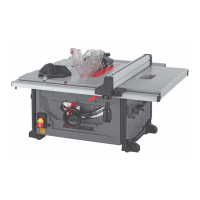
AUXILIARY WOOD FENCE (Fig. 47)
• When making multiple or repetitive cuts
that result in cut-off pieces of one inch
or less, it is possible for the saw blade to
catch the cut-off piece and throw it out
of the saw or into the blade guard and
housing, possibly causing damage or injury.
To minimize this, an auxiliary wood fence
can be mounted to your saw.
• Holes are provided in the saw fence to
attach an auxiliary wood fence. This fence
is to be constructed of straight wood
approximately 3/4" thick by 2 1/2" high by
22" long.
• Attach the wood fence securely and make a
full depth cut to make a blade slot.
• Check for interference between the wood
fence and the lower blade guard. Adjust
if necessary.
NOTE: This auxiliary fence is used only with
the saw blade in the 0° bevel position (90° to
the table). The auxiliary wood fence must be
removed when bevel cutting.
Fig. 46
Cut these
grooves with
saw
Use a chisel
to cut out the
middle
1
2
WARNING!
• DO NOT USE A DADO BLADE, use only the standard 10" diameter saw
blade for cutting groove operation.
Fig. 47
Blade slot


 To Next Page