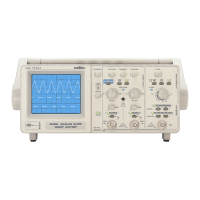
30 MHz-differential oscilloscope
5
2. INSTRUMENT DESCRIPTION
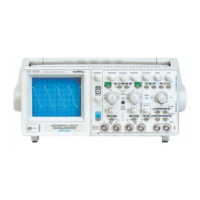
This instrument is a 30 MHz portable differential oscilloscope with AUTOSET. Its
technology has been designed to satisfy the most demanding users. It is intended for
electrotechnicians and electronics experts (operation in normal or differential mode).
This oscilloscope's inputs can operate in both traditional and differential mode (independent
switching accessible on the front):
in traditional mode
∗ Inputs CH1+ and CH2+ are active.
∗ Inputs CH1- and CH2- are inhibited internally, but the impedance as seen from the input
remains constant.
in differential mode
∗ Inputs CH1+ CH1- and CH2+ CH2- are active.
∗ The signal displays corresponds to the difference between the signals present on
inputs CH 1+ and CH1- (and/or CH2+ and CH2-).
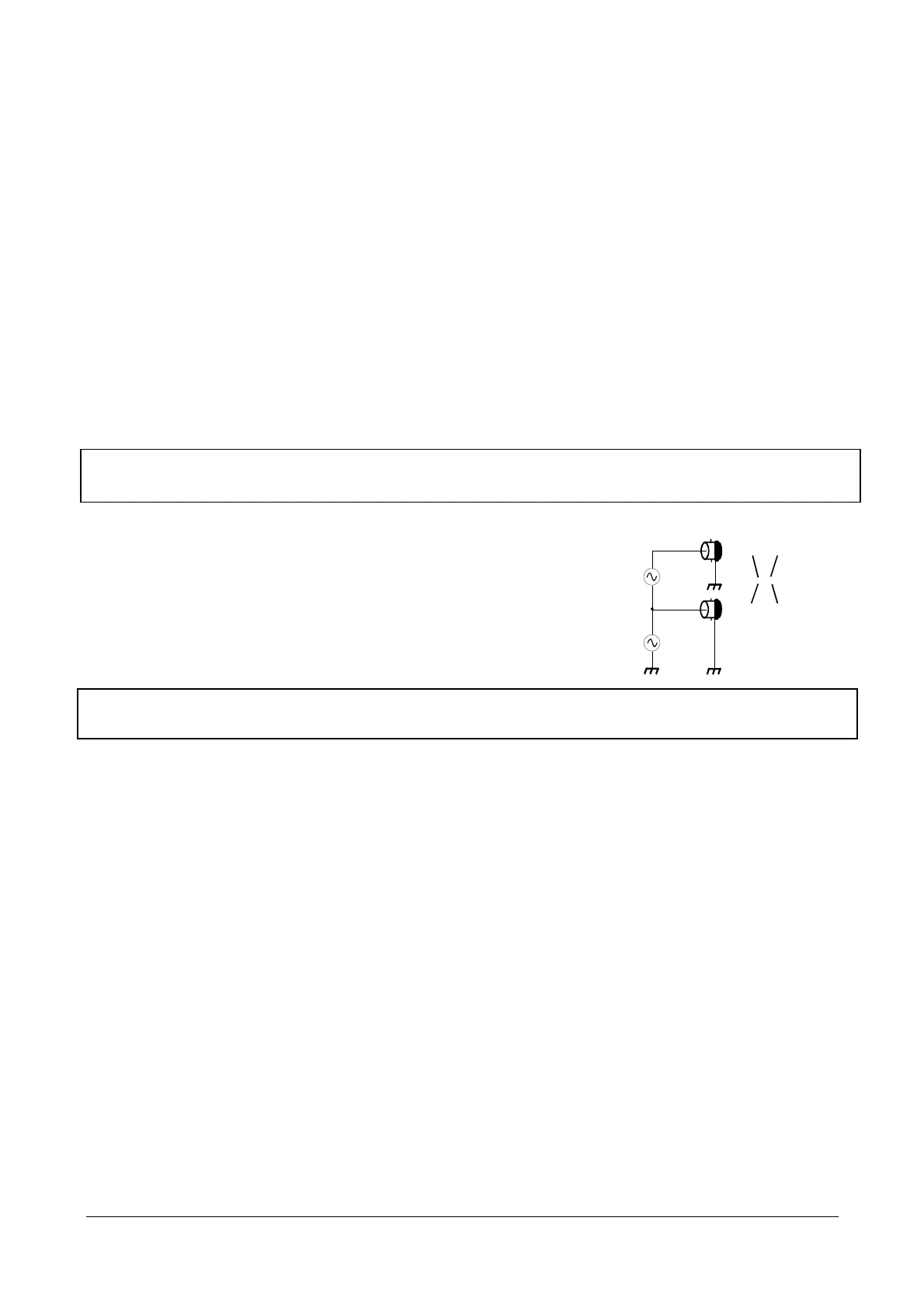
The voltage common to the 2 inputs (CH1+, CH1-) or (CH2+, CH2-) is called the
common mode voltage Vcm.
∗ The peak common mode voltage max. Vcm depends on the calibre selected:
• 20 V for sensitivities from 10 mV to 0.5 V
• 200 V for sensitivities from 1 V to 5 V
• 600 V for sensitivities from 10 V to 200 V/div.
Vdiff
Vcm
CH1- CH2-
CH1+ CH2
ou
The representation of the signal on the screen may be erroneous when the max.
common mode voltage authorized for the calibre selected is exceeded.
Performance of the oscilloscope
∗ 2 channels at 30 MHz
∗ High input dynamic: 10 mV to 200 V/div. (14 calibres)
∗ Triggering up to 50 MHz
∗ Trigger delay function
∗ The AUTOSET function automatically searches for the vertical sensitivity and the
scanning coefficient adapted to the signal present on channels CH1 and CH2.
The front panel is managed by an 8-bit microcontroller with FLASH memory which
handles the following tasks:
∗ Reading of the absolute sensitivity and time base coders
∗ Management of the LEDs
∗ Configuration of the basic board by serial link
∗ Management of communication with the PC via the RS232C link with the
HA1255 programming kit (optional)
∗ Generation of the calibration signal
∗ Saving of the instrument's configuration in EEPROM


 To Next Page