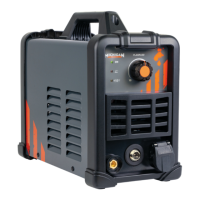
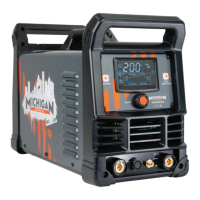
6 ACDC200LCD
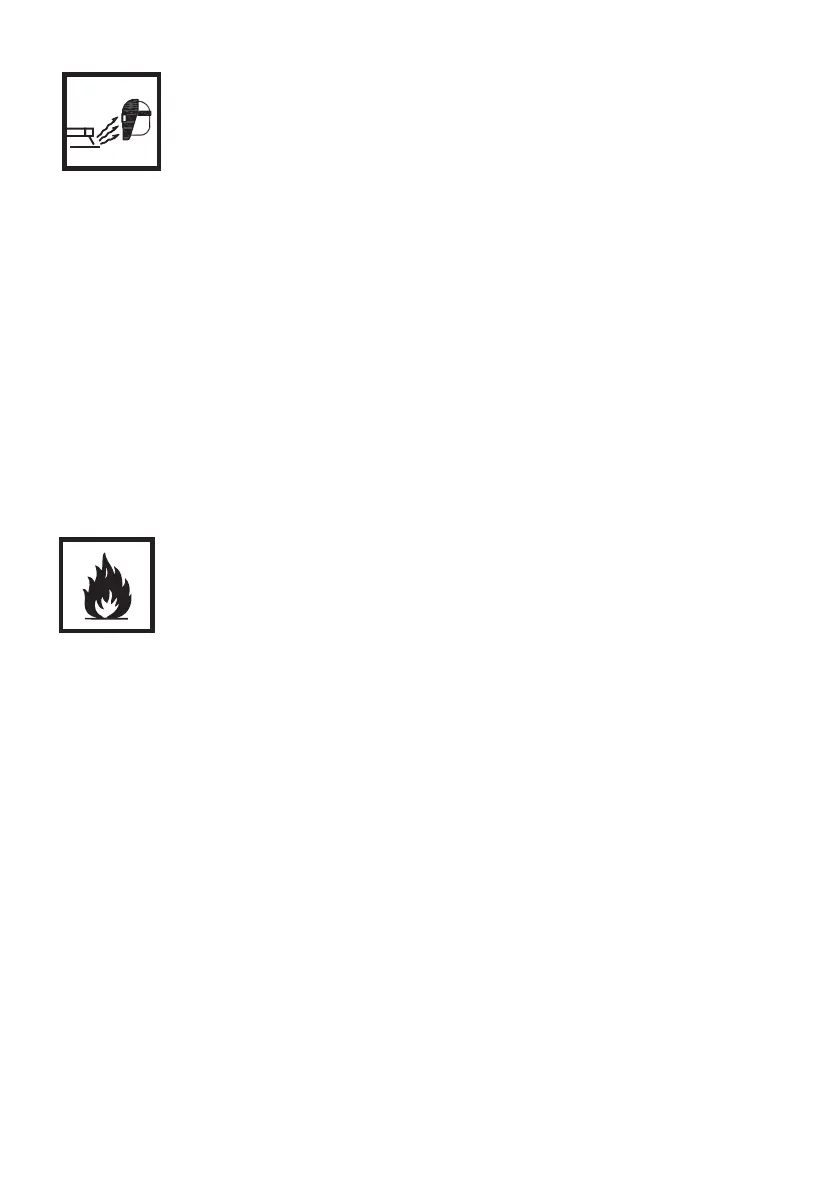
UV and IR Arc Rays
• The welding arc produces ultraviolet (UV) and infrared (IR) rays that
can cause injury to your eyes and skin. Do not look at the welding arc
without proper eye protection.
• Always use a helmet that covers your full face from the neck to top of
head and to the back of each ear.
• Use a lens that meets ANSI standards and safety glasses. For welders
under 160 Amps output, use a shade 10 lens; for above 160 Amps, use
a shade 12. Refer to the ANSI standard Z87.1 for more information.
• Cover all bare skin areas exposed to the arc with protective clothing
and shoes. Flame-retardant cloth or leather shirts, coats, pants or
coveralls are available for protection.
• Use screens or other barriers to protect other people from the arc rays
emitted from your welding.
• Warn people in your welding area when you are going to strike an arc
so they can protect themselves.
Fire Hazards
• Do not weld on containers or pipes that contain or have had
ammable, gaseous or liquid combustibles in them. Welding creates
sparks and heat that can ignite ammable and explosive materials.
• Do not operate any electric arc welder in areas where ammable or
explosive materials are present.
• Remove all ammable materials within 10m of the welding arc.
If removal is not possible, tightly cover them with reproof covers.
• Take precautions to ensure that ying sparks do not cause res or
explosions in hidden areas, cracks or areas you cannot see.
• Keep a re extinguisher close in the case of re.
• Wear garments that are oil-free with no pockets or cus that will
collect sparks.
• Do not have on your person any items that are combustible, such as
lighters or matches.
• Keep work lead connected as close to the weld area as possible to
prevent any unknown, unintended paths of electrical current from
causing electrical shock and re hazards.


 To Next Page