EasyManua.ls Logo

Miller Si 160 - User Manual

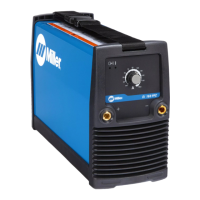
Miller Si 160
40 pages
Print Icon
To Next Page IconTo Next Page
Loading...
Visit our website at
www.MillerWelds.com
Processes
Description
TIG (GTAW) Welding
Stick (SMAW) Welding
OM-261 767A 201301
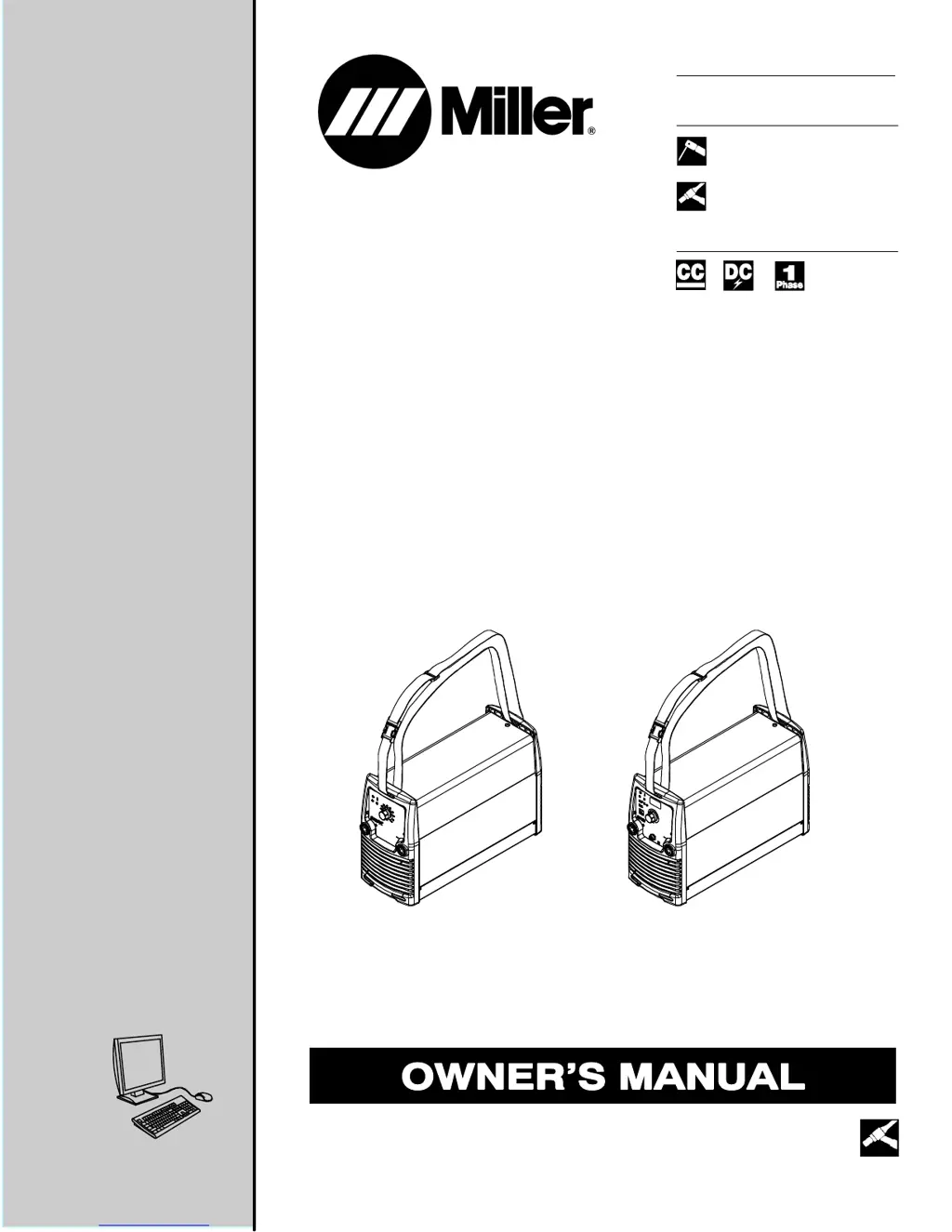
Arc Welding Power Source
Si 160, Si 160 PFC, And STi 160
File: TIG (GTAW)
CE

Questions and Answers

  • A
    alisha85Jul 30, 2025
    What to do if Miller Si 160 has no weld output and the high temperature light is on?
    • K
      Kimberly PriceJul 30, 2025
      If your Miller Welding System's high temperature light is on and there's no weld output, it could be due to the unit overheating and undergoing thermal shutdown. Allow the unit to cool with the fan on. Alternatively, reduce the duty cycle or amperage. Also, check for and correct any blocked or poor airflow to the unit.
  • C
    Christopher RiosAug 3, 2025
    How to troubleshoot Miller Welding System when there is no weld output and the ready light is off?
    • F
      fcastilloAug 4, 2025
      If your Miller Welding System has no weld output and the ready light is off, ensure the line disconnect switch is in the On position. Also, check and replace the line fuses if necessary, or reset the circuit breaker. Finally, verify proper input power connections.
  • C
    Christian BoltonAug 7, 2025
    Why does my Miller Welding System have an erratic or improper welding arc?
    • M
      Maria KingAug 7, 2025
      An erratic or improper welding arc in your Miller Welding System could be due to several factors. Ensure you are using the correct size and type of weld cable. Clean and tighten all weld connections. Also, check the electrode polarity and reverse it if necessary, and make sure there are good connections to the workpiece.
  • M
    Matthew WelchAug 12, 2025
    What causes stick welding problems with a Miller Si 160 Welding System, like hard starts or unusual spattering?
    • A
      Alexis CollinsAug 12, 2025
      Stick welding problems such as hard starts and unusual spattering with your Miller Welding System can be caused by using the incorrect type and size of electrode. Check the electrode polarity and reverse if needed, and ensure connections are secure. Also, make sure a remote control is not connected.
  • P
    Patricia ThompsonAug 16, 2025
    What causes TIG welding problems like wandering arc and hard starts in Miller Welding System?
    • M
      Mary AllenAug 17, 2025
      TIG welding issues like wandering arc and hard starts in your Miller Welding System can arise from incorrect tungsten type and size. Ensure you are using properly prepared tungsten. Check the electrode polarity and reverse if necessary.
  • Q
    qandrewsAug 20, 2025
    Why is my Miller Welding System fan not operating?
    • J
      justinmontgomeryAug 20, 2025
      If the fan on your Miller Welding System isn't working, it might be because the unit hasn't warmed up enough to require cooling. Check for and remove anything that might be blocking the fan's movement.
  • C
    Christine StricklandAug 25, 2025
    What to do if tungsten electrode oxidizing after TIG welding with Miller Si 160 Welding System?
    • J
      Jennifer JacksonAug 26, 2025
      If the tungsten electrode is oxidizing and not remaining bright after TIG welding with your Miller Welding System, shield the weld zone from drafts. Verify you're using the correct type of shielding gas. Check and tighten all gas fittings. Also, check the electrode polarity and reverse if necessary.

Summary

Section 1 - Safety Precautions

1-1. Symbol Usage

Explains the meaning of warning symbols used throughout the manual for safety.

General Welding Hazards

Covers hazards such as fumes, gases, arc rays, fire, flying metal, noise, and cylinder safety.

1-2. Arc Welding Hazards

Details potential dangers and necessary precautions related to arc welding.

Section 3 - Specifications and Installation

3-4. Specifications

Presents detailed technical specifications, including input power, output, and dimensions.

3-6. Volt-Ampere Curves

Illustrates the output voltage and amperage capabilities of the power source across different settings.

3-7. Duty Cycle And Overheating

Explains the concept of duty cycle and the consequences of exceeding it, leading to overheating.

3-9. Electrical Service Guide

Provides recommendations for proper electrical connections, fusing, and wiring.

3-10. Connecting 1-Phase Input Power

Illustrates the procedure for safely connecting the welding unit to a 1-phase input power source.

3-11. Connecting To 1-Phase Engine Generator w;230 Volt Output

Outlines generator requirements and connection procedures for operating the unit.

3-5. Selecting A Location

Guides on choosing an appropriate installation location, focusing on airflow requirements.

Section 4 - Operation

Section 5 - Maintenance And Troubleshooting

5-3. Troubleshooting

Provides a guide to diagnose and resolve common operational problems and issues.

Section 6 - Electrical Diagram

Section 7 - Parts List For Si Models

Section 8 - Parts List For STi Models

Section 9 - Parts List For Si PFC Models

Warranty

Miller Si 160 Specifications

General IconGeneral
BrandMiller
ModelSi 160
CategoryWelding System
LanguageEnglish

Related product manuals