4
5
Grounded tools require a three wire extension
cord. Double insulated tools can use either a two
or three wire extension cord. As the distance from
the supply outlet increases, you must use a heavier
gauge extension cord. Using extension cords with
inadequately sized wire causes a serious drop in
voltage, resulting in loss of power and possible tool
damage. Refer to the table shown to determine the
required minimum wire size.
The smaller the gauge number of the wire, the
greater the capacity of the cord. For example, a 14
gauge cord can carry a higher current than a 16
gauge cord. When using more than one extension
cord to make up the total length, be sure each cord
contains at least the minimum wire size required.
If you are using one extension cord for more than
one tool, add the nameplate amperes and use the
sum to determine the required minimum wire size.
Guidelines for Using Extension Cords
• If you are using an extension cord outdoors, be
sure it is marked with the suffi x “W-A” (“W” in Cana-
da) to indicate that it is acceptable for outdoor use.
• Be sure your extension cord is properly wired
and in good electrical condition. Always replace a
damaged extension cord or have it repaired by a
qualifi ed person before using it.
• Protect your extension cords from sharp objects,
excessive heat and damp or wet areas.
READ AND SAVE ALL
INSTRUCTIONS FOR FUTURE USE.
* Based on limiting the line voltage drop to fi ve volts
at 150% of the rated amperes.
EXTENSION CORDS
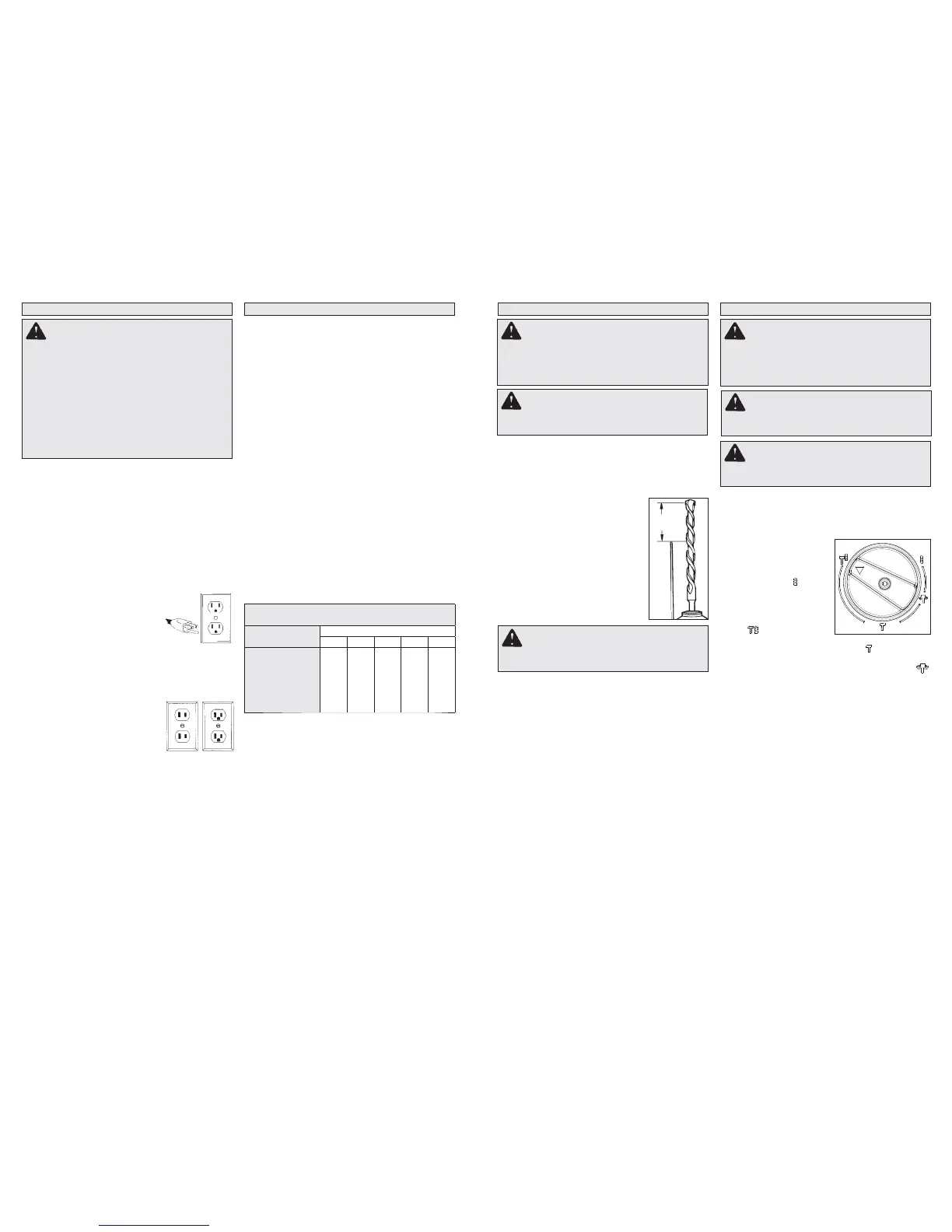
Recommended Minimum Wire Gauge
For Extension Cords*
Nameplate Amps
Extension Cord Length
25' 50' 75' 100' 150'
0 - 2.0
2.1 - 3.4
3.5 - 5.0
5.1 - 7.0
7.1 - 12.0
12.1 - 16.0
16.1 - 20.0
18
18
18
18
16
14
12
18
18
18
16
14
12
10
18
18
16
14
12
10
--
18
16
14
12
10
--
--
16
14
12
12
--
--
--
OPERATION
Selecting Action
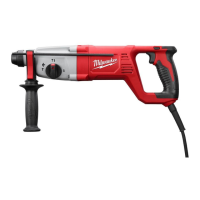
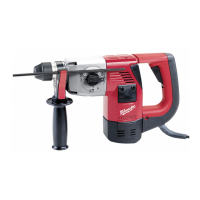
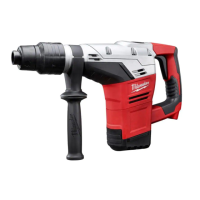
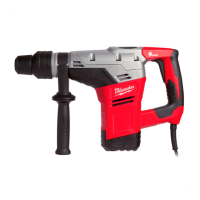
MILWAUKEE Rotary Hammers have three settings:
rotation only, rotary hammer, and hammer only.
Always allow the motor to come to a complete
stop before changing the mode selection to avoid
damage to the tool.
1. For rotation only, turn
the selector lever so the
arrow on the lever points
to the twist drill symbol.
2. For rotary hammering,
turn the selector lever
so the arrow points to
the hammer and twist
drill symbol.
3. For hammering only, turn the selector lever so
the arrow points to the hammer symbol.
4. To freely rotate the bit to the desired angle for
hammering only, turn the selector lever to the
symbol. Then, follow step 3.
NOTE: To engage the hammering mechanism,
maintain pressure on the bit. When pressure on
the bit is released, the hammering action will stop.
Starting and Stopping
1. To start the tool, grasp the handle fi rmly and pull
the trigger.
2. To stop the tool, release the trigger. Make sure
the tool comes to a complete stop before laying
the tool down.
WARNING To reduce the risk of injury,
always unplug tool before attaching or remov-
ing accessories or making adjustments. Use
only specifi cally recommended accessories.
Others may be hazardous.
WARNING To reduce the risk of injury,
wear safety goggles or glasses with side
shields.
WARNING To reduce the risk of injury,
keep hands and cord away from the bit and
all moving parts.
ASSEMBLY
Adjusting the Side Handle Position
1. Loosen the side handle by unscrewing the side
handle grip until the side handle rotates freely.
2. Rotate the side handle to the desired position.
3. Tighten the side handle grip securely.
Setting the Depth Gauge
1. Press in the clamping lever.
2. Slide the depth gauge rod back-
ward or forward until it is set for
the desired depth.
NOTE: The drilling depth is the
distance between the tip of the bit
and the tip of the depth gauge rod.
3. Release the clamping lever.
Installing Bits and Chisels
NOTE: Only use accessories with SDS or SDS
Plus shanks.
Be sure that the shank of the bit is clean. Dirt par-
ticles may cause the bit to line up improperly. Do not
use bits larger than the maximum recommended
capacity of the drill because gear damage or mo-
tor overloading may result. For best performance,
be sure that the bit is properly sharpened and the
shank is lightly greased before use. Use caution
when handling hot bits and chisels.
1. Unplug tool.
2. Insert the bit or chisel into the nose of the tool.
3. Push bit into tool until it locks.
4. Check to see that the bit is locked by tugging on it.
5. To remove bits and chisels, pull back on the bit
release collar and remove bit.
WARNING To reduce the risk of injury,
always unplug tool before changing or re-
moving accessories. Only use accessories
specifi cally recommended for this tool. Others
may be hazardous.
WARNING To reduce the risk of injury,
always use a side handle when using this tool.
Always brace or hold securely.
WARNING To reduce the risk of injury,
do not grasp the bit while the chuck is rotat-
ing or while the bit is falling from the chuck.
Drilling
Depth
Fig. B
Fig. C
Fig. A
GROUNDING
Grounded Tools: Tools with Three Prong Plugs
Tools marked “Grounding Required” have a three
wire cord and three prong grounding plug. The
plug must be connected to a properly grounded
outlet (See Figure A). If the tool should electrically
malfunction or break down, grounding provides a
low resistance path to carry electricity away from
the user, reducing the risk of electric shock.
The grounding prong in the plug is connected
through the green wire inside the cord to the
grounding system in the tool. The green wire in the
cord must be the only wire connected to the tool's
grounding system and must never be attached to
an electrically “live” terminal.
Your tool must be plugged into an appropri-
ate outlet, properly installed and grounded
in accordance with all codes and
ordinances. The plug and outlet
should look like those in Figure A.
Double Insulated Tools: Tools with Two Prong
Plugs
Tools marked “Double Insulated” do not require
grounding. They have a special double insulation
system which satisfi es OSHA requirements and com-
plies with the applicable standards of
Underwriters Laboratories, Inc., the
Canadian Standard Association and
the National Electrical Code. Double
Insulated tools may be used in either
of the 120 volt outlets shown in
Figures B and C.
WARNING Improperly connecting the
grounding wire can result in the risk of elec-
tric shock. Check with a qualifi ed electrician
if you are in doubt as to whether the outlet is
properly grounded. Do not modify the plug
provided with the tool. Never remove the
grounding prong from the plug. Do not use
the tool if the cord or plug is damaged. If
damaged, have it repaired by a MILWAUKEE
service facility before use. If the plug will not
fi t the outlet, have a proper outlet installed by
a qualifi ed electrician.



 To Next Page
 Loading...