1. Unplug tool.
2. Insert the bit or chisel into the nose of the tool.
3. Push bit into tool until it locks.
4. Check to see that the bit is locked by tugging on it.
5. To remove bits and chisels, pull back on the bit
release collar and remove bit.
OPERATION
To reduce the risk of injury, always
unplug tool before attaching or
removing accessories or making adjustments.
Use only specically recommended accessories.
Others may be hazardous.
To reduce the risk of injury, wear safety goggles
or glasses with side shields.
To reduce the risk of injury, wear a dust mask or
use an OSHA compliant dust extraction solution
when working in dusty situations.
To reduce the risk of injury, keep hands and cord
away from the bit and all moving parts.
To reduce the risk of injury, always use a side
handle when using this tool. Always brace or
hold securely.
Selecting Action
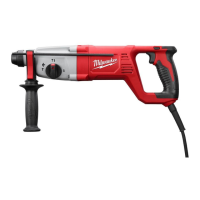
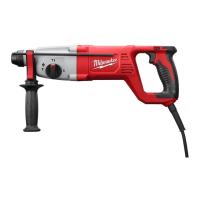
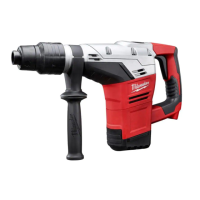
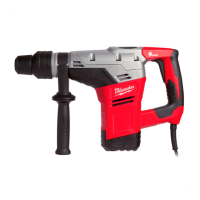
MILWAUKEE Rotary Hammers have three settings:
rotation only, rotary hammer, and hammer only.
Always allow the motor to come to a complete stop
before changing the mode selection to avoid dam-
age to the tool.
1. For rotation only, turn the
selector lever so the arrow
on the lever points to the
twist drill
symbol.
2. For rotary hammering, turn
the selector lever so the ar-
row points to the hammer
and twist drill
symbol.
3. For hammering only, turn
the selector lever so the arrow points to the ham-
mer
symbol.
4. To freely rotate the bit to the desired angle for
hammering only, turn the selector lever to the
symbol. Then, follow step 3.
NOTE: To engage the hammering mechanism, main-
tain pressure on the bit. When pressure on the bit is
released, the hammering action will stop.
Starting and Stopping
1. To start the tool, grasp the handle rmly and pull
the trigger.
2. To stop the tool, release the trigger. Make sure
the tool comes to a complete stop before laying
the tool down.
Applying greater pressure does not
increase the tool's eectiveness.
If the applied working pressure is too high, the
shock absorber will be pushed together making
the vibrations to the handle noticeably stronger.
Operator Force
The Anti-Vibration System provides the operator with
comfort without sacricing power or performance.
Ideal operator force compresses the bellows slightly
and allows the tool to work aggressively while the
handle remains steady.
Excessive force compresses the bellows signicantly
and reduces vibration dampening. Users will be able
to feel the dierence and should adjust the force to
the handle accordingly.
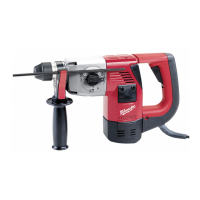
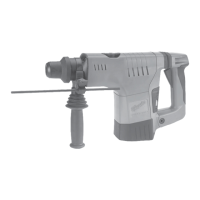
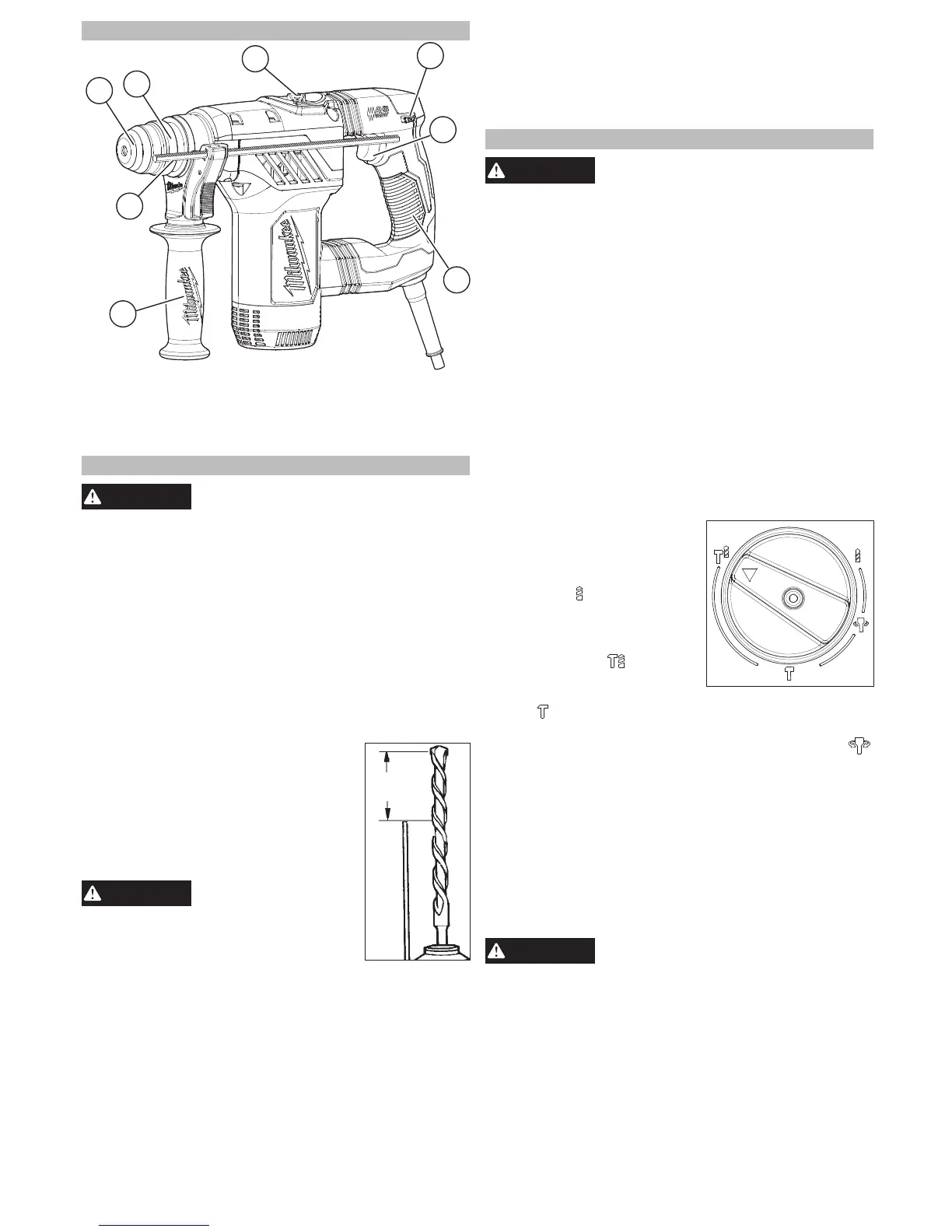
FUNCTIONAL DESCRIPTION
1. Side handle
2. Depth gauge rod
3. Bit holder
4. Bit release collar
3
1
5
4
2
5. Mode selector knob
6. Control switch
7. Trigger
8. Handle
7
6
8
ASSEMBLY
To reduce the risk of injury, always
unplug tool before changing or
removing accessories. Only use accessories
specically recommended for this tool. Others
may be hazardous.
To reduce the risk of injury, always use a side
handle when using this tool. Always brace or
hold securely.
Adjusting the Side Handle Position
1. Loosen the side handle by unscrewing the side
handle grip until the side handle rotates freely.
2. Rotate the side handle to the desired position.
3. Tighten the side handle grip securely.
Setting the Depth Gauge
1. Press in the clamping lever.
2. Slide the depth gauge rod backward
Drilling
Depth
or forward until it is set for the de-
sired depth.
NOTE: The drilling depth is the
distance between the tip of the bit
and the tip of the depth gauge rod.
3. Release the clamping lever.
To reduce the risk of
injury, do not grasp
the bit while the chuck is rotating
or while the bit is falling from the
chuck.
Installing Bits and Chisels
NOTE: Only use accessories with SDS or SDS Plus
shanks.
Be sure that the shank of the bit is clean. Dirt particles
may cause the bit to line up improperly. Do not use
bits larger than the maximum recommended capacity
of the drill because gear damage or motor overload-
ing may result. For best performance, be sure that
the bit is properly sharpened and the shank is lightly
greased before use. Use caution when handling hot
bits and chisels.


 To Next Page
 Loading...