In principle
Your stove has two air supplies:
Primary air is controlled by the upper air controler of the door. The air eventually washes
at high speed down the back face of the door glass. This super-heated air helps with the
combustion of volatile gases produced by the re.
Secondary air is supplied to the top of the re through two rows of holes in the steel bae.
This eectively burns o other residual gases, making for very clean emissions. This air sup-
ply isconstant and cannot be varied. The lower air controler on the door is xed, and only
for decoration purposes.
2.2 Lighting and loading intervals
When rst lighting the stove, a large volume of air is needed. When the stove is cold, you
should leave the door open an inch or two for the rst few minutes and open the primary air
supply completely. While the door is open, do not leave the stove unattended.
To form a reasonable bed of ash on the oor of the stove, you should use 5-6 inches thick-
ness (2-4 pound) of dry kindling at the initial lighting. Always maintain a 1-1,5 inch (2-3 cm)
layer of ash on the oor of the combustion chamber at all other times.
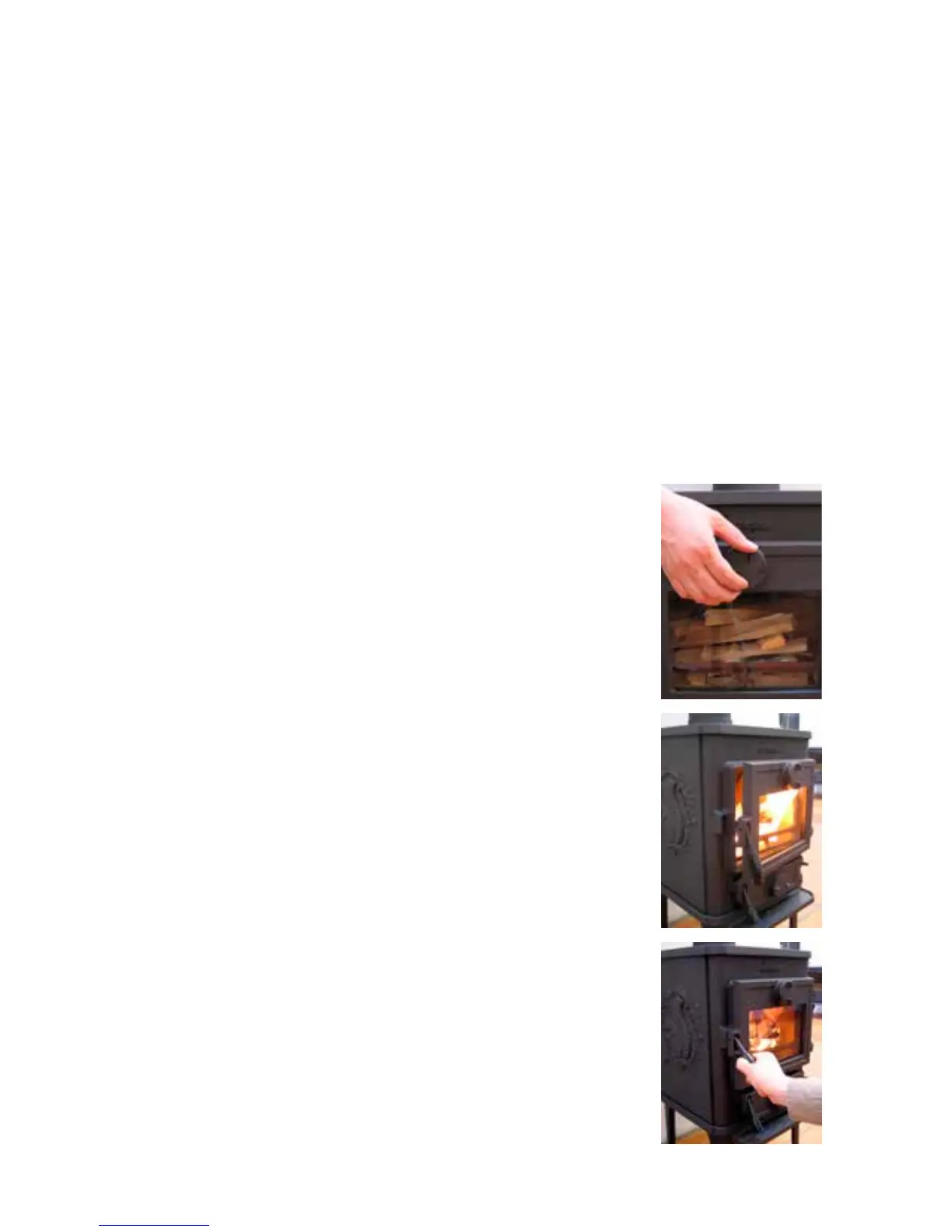
1. The air supply must be fully open. Maximum 4 turns.
2. Light the re. An ember bed will quickly be formed by light-
ing with relighters, Morsø kindling bags or 7-10 pieces of twist-
ed paper under the dry kindling wood (see above).
3. After lighting, partially close the door, leaving it open an
inch or two to allow in plenty of combustion air.
4. When the chimney is warmed through after 5-10 min-
utes, the door should be closed. A suitable ember bed will
be formed after a further 15-20 minutes.


 To Next Page